

A paid professional deep clean is a top-to-bottom reset that strips out grime a standard clean never touches, from grout lines to appliance interiors. It costs more and takes longer than routine cleaning for exactly that reason. Some jobs, though, such as the inside of your oven or your cupboard interiors, are usually optional add-ons, so check them off with the provider at booking rather than assuming they're included. Before you pay, confirm the checklist, the guarantee, and who's actually turning up.
TL;DR:
- Deep cleaning typically takes 1.5 to 2 times longer and costs 50 to 75% more than a standard clean, reflecting the extensive detail work involved.
- The core deep-clean process includes tasks like grout scrubbing, high dusting, and detailed edge work, with appliance interiors and inside windows as optional add-ons.
- Preparation involves removing valuables, securing fragile items, and arranging access in advance to streamline the process and avoid costly surprises.
- Guarantees rely on a 24 to 72-hour reporting window, focus on insured, DBS-checked staff, and require a fixed quote and itemized checklist before work begins.
- Heavy pet hair, persistent neglect, and multiple add-ons significantly increase cleaning time and costs, so clear communication about expectations and scope is essential.
Table of Contents
- What does "deep clean" actually mean?
- What's on a professional room-by-room checklist?
- What add-ons and exclusions should you check before booking?
- How should you prepare your home for the clean?
- What happens on the day, and how long does it take?
- How is deep cleaning priced, and what changes the cost?
- What guarantees and checks actually matter?
- Why a proper deep clean is worth doing first
- Book a deep clean without the guesswork
- Sources
- FAQ
What does "deep clean" actually mean?
A deep clean is a full reset, not a quick tidy-up. Standard cleans keep visible surfaces presentable week to week. A deep clean goes after the grime that builds up quietly over months: the grease film behind a cooker, the dust line along a skirting board, the limescale ring nobody looks at until it's grey.
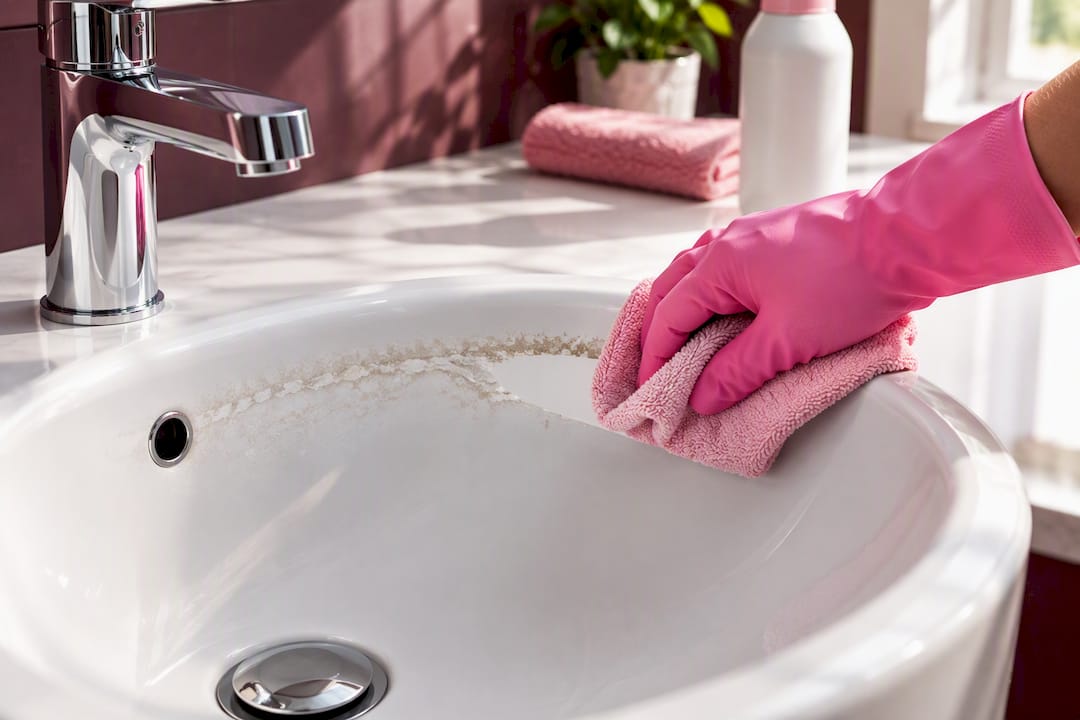
Reputable firms typically list baseboards, grout lines, high dusting and interior appliance cleaning as deep-clean territory, according to a professional cleaning standards guide. A standard clean skips most of that because it's designed for maintenance, not restoration.
That extra reach is why deep cleans take longer and cost more. You're paying for hours of detail work, not a quick wipe-round. Typical differences include:
- Skirting boards, door frames and light switches wiped down, not just floors
- Grout scrubbed rather than surface-mopped around
- Appliance interiors cleaned when booked as an add-on
- High dusting on shelves, tops of cupboards and light fittings
- Detailed edge work where a vacuum or mop alone leaves residue
Think of it as the difference between hoovering a carpet and having it professionally shampooed. Both leave the room looking clean. Only one gets at what's actually in the fibres.
What's on a professional room-by-room checklist?
A genuine deep-clean checklist runs to dozens of individual tasks. One detailed example used by professional teams for inspection-standard cleans lists close to fifty separate items, with optional extras kept separate from the core list. Here is what that typically breaks down to, room by room.
Kitchen
- Stovetop and hob degreased, including burner rings and knobs
- Extractor fan and filter wiped down
- Splashbacks and tiled areas scrubbed, not just sprayed
- Cupboard fronts cleaned; interiors only if booked as an add-on
- Fridge interior cleaned only if booked separately
Bathroom
- Grout scrubbed, not just the tile surface
- Shower doors and screens descaled
- Taps, showerheads and fittings treated for limescale
- Extractor fan casing dusted
- Behind and around the toilet base, an area standard cleans routinely miss
Bedrooms and living areas
- Skirting boards wiped along their full length
- Behind and under furniture that can be safely moved without two people
- Upholstery vacuumed, including cushions and seams
- Blinds dusted slat by slat; curtains vacuumed or dusted
- Internal window tracks cleaned where the service includes it
Whole-home details
- High dusting: shelving tops, picture frames, light fittings
- Air vents and radiator covers
- Switch plates and door frames
- Cobwebs in corners and ceiling edges
- Carpet edges hand-detailed where a vacuum can't reach, plus a HEPA vacuum pass on carpeted rooms
One word matters more than any item on that list: accessible. Cleaners will move a sofa or a light table. They generally won't shift a wardrobe, a heavy bookcase, or anything that needs two people and a risk assessment. If you want cleaning behind or under something heavy, ask the provider to price it in advance rather than expecting it on the day.
Pro Tip: Walk the property yourself before the team arrives and note anything fragile, antique, or awkward to move. A two-minute list saves everyone a difficult conversation halfway through the job.
What add-ons and exclusions should you check before booking?
Deep-clean packages have a core scope and a list of extras. Confusing the two is the single most common source of complaint after a booking, according to guidance from Care, which notes that appliance interiors and cupboard interiors are almost always treated as optional rather than default inclusions.
Add-ons you'll typically need to book separately include:
- Inside-oven cleaning, usually priced around £25 as a standalone item
- Fridge or freezer interior cleaning
- Inside windows, separate from exterior glass
- Inside cupboards and drawers
- Mattress deep cleaning
- Carpet or upholstery shampooing, priced per room or per item
Exclusions are a different category entirely and worth knowing before you get a quote. Most providers won't touch paint splash removal beyond a light service, structural repairs, active pest infestations, or specialist natural stone care. Those need a tradesperson or a specialist, not a cleaning team.
Ask for an itemised quote and book every add-on at the time you book the main job. Trying to add extras once the team is already on-site rarely works and often costs more.
How should you prepare your home for the clean?
A little preparation gets you a better result and a faster job. Clear surfaces of personal items and remove anything valuable from the rooms being cleaned, particularly in kitchens and bathrooms where products and cloths move around a lot.
Decide in advance whether you'll be home. If it's a first visit, arrange a keycode, lockbox, or a short walkthrough with the team so nobody's standing on a doorstep. A quick five-minute introduction at the start also lets you flag priorities directly.
- Point out anything delicate, from an antique table to a natural stone worktop, so the team uses the right products
- Remove or secure sentimental or fragile items rather than leaving them for the cleaners to work around
- Don't expect cleaners to sort, file or organise for you. That's a different service. Deep cleaning is about grime removal, not decluttering your junk drawer
- If the property hasn't been professionally cleaned in a long time, mention it. Months of built-up grease or limescale genuinely changes how long the job takes
What happens on the day, and how long does it take?
Expect a uniformed, vetted team to arrive with their own supplies and a brief walkthrough to confirm scope before starting. Reputable firms bring industrial-grade equipment rather than relying on whatever's under your sink, and they'll ask about any delicate surfaces during that initial confirmation.
The order of work matters. A proper deep clean runs ceiling down: high dusting first, then surfaces and fixtures, then floors last. Cleaning floors before dusting shelves just means redoing the floors.
- Small flat: roughly 2 to 3 hours
- Two-bedroom home: roughly 3 to 5 hours
- Three-bedroom home: roughly 5 to 7 hours
A deep clean generally takes 1.5 to 2 times longer than a standard clean on the same property, which is the single biggest reason quotes vary so much between providers.
Heavy pet hair, months of neglect, and multiple add-ons all push those estimates upward. Once the team finishes, walk the priority areas you flagged at the start and check anything specific was actually done. If something's missed, report it straight away rather than assuming it'll be picked up next time.
How is deep cleaning priced, and what changes the cost?
Most providers price deep cleans one of two ways: a fixed package based on property size, or an hourly rate for jobs that don't fit a standard template. Fixed packages are easier to budget against because you know the number before anyone arrives.
Several things push the price up regardless of model:
- How long since the last proper clean, since grease and limescale compound over time
- Pet hair and dander, which add real time to upholstery and carpets
- The number of add-ons booked, from oven interiors to carpet shampooing
- Hard-to-access areas, including anything behind heavy furniture
As a rough rule of thumb, a deep clean typically runs 50 to 75% more than a standard clean on the same property, reflecting the extra hours involved rather than a premium for the same work. Treat that as a planning figure, not a guaranteed quote.
Ask for an itemised breakdown before you commit. Confirm who's supplying products and equipment, and whether anything counts as specialised cleaning that carries its own charge.
What guarantees and checks actually matter?
Five things separate a provider worth paying from one you'll regret booking: background-checked staff, proper liability insurance, a written checklist you can hold them to, transparent pricing agreed before the job starts, and a satisfaction or re-clean guarantee if something's missed.
Guarantees are only useful if you understand how they work. Most firms set a reporting window, often somewhere between 24 and 72 hours, during which you can flag missed areas and have someone return to fix them. Read the provider's terms before you need to use that window, not after.
- Check the staff are DBS-checked and insured, not just "vetted" in marketing copy
- Ask to see or receive the written checklist before the job, not after
- Confirm pricing is fixed, with no surprise call-out or product fees
- Understand exactly how long you have to report a problem and what happens next
The service runs on vetted, DBS-checked cleaners in uniform, fixed pricing with no hidden fees, a 72-hour re-clean guarantee, and holds a high customer satisfaction rating from thousands of cleaned homes. It's the kind of specific, checkable detail worth demanding from any provider you're comparing.
Why a proper deep clean is worth doing first
Booking a deep clean before switching to routine maintenance sets a genuinely clean baseline, and every visit after that gets faster because there's less ground to make up. Landlords benefit the same way between tenancies, and so do tenants trying to protect a deposit. A written checklist and a re-clean guarantee turn that first booking from a gamble into something you can actually hold a provider to.
— Book
Book a deep clean without the guesswork
Bookmycleaning is the alternative to piecing a deep clean together yourself or gambling on an unvetted local cleaner: fixed pricing shown before you book, DBS-checked staff in uniform, and a 72-hour re-clean guarantee if anything's missed. Deep cleaning starts from £119, booked online in under a minute with no card or deposit required, and same-day slots are often available if you need it done fast.
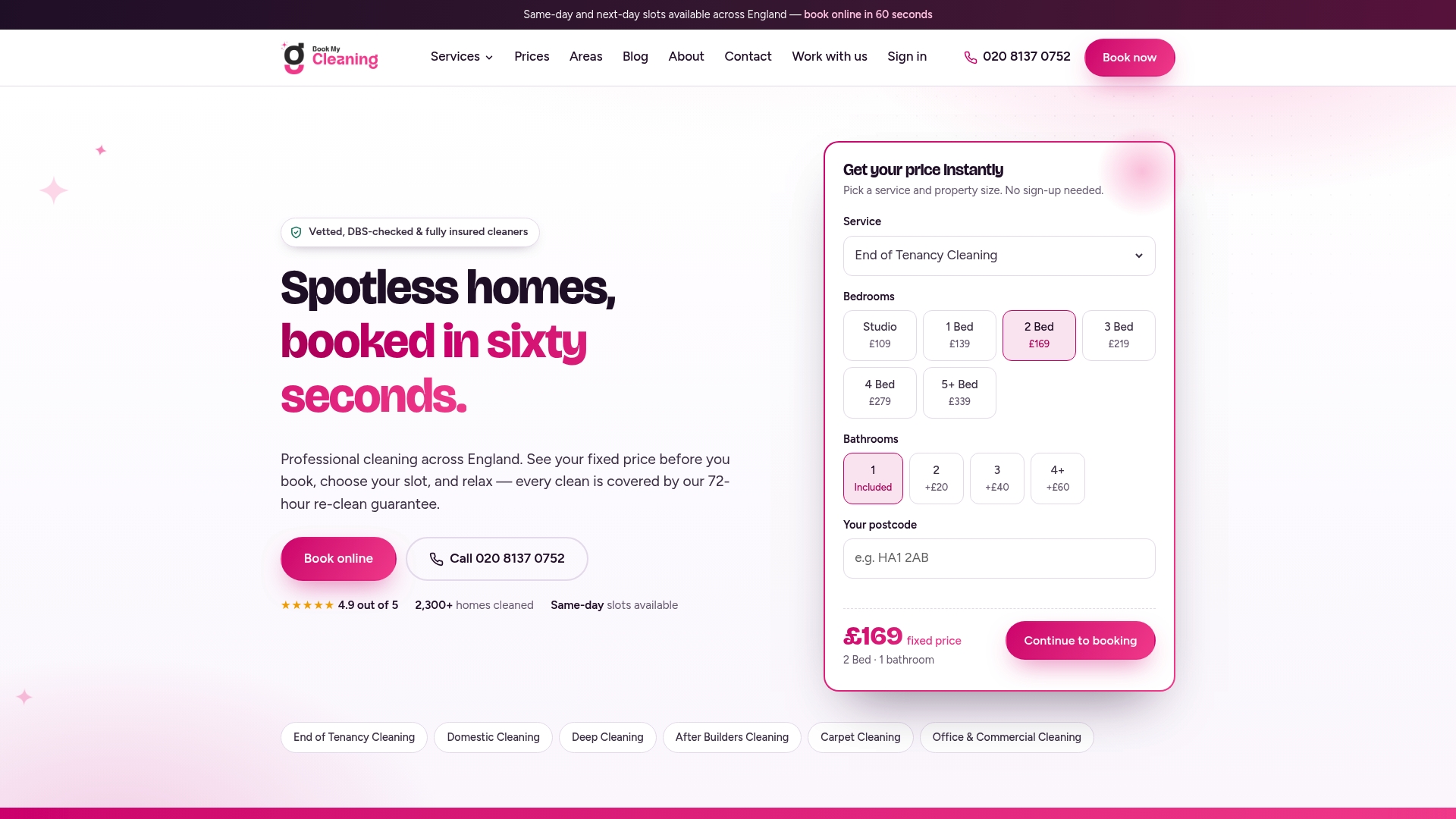
Add extras like inside-oven cleaning, fridge interiors or carpet shampooing at the time of booking, and request the itemised checklist so you know exactly what's covered before the team arrives. If pets or allergies are a factor, pairing the clean with an air purifier helps keep the air clear once the dust has settled. Once you've had a deep clean, switching to regular domestic cleaning from £16.95 an hour keeps that standard without repeating the full job every time. Check the full price list and book your deep clean today.
Sources
- What to Expect from Professional Cleaning: The 2025 Guide | Tidied
- Deep Cleaning vs Standard Cleaning 2026: What's the Difference? | Maidless
- Care
- Deep Cleaning vs Standard Cleaning: What’s the Difference? - Cleaning Contractor Network
FAQ
What's included in a standard deep-clean checklist?
A standard deep-clean checklist covers baseboards, grout scrubbing, high dusting, switch plates, vents, and detailed floor edge work across every room. Appliance interiors, inside windows and cupboard interiors are usually separate add-ons rather than part of the core job.
How long does a professional deep clean take?
A small flat generally takes around 2 to 3 hours, a two-bedroom home 3 to 5 hours, and a three-bedroom home 5 to 7 hours. Deep cleans run roughly 1.5 to 2 times longer than a standard clean on the same property.
Do I need to be home during a deep clean?
You don't have to be home, but you'll need to arrange access, whether that's a keycode, a lockbox, or a short walkthrough for a first visit. Many customers prefer to be present for the initial confirmation and then leave the team to work.
What should I do if the cleaners miss something?
Report it within the provider's reporting window, commonly between 24 and 72 hours after the job. This provider offers a re-clean guarantee during a defined reporting window, so missed spots may be corrected at no extra charge.