
Guest ready cleaning means a property is hygienically clean, fully restocked and visibly presentable before a single guest walks in, with nothing left to check off later. The one action that gets you there every time is a written, room-by-room turnover checklist you complete and verify after every checkout. Book My Cleaning and other professional services build their process around exactly that discipline.
TL;DR:
- Deep cleaning should be scheduled every two to three months or more frequently if visible buildup, odors, or mold appear, as standard turnovers do not address these issues.
- Maintaining linen logistics involves stripping beds immediately after guests leave, keeping spare sets on-site, and building backup plans like local laundry services to ensure same-day turnarounds.
- Using a detailed, written, room-by-room checklist and reference photos helps verify the space is truly guest ready and prevents incomplete cleanings or overlooked details.
- Professional cleaning services rely on standardized processes, vetted staff, and guaranteed re-clean policies to deliver consistent quality across multiple properties or tight schedules.
- Prioritizing kitchen and bathroom cleanliness, proper ventilation, and consistent presentation touches significantly improves guest perceptions and overall review scores.
Table of Contents
- What does a room-by-room guest ready checklist include?
- How often should you deep clean versus just turn a property over?
- How do you manage linen and laundry for same-day turnovers?
- What supplies and techniques actually get a turnover done properly?
- How long should a turnover take and how do you verify it's actually done?
- What finishing touches actually improve the guest experience?
- How do you adjust the turnover for pets, pools or damp?
- How professional cleaners keep turnovers reliable
- Book a guaranteed turnover clean with Book My Cleaning
- Key official guidance behind this checklist
- Sources
- FAQ
What does a room-by-room guest ready checklist include?
Airbnb's own hosting standards treat this as the minimum baseline for every turnover, not an optional extra. Skip a room and you risk the exact complaint that tanks a review: something felt used, not cleaned.
Work through the property in this order every time:
- Entryway: declutter shoes and post, sweep or vacuum, wipe door handles and light switches, check the mat is clean and dry.
- Living areas: dust surfaces, vacuum upholstery and rugs, remove pet hair, straighten cushions and throws.
- Kitchen: clear any leftover food, wipe down all surfaces, sanitise taps and handles, check inside the fridge and oven are genuinely empty and clean.
- Bedrooms: strip every bed and remake with fresh linen, keep spare sets accessible, leave clear luggage space.
- Bathrooms: disinfect the toilet, sink, shower and tub, check drains run freely, restock toiletries and towels.
- Final pass: take rubbish out, open windows to air the space if the weather allows, and do a genuine smell check before you lock up.
That last step matters more than hosts assume. A property can look spotless and still fail if it smells of last night's cooking or damp towels.
How often should you deep clean versus just turn a property over?
A turnover clean happens after every single checkout, no exceptions. A deep clean is a separate, longer job that tackles what a turnover never touches: grout, oven interiors, mattress flipping, behind appliances, window tracks. Airbnb's guidance for consistent five-star hosting points to scheduling this every two to three months, or sooner if you spot visible build-up.
A standard turnover for a two-bedroom flat typically requires between one and two hours. A proper deep clean takes significantly longer, often several hours. If you're seeing recurring stains, a persistent musty smell, or any sign of mould or pests, that's not a turnover problem. Call a specialist.
Pro Tip: Block your deep-clean slots into the calendar before your busy season starts. Trying to squeeze one in between back-to-back bookings is how properties slide from "guest ready" to "just about acceptable".

How do you manage linen and laundry for same-day turnovers?
Same-day changeovers live or die on laundry logistics. Get this wrong once and you're apologising to a guest standing in your hallway with a suitcase.
- Strip beds the moment guests leave and get the wash cycle running before you touch anything else in the property.
- Keep at least one full spare linen set per bed stored on-site, so a slow-drying load never delays a changeover.
- Build in a rapid-turnaround backup, whether that's a tumble dryer, a local laundry service, or simply rotating in your spare set while the used linen washes separately.
- Pack a labelled caddy for consumables you restock every visit, kept separate from a bulkier owner's supply cupboard for backstock.
This is the logistics layer that separates hosts who run smoothly from those who panic-clean between bookings. It has nothing to do with expensive products and everything to do with sequencing.
What supplies and techniques actually get a turnover done properly?
You don't need a huge kit. You need the right basics and a sensible order of operations.
- Disinfectant spray or wipes for high-touch surfaces
- Microfibre cloths (they lift dust rather than push it around)
- A vacuum with hard-floor and upholstery attachments
- A mop, toilet brush and heavy-duty bin bags
- A lint roller for pet hair and throws
- Glass cleaner and a general stain remover
- A small air purifier for properties prone to lingering odours
Technique matters as much as the kit. Work top to bottom, ceiling fans and shelves before skirting boards, so dust lands on floors you're about to clean anyway. Do floors last, always. And rather than reaching for a heavily scented spray to cover a smell, open a window and let the air actually clear. Guests notice fake fragrance faster than they notice a faint, honest one.
How long should a turnover take and how do you verify it's actually done?
A studio or one-bedroom typically needs 60 to 90 minutes; a three-bedroom house closer to three hours. Treat those as realistic minimums, not aspirational targets you'll beat under pressure.
- Use the same written checklist every time, ticked off room by room, not carried in someone's head.
- Take reference photos of beds, bathrooms and the kitchen once finished, so anyone checking the handover can compare against a known standard.
- Set escalation triggers in advance: visible mould, a broken appliance, or pest signs mean you stop and book a specialist, not push through with standard supplies.
- Keep a backup cleaner on call, or build 30 minutes of buffer into tight same-day schedules, so one delayed changeover doesn't cascade into the next guest's arrival.
Busy-season stretches are exactly when skipping the checklist causes incomplete handovers, so the buffer and backup plan matter most precisely when you're least likely to build them in.
What finishing touches actually improve the guest experience?
Cleanliness gets you to guest ready. Presentation is what makes it feel hospitable rather than merely acceptable.
- Restock visible spares: extra toilet roll, one towel and pillow per guest, a basic tea and coffee kit on the counter.
- Match beds and towel folds to a reference photo so every changeover looks consistent, not just clean.
- Ventilate before arrival rather than reaching for a strong air freshener; a neutral, aired space reads as genuinely fresh.
- Leave a simple printed welcome sheet with Wi-Fi details and house instructions, which cuts down guest messages in the first hour.
Airbnb's own guidance on preparing for guests notes that kitchens and bathrooms carry disproportionate weight in how guests rate cleanliness overall. If time is short, prioritise those two rooms over anything else.
How do you adjust the turnover for pets, pools or damp?
Pet-friendly lets need dedicated pet bedding and a proper hair-removal pass with a vacuum attachment and lint roller, every single turnover. Pools and hot tubs are a different category entirely: follow manufacturer and pool-maintenance guidance rather than standard cleaning steps, since the ASSC protocol treats these as specialist facilities needing their own maintenance schedule. Any sign of damp or mould gets documented and escalated to remediation, and flagged on your listing until resolved.

How professional cleaners keep turnovers reliable
Consistency comes from process, not effort. Professional services lean on written checklists, reference photos and uniformed staff so any cleaner reproduces the same standard, backed by vetted, DBS-checked teams and a 72-hour re-clean guarantee. If you're managing several properties or tight same-day windows, that structure is usually worth more than doing it yourself.
— Book
Book a guaranteed turnover clean with Book My Cleaning
Running your own checklist works until a same-day changeover, a sick cleaner, or a fully booked week collides with a guest already on their way. Book My Cleaning is the alternative to piecing together your own turnover team: fixed prices shown upfront on the pricing page, vetted and DBS-checked cleaners in uniform, and a 72-hour re-clean guarantee if something's missed.
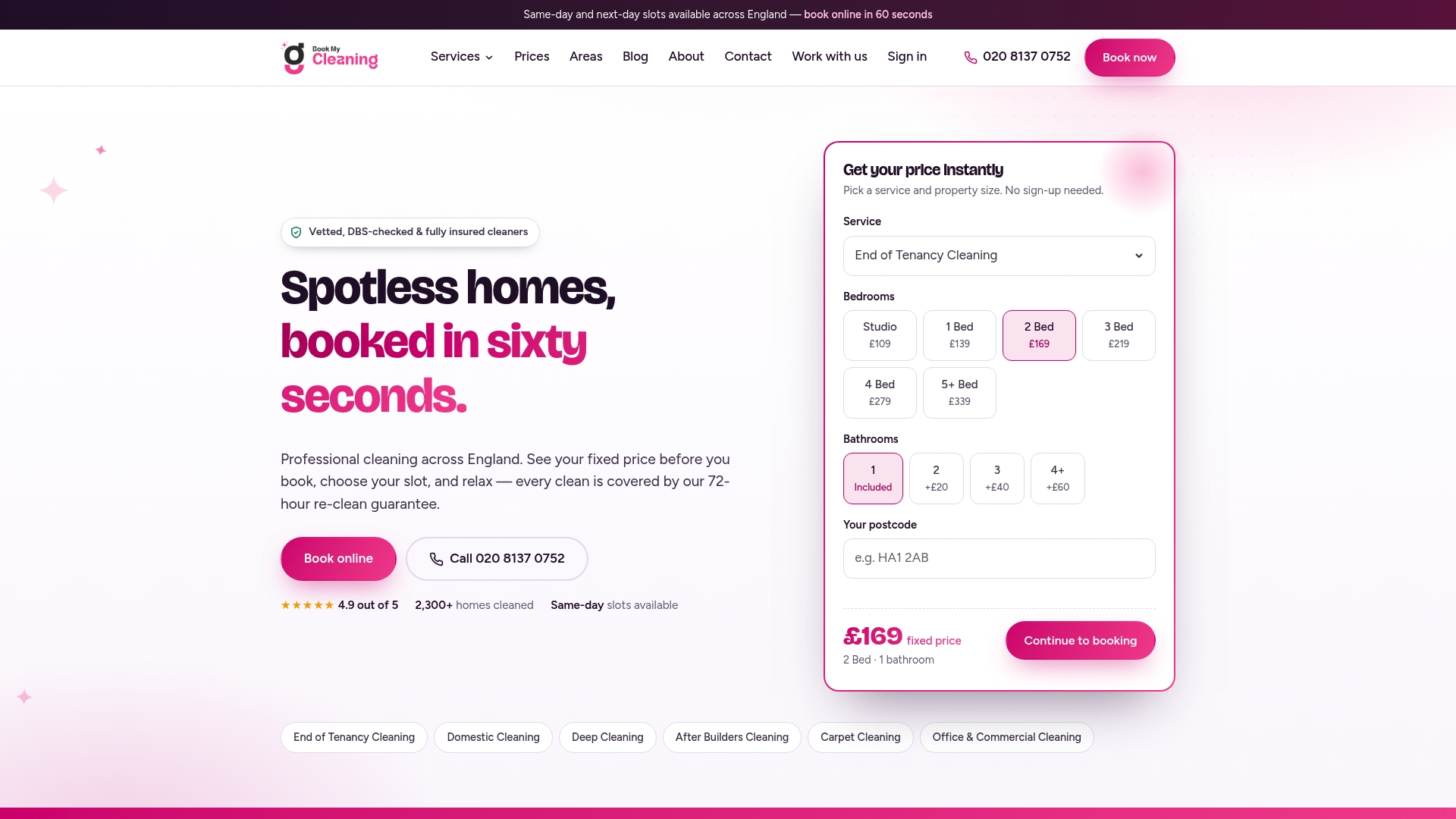
For a standard turnover between guests, domestic cleaning covers the essentials at £17.50 to £20.95 an hour. If a property needs a proper reset after a long booking or before a new season, deep cleaning runs £119 to £329 depending on size, and end of tenancy cleaning from £109 covers the deeper checkout standard some lets require. Booking can be done quickly online, often without the need for a card to secure a slot.
Key official guidance behind this checklist
This playbook draws on Airbnb's own hosting cleanliness standards and the ASSC cleaning protocol for short-term accommodation. For mould, pest, or structural issues, consult a qualified specialist rather than relying on standard turnover steps.
Sources
- Ensuring your place is sparkling clean - Resource Center - Airbnb
- Cleaning Protocols for Self-Catering Properties and Short-Term Lets
FAQ
Should I clean my house before guests arrive?
Yes, always, no matter how tidy it already looks. Airbnb's hosting standards state a space must be free of health hazards and fully cleaned before every check-in, and skipping this step is one of the fastest ways to earn a poor review.
How does a professional guest ready cleaning service work?
You book online, choose the service that matches your need (a standard turnover, a deep clean, or an end-of-tenancy clean), and a vetted cleaner arrives at the agreed slot. With Bookmycleaning, pricing is fixed and shown before you book, and every job carries a 72-hour re-clean guarantee if something isn't right.
Is it worth hiring a cleaning service for short-term rentals rather than doing it myself?
It depends on volume and time pressure. One or two properties with generous gaps between guests are manageable solo with a good checklist; multiple same-day turnovers or unpredictable guest schedules usually justify a professional service with guaranteed availability and consistent standards.
What does Book My Cleaning charge for a turnover-style clean?
Domestic cleaning, the closest match to a standard turnover, is priced at £17.50 to £20.95 per hour, while deep cleaning runs £119 to £329 one off depending on property size. Full details sit on the pricing page.
How often should a rental get a deep clean rather than just a turnover?
Every two to three months is the general benchmark from Airbnb's hosting guidance, or sooner if you notice visible grime, lingering odours, or build-up a standard turnover doesn't reach. A turnover resets presentation and supplies; a deep clean tackles what accumulates underneath.