
There is no single UK law that sets a cleaning standard for holiday lets. The standard is set by three things: the official guidance and grading schemes in each nation, the safety checks you must do at every changeover, and what a guest finds when they open the door. Meet those consistently and you get the reviews. The reliable way to do that is a written checklist, a booked slot and a cleaner who works to it every time, and that is what we provide through fixed-price online booking.
TL;DR
- No one rule covers every holiday let. Tourism NI, VisitScotland and fire services publish the expectations, and guests judge you against all of them.
- Guests should find no sign of the previous stay: no hairs, food, rubbish or smells, inside and outside.
- Changeover is also a safety moment: smoke alarms and firefighting equipment are checked and recorded between guests.
- Deep cleans on a rhythm (monthly, quarterly, yearly) catch what turnovers miss.
- A written checklist, set price and a re-clean guarantee take the guesswork out of hiring cleaners.
Table of Contents
- What "clean" means for a holiday let
- Which rules and guidance apply
- The room-by-room standard
- Laundry and linen
- Changeover is a safety check too
- Deep cleaning: the rhythm that keeps standards up
- What it costs to hit the standard
- Checking the work before guests arrive
- Briefing a cleaner properly
- Book the clean
- FAQ
- Sources
What "clean" means for a holiday let
A holiday let is judged differently from a family home. Guests pay for a break, arrive at a set time and notice everything in the first ten minutes. Tourism NI's self-catering criteria say the property should be thoroughly cleaned throughout for all new arrivals, with no evidence of previous guests: no left-over food, clothes, rubbish, old newspapers or hairs. Porches, patios and parking areas should be litter-free too.
The same document calls housekeeping probably the single most important part of letting a holiday home, because cleanliness draws more complaints than any other area. It also advises owners not to skimp on the hours allocated to cleaning, especially when aiming for four- or five-star grades.
That gives you a workable definition. Clean means three things:
- Visibly clean. Surfaces, floors, glass and sanitaryware have no marks, dust or hairs.
- Hygienically clean. Frequently touched points are disinfected, linen is fresh and the kitchen is ready to cook in.
- Reset. Consumables are topped up, inventory is present and nothing from the last stay remains.
Which rules and guidance apply
The picture differs by nation, so check the body for where your property sits.
- Northern Ireland. Tourism NI states as a legislative minimum that each unit gets a cleaning service at least once a week to keep it clean and orderly (see the criteria linked above).
- Scotland. VisitScotland's self-catering best practice expects well-organised cleaning and restocking between departures and check-ins, and a full deep clean before seasonal bookings recommence.
- Wales and England. Fire and rescue services publish changeover expectations, covered below, and GOV.UK sets rules for any food business.
- Sector guidance. The Association of Scottish Self-Catering Operators' cleaning protocol guidance is guidance rather than law. Its core advice is to risk-assess the business, update that assessment periodically and keep a documented cleaning protocol with assigned responsibilities.
If you provide food to guests as a business, GOV.UK says you need a cleaning schedule and record covering what is cleaned or disinfected, how often and with which products. For a typical self-catering let, a written checklist signed off each changeover serves the same purpose and gives you evidence if a guest complains.
The room-by-room standard
VisitScotland's guidance gives a useful list of the places that get missed. Build your checklist around them.
Kitchen
- Clean inside the oven, microwave, fridge and freezer, with no leftover food anywhere.
- Wipe cupboard fronts, handles and the tops of units.
- Clean extractor fans and filters regularly. The Home Office's fire safety guide for small paying-guest accommodation says extract filters need regular cleaning to avoid grease build-up.
- Inside the dishwasher and washing machine, check the filter, the soap drawer and the drum seal.
- Check every item on the kitchen inventory is present, clean and put away.
Bathrooms
- Descale and disinfect toilet, basin, shower and bath until sanitaryware is spotless.
- Do a final sweep for stray hairs, which VisitScotland singles out for sanitaryware and bed linen.
- Polish mirrors and taps, empty bins, and refill soap and toilet roll.
- Put out fresh towels and mats.
Bedrooms
- Clean under beds and furniture, and vacuum behind and under cushions.
- Fresh, stain-free linen on every bed, with mattress protectors and pillows in good condition.
- Dust light fittings, skirting boards, ornaments and the insides of drawers and cupboards.
Living areas and whole house
- Vacuum and mop all floors, including edges and under furniture.
- Disinfect door handles, light switches and remote controls. These are the frequently touched points that sector guidance singles out for regular cleaning.
- Check lights and bulbs work, and that nothing is left behind from the last stay.
- Clear the outdoor space: sweep the patio, empty outdoor bins, and tidy the porch and parking area.
If you want a fuller operating routine, our Airbnb cleaning checklist sets out the room-by-room sequence in more detail.
Laundry and linen
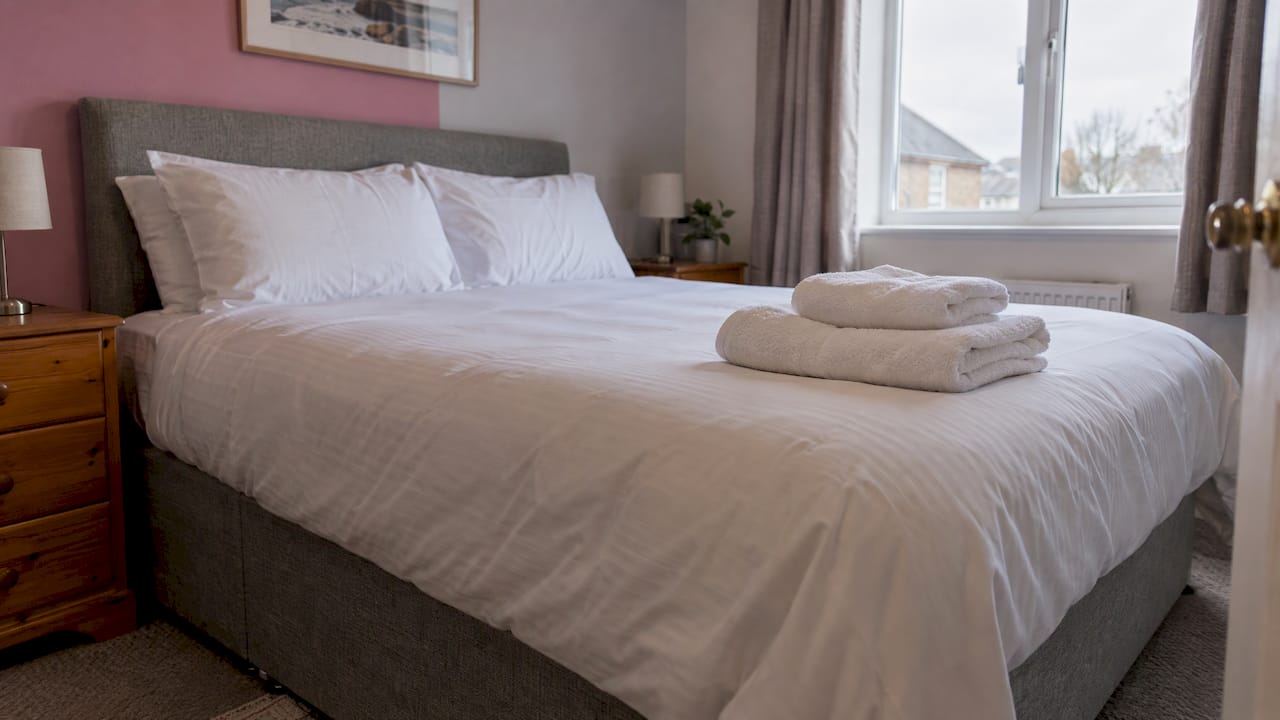
Linen is where guests notice first. Hosting guidance recommends that bed linen and towels be washed at a minimum of 60 degrees or with a detergent designed for lower temperatures. Check the care labels first, and keep a spare set per bed so a late checkout never delays a changeover.
Our price list includes wash and fold laundry at £12 and ironing at £17.50 per hour, so linen can sit inside the same booking as the clean.
Changeover is a safety check too
A good changeover is more than cleaning. Fire services expect checks at every change of occupancy, because no one is on site to do them in between.
- The Home Office guide says that in self-catering premises where staff or owners are not present, the weekly and monthly fire tests are carried out at each change of occupancy and the results recorded. That includes smoke and heat alarms, exit doors and emergency lighting.
- South Wales Fire and Rescue's self-catering booklet says smoke alarms should be tested at each changeover for damage, tampering and audibility in all areas. Firefighting equipment should be inspected for location, tampering and expiry, with any defect fixed before the next guests arrive.
- Gas appliances must be serviced annually by a Gas Safe registered engineer, and smoke alarms are typically replaced after around 10 years. Review your fire risk assessment annually and after any significant change.
A cleaner can note that an alarm is chirping or an extinguisher is missing, but the testing and servicing duties stay with you as the owner or manager, and gas work must go to a Gas Safe registered engineer. Put these checks on the same sheet as the cleaning so one visit covers both.
Deep cleaning: the rhythm that keeps standards up
Turnover cleaning keeps the surface right. Over a season, grease, limescale, dust behind appliances and tired carpets build up in places a two-to-three-hour changeover never reaches. A sensible pattern for a busy let:
| Frequency | What to cover |
|---|---|
| Every changeover | Full room-by-room clean, linen change, restock, safety checks recorded |
| Monthly | Areas missed in standard turnovers: behind and under furniture, extractor, light fittings, skirting boards |
| Quarterly | Carpets, upholstery and windows |
| Annually, or before a seasonal reopening | Complete deep clean including behind the cooker, freezer and wardrobes, walls and paintwork, mattresses and soft furnishings |
This rhythm follows the annual spring-clean approach in Sykes' property standards and VisitScotland's call for a full deep clean before seasonal bookings restart. Treat the monthly and quarterly layers as a practical schedule, not a legal requirement.
If your let closes over winter, our winter deep cleaning plan gives a room-by-room order of work.
What it costs to hit the standard
Our published prices (read from our site in September 2026) let you budget a year of cleaning before you commit:
| Service | Price |
|---|---|
| Domestic cleaning | £17.50 to £20.95 per hour |
| Deep cleaning | £119 to £329, one-off |
| Carpet cleaning | £32 per room |
| Upholstery / sofa cleaning | £25 per item |
| Mattress deep clean | £30 per mattress |
| Inside oven | £25 |
| Inside fridge / freezer | £15 |
| Inside windows | £15 |
| External window cleaning | £25 |
| Balcony / patio cleaning | £15 |
| Heavy limescale treatment | £20 |
The deep clean range depends on property size. The add-ons map straight onto the places guests inspect: oven, fridge, windows, mattress, limescale in the bathroom. Full details are on our prices page.
Checking the work before guests arrive
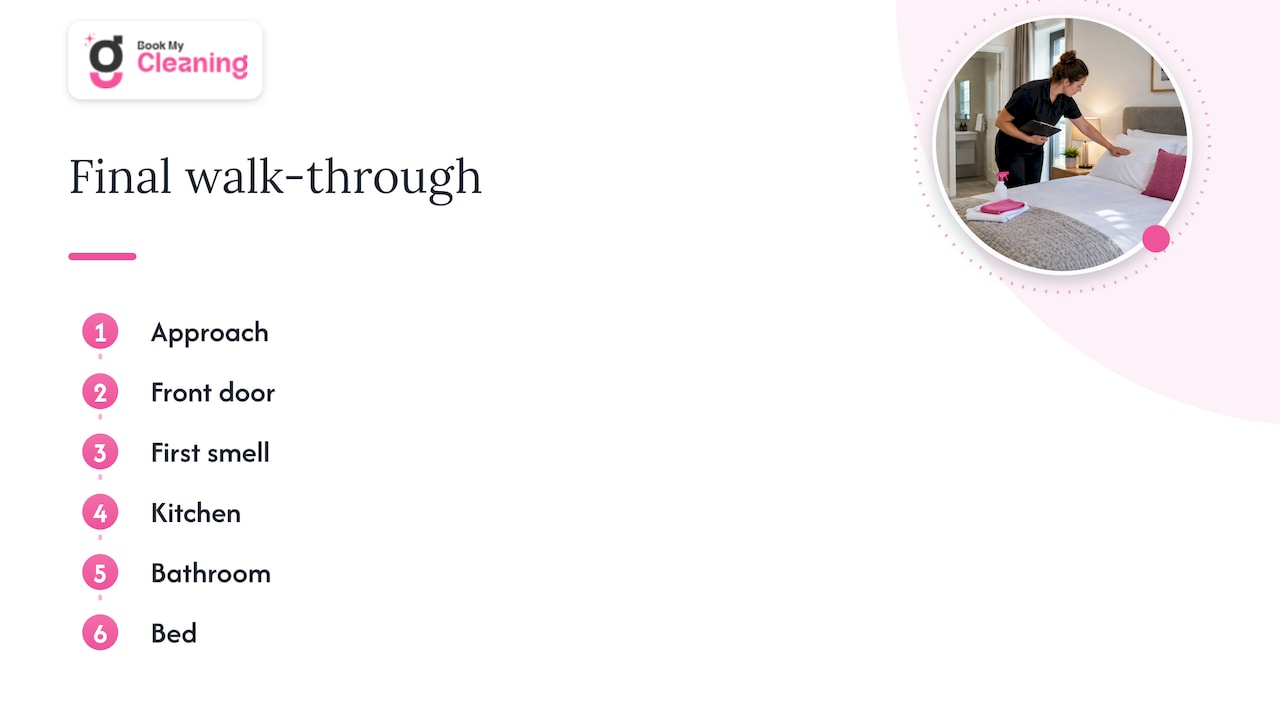
Whoever cleans, someone should do a final walk-through against a written list, ideally in the order a guest experiences it: the approach, the front door, the first smell, then kitchen, bathroom and bed. A structured property inspection checklist shows how a final inspection can be laid out item by item. Take photos of each room at completion. If a guest complains, you can see what was true at handover.
Hosting guidance also advises running through the whole cleaning process yourself once even if you hire someone, leaving enough time between bookings for a thorough job and having a backup plan if your cleaner is unavailable. Same-day slots help with the last of those.
Briefing a cleaner properly
VisitScotland advises that if you use an external cleaning company you provide detailed expectations so housekeepers work to the same standards, and that you monitor guest feedback for comments on cleanliness. In practice that means:
- Hand over a written checklist for each room, with the safety checks marked as yours.
- Say what is included and what is extra (oven, fridge, mattress, limescale).
- Agree the window between checkout and check-in.
- Read every review for words like dusty, hairs, smell or sticky, and feed it back.
Our hire a cleaner checklist lists eleven questions worth settling before the first visit, and the professional cleaning checklist shows what counts as standard and what as an extra.
Our view: standards live in the routine
We clean homes across England, and the pattern is the same in every property: a standard is only as good as the list behind it and the person who works to it. A guest does not judge your intentions. They judge the oven door, the shower tray and the skirting board.
That is why we publish fixed prices before you book, send cleaners who are vetted, DBS-checked and in uniform, bring all products and equipment, and work to written checklists. If the standard is not met, our 72-hour re-clean guarantee means we come back. We have cleaned over 2,300 homes and hold a 4.9-star rating.
For an owner, the practical gain is predictability. You know the price, you know the list, and you can add an oven, a mattress or a limescale treatment in one booking rather than chasing three people.
Book
Book the clean
If you want a holiday property or a home brought to a guest-ready standard, you can see our fixed prices and book online in under a minute, with no card or deposit needed to reserve. Domestic cleaning starts at £17.50 per hour, deep cleaning from £119, and same-day slots are available. All our cleaners are DBS-checked and uniformed, and our 72-hour re-clean guarantee backs every job.
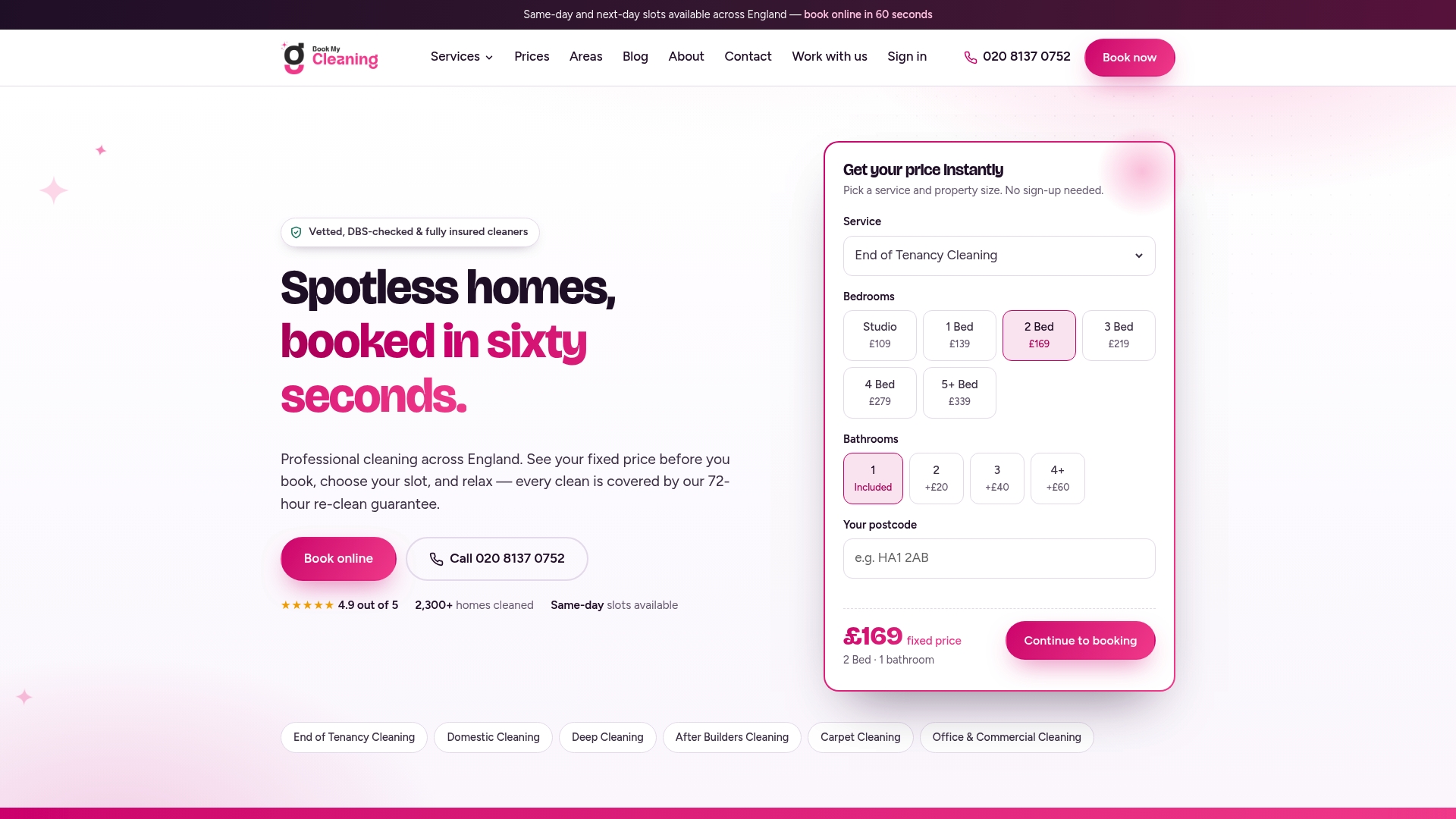
Book your clean at Book My Cleaning and add the oven, fridge, mattress or limescale extras that matter for your guests.
FAQ
How clean should you leave a holiday cottage?
Leave it as if no one had stayed before. Tourism NI's criteria ask for a thorough clean throughout, with no leftover food, clothes, rubbish, newspapers or hairs, and litter-free porches, patios and parking areas. Check inside the fridge, oven and bathroom first, because that is where guests look.
Is there a legal cleaning standard for UK holiday lets?
Not one national standard. Northern Ireland states a weekly cleaning service as a legislative minimum, and Scotland, Wales and England rely on guidance, fire safety expectations and, for food businesses, GOV.UK cleaning schedule rules. Sector protocols are guidance, so a documented routine and a risk assessment are your best protection.
How often does a holiday let need a deep clean?
A sensible pattern is a monthly clean of the areas turnovers miss, a quarterly clean of carpets, upholstery and windows, and a full deep clean each year or before seasonal bookings begin. Busy lets may need it more often.
What should be checked between guests besides cleaning?
Smoke alarms, exit doors, emergency lighting and firefighting equipment should be checked at each changeover with the results recorded. Gas appliances need an annual service by a Gas Safe registered engineer.
Sources
- Tourism NI self-catering quality assurance criteria
- VisitScotland self-catering best practice
- ASSC cleaning protocols for self-catering
- GOV.UK food hygiene: cleaning
- South Wales Fire and Rescue self-catering booklet
- Holiday home linen and cleaning guidance
- Holiday cottage property standards
- Property inspection checklist