
Do a full room-by-room deep clean before you move anything in, starting top to bottom with the kitchen and bathroom. Clear the space, gather your supplies, and work through a printable checklist rather than cleaning as you unpack. Follow ventilation guidance from the HSE and warnings from London Fire Brigade on mixing products, or book a professional clean if time is tight.
TL;DR:
- Deep cleaning the entire property before move-in typically takes three to six hours depending on the size and level of dirt.
- Use separate containers for bleach and acids such as vinegar, as mixing them can release toxic gases like chlorine or chloramine.
- Prioritize cleaning from top to bottom, back to front, and dry to wet to ensure dust and debris do not recontaminate cleaned surfaces.
- Small mould patches can usually be treated DIY, but larger or persistent cases should be handled by a professional to avoid health risks.
- Hiring a professional cleaning service generally costs between £119 and £329 for deep cleaning, with specific tasks like oven and carpet cleaning available as extras.
Table of Contents
- What to gather before you start cleaning
- Room-by-room move-in cleaning checklist
- Working in the right order saves hours
- Staying safe with cleaning chemicals
- Getting rid of cleaning waste properly
- Dealing with pests before you settle in
- When DIY makes sense and when it does not
- Booking a move-in clean through Book My Cleaning
- FAQ
- Sources
What to gather before you start cleaning
Working from a half-stocked caddy wastes time and forces trips to the shop mid-job. Before you touch a single surface, lay out everything you need in one place.
- An all-purpose cleaner, a disinfectant, microfibre cloths, a mop and bucket, a vacuum cleaner and a set of scrubbing brushes.
- Baking soda and white vinegar as milder alternatives for grease and limescale.
- Rubber gloves and a basic mask for dusty jobs, plus open windows for airflow throughout.
- A printed or downloaded room-by-room checklist, ticked off as you go rather than relied on from memory.
Never mix cleaning products, even ones that seem similar; keep each in its original container. A one-bedroom flat typically takes several hours to clean properly before moving day, and a two-bedroom house requires more time. Do this before furniture arrives, not around it.
Room-by-room move-in cleaning checklist
Work through each room in full before moving to the next. Skipping between rooms to "finish later" is how tasks get missed.
- Empty and wipe every kitchen cupboard. Previous occupants leave crumbs, spills and the odd sticky shelf liner behind, so clear cupboards fully before anything goes in them.
- Clean worktops and the splashback. A degreaser lifts cooking residue that a damp cloth alone will not shift.
- Scrub the hob and clean inside the oven. For stubborn oven grime, a baking-soda paste left for 12 to 24 hours, then scraped and wiped, works well and avoids stressing an unfamiliar appliance's self-clean cycle.
- Wipe the extractor fan and filter. Grease builds up here invisibly and affects how well it draws smoke and steam.
- Clean inside the fridge and freezer. Use a mild solution, not harsh chemicals, since food will sit against these surfaces.
- Descale the sink and taps, then clean the kitchen floor. Finish the kitchen with flooring last, once every surface above it is done.
- Descale the shower, taps and showerhead in the bathroom. Limescale here is often the heaviest in the property.
- Clean grout, the toilet inside and out, and the extractor fan. Grout brushes and a baking-soda paste handle most discolouration without harsh bleach.
- Wipe mirrors and tiles, then mop the bathroom floor last.
- Dust ceiling corners and light fittings in every living area and bedroom. Cobwebs and dust collect highest in the room, so this comes before anything lower down gets touched.
- Wipe skirting boards, then vacuum and mop floors. Dust falls from skirting boards onto carpets and hard flooring, so boards come first.
- Check curtains, blinds and sockets. Give curtains a shake or a vacuum pass, wipe blinds slat by slat, and wipe down switches and socket covers with a dry or barely damp cloth.
- Clean hallway doors, thresholds and the letterbox. These collect dirt and post residue that is easy to overlook.
- Remove scuff and shoe marks from walls near entry points, then clean hallway flooring last.
- Clean interior windows, frames and sills throughout the property. Check blinds and curtain fittings for damage while you are there.
- **Finish with small tasks: ** replace any missing bulbs, test smoke alarms, and remove sticker residue from windows, cupboards or appliances with a little white vinegar.
Working in the right order saves hours
The sequence matters as much as the tasks themselves. Clean top to bottom so dust and debris fall onto surfaces not yet done, back to front so you are not walking back across clean floors, and dry to wet, dusting and vacuuming before mopping or wiping down wet surfaces.
- Batch similar tasks across rooms: wipe every cupboard in the property before vacuuming every floor, rather than finishing one room completely before starting the next.
- Use steam cleaners on tiles and grout where available; reach for manual scrubbing on delicate or painted surfaces instead.
- Treat stains the moment you spot them with a vinegar or baking-soda paste rather than leaving them for a second pass.
A practical home cleaning routine built around batching tasks rather than room-hopping cuts the total time noticeably on larger properties.
Pro Tip: Do all the "high and dusty" jobs across the whole property first (light fittings, tops of cupboards, skirting boards), then do all the floors last, in one pass.
Staying safe with cleaning chemicals
Never mix bleach with acidic cleaners or ammonia. The reaction releases chlorine or chloramine gas, and London Fire Brigade has specifically warned against combining household products in a different container than the one they came in.
Household bleach can liberate chlorine gas when mixed with an acid, and Gov notes that while bleach is a moderate irritant at household strength, mixing or misuse can cause real harm. If you smell a strong chemical reaction, leave the room immediately, open windows and doors, and do not go back in until the air has cleared.
- Keep windows open throughout cleaning; the HSE suggests around 5 to 10 air changes per hour where practical to reduce exposure to fumes and dust.
- Wear gloves for all chemical use and a mask for dusty jobs such as sweeping or vacuuming untouched rooms.
- Treat small mould patches with an appropriate mould spray and PPE; anything over roughly a square metre, or mould linked to a building defect, needs a specialist, according to Oxford City Council's guidance.
If anyone in the household has asthma or another respiratory condition, it is worth being cautious with harsh chemicals and considering a professional for the dustiest or heaviest jobs.
Getting rid of cleaning waste properly
A move-in clean generates more rubbish than people expect: empty bottles, used cloths, old sponges, packaging from new supplies and whatever grime you have physically removed from the property. Sort it before bin day rather than bagging everything together.
Rinse empty plastic cleaning bottles and recycle them with household plastics where your local council accepts them. Disposable cloths and heavily soiled items generally go in general waste, not recycling, since residue contaminates the recycling stream. Keep any leftover chemical products in their original containers with labels intact rather than decanting them, both for safety and so they can be disposed of correctly later if unused.
Never pour chemical cleaners down the drain in concentrated form, and never combine leftover products into one container to save space, since this is exactly the kind of mixing that causes dangerous reactions. If you have larger waste, such as old carpet offcuts or broken fittings removed during the clean, check whether your local council collects bulky waste or whether a tip run is needed before moving day.
Keep a bin bag specifically for cleaning waste separate from general unpacking rubbish. It is easier to deal with one bag of dirty cloths and empty bottles than to dig through mixed rubbish later looking for a specific item.

Dealing with pests before you settle in
An empty property is the ideal time to check for pests, before furniture and belongings make inspection harder. Look in cupboards, behind appliances, under sinks and along skirting boards for droppings, nesting material or damage to wiring and woodwork.

Common signs include small black droppings (mice or rats), discarded insect casings, or a musty smell in cupboards that were sealed shut for a while. If you spot evidence of an infestation rather than a single stray insect, treat it as a priority over cosmetic cleaning, since pests can spread into stored food and fabrics once you move in.
Minor issues, such as the odd ant trail or a single cobweb-heavy corner, are usually solvable with standard cleaning and a shop-bought deterrent. Anything suggesting rodents, a larger insect colony, or damage to the structure is worth a professional pest inspection before you unpack, since treating the surface without addressing the source only delays the problem. Landlords are often responsible for pest issues present before a tenancy starts, so check your agreement if you are renting.
When DIY makes sense and when it does not
A small flat with a free weekend is a reasonable DIY job. A larger property, a tight moving schedule, or mould and heavy grime that need specialist handling are good reasons to book a professional instead. Vetted cleaners, fixed pricing and a re-clean guarantee remove the guesswork from that decision, but booking one is always an option, never a requirement.
— Book
Booking a move-in clean through Book My Cleaning
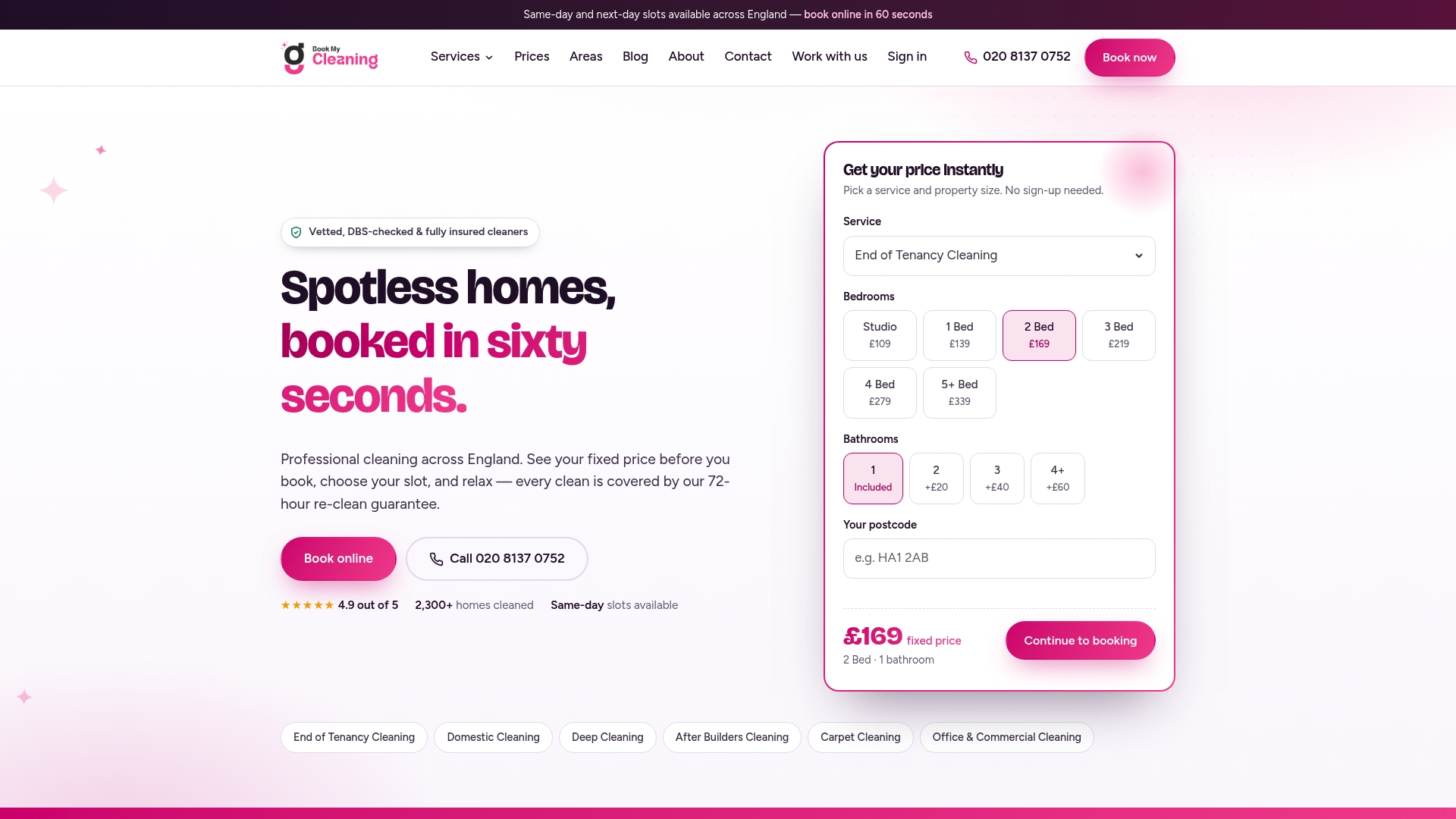
When time is short or the property needs more than a weekend of elbow grease, we offer fixed-price deep cleaning and end of tenancy cleaning across England, with the common add-ons movers actually need.
- Inside oven, inside fridge and freezer, and inside windows as optional extras on top of the main clean.
- Carpet and upholstery cleaning for rooms that need more than vacuuming.
- Cleaners who arrive in uniform, with no hidden fees and a 72-hour re-clean guarantee if anything falls short.
| Service | Price |
|---|---|
| Deep Cleaning | £119 to £329 one-off |
| End of Tenancy Cleaning | £109 to £339 one-off |
| Carpet Cleaning | from £32 per room |
FAQ
How long does a move-in deep clean take?
A one-bedroom flat typically takes three to four hours to clean thoroughly, while a two-bedroom property usually takes five to six hours. Larger or heavily soiled properties take longer, particularly where an oven or grout needs intensive treatment.
Can I mix bleach and vinegar to clean more effectively?
No, mixing bleach with vinegar or any other acid releases chlorine gas, which London Fire Brigade has specifically warned against. Keep each product in its own original container and never combine them.
What is the correct order to clean a new home?
Work top to bottom, back to front and dry to wet: dust and debris fall as you clean upper surfaces first, and vacuuming before mopping avoids turning dust into mud. This order also means you never walk back across a floor you have already finished.
Do I need a professional for mould in a new property?
Small mould patches can usually be treated yourself with an appropriate mould spray and gloves, but Oxford City Council's guidance recommends a specialist for patches over roughly a square metre or mould linked to a building defect. If in doubt, treat a small test area first and call in help if it keeps returning.
How much does a professional move-in clean cost?
A deep clean through Book My Cleaning runs from £119 to £329 depending on property size, listed on our prices page. End of tenancy cleaning, often used for move-outs rather than move-ins, runs from £109 to £339.
Sources
- DIY cleaning cocktails putting Londoners at risk | London Fire Brigade
- Gov
- Cleaning accommodation and facilities - HSE guidance
- Get rid of mould | Oxford City Council