
To maximise the chance of getting your deposit back, clean to the same standard recorded in your check-in report and gather date-stamped photos and receipts as you go. These two things, matching the original inventory and holding proof, decide most disputes long before an adjudicator gets involved. The room-by-room checklist below turns that principle into a plan you can follow on moving day.
TL;DR:
- Thorough cleaning of high-risk areas like ovens, carpets, and bathroom surfaces before move-out reduces the likelihood of deposit deductions.
- Keeping detailed, date-stamped photos and receipts of cleaning efforts provides strong evidence if a dispute arises over property condition.
- Focus on cleaning hidden spots such as behind appliances, door frames, and light fittings, which landlords often inspect and where dust accumulates over time.
- Professional cleaning services often include comprehensive cleaning of all key areas, are backed by itemized invoices, and may offer re-clean guarantees.
- Completing deep-clean tasks three to four days before handover and following a time-efficient routine helps ensure the property meets check-in standards without last-minute stress.
Table of Contents
- Quick printable checklist for move-out day
- Room-by-room detailed move-out checklist
- Areas people often forget that cost deposit money
- Supplies, stain treatments and a simple timing plan
- Evidence, inventories and how adjudicators treat cleaning claims
- Cleaner perspective: what inventory clerks check first
- When a professional end of tenancy clean makes sense
- Primary sources and further reading
- Sources
- FAQ
Quick printable checklist for move-out day
Keep this list on your phone or print it and tick items off as you finish each room. It covers the tasks that matter most and gives a rough idea of how long each one takes.
- Strip beds, clear cupboards and remove all belongings first, so every surface is accessible.
- Kitchen: clean inside the oven, hob, extractor and fridge, then worktops and cupboards (60 to 90 minutes).
- Bathroom: descale the shower, bath and taps, and clean the toilet base and tiles (30 to 45 minutes).
- Bedrooms and living areas: dust skirting boards, wipe windowsills and vacuum thoroughly (20 to 30 minutes per room).
- Floors: vacuum carpets, treat any stains and mop hard flooring last.
- Photograph every room from at least two angles once cleaned, and keep any cleaning product receipts.
A one-bedroom flat usually takes several hours to clean properly; a three-bedroom house requires more time, often a full day. Build in extra time for the oven and bathroom, since these two areas cause the most disagreement with landlords.
Room-by-room detailed move-out checklist
Inventory clerks work through a property methodically, checking specific spots against the check-in report. Matching their attention to detail room by room is the most reliable way to avoid deductions.
Kitchen, the room that draws the closest scrutiny:
- Clean inside the oven, including racks, trays and the glass door.
- Degrease the hob, splashback and extractor fan and filter.
- Empty and wipe out cupboards, the fridge and the freezer.
- Clean worktops, the sink, taps and the bin area, including underneath.
Bathroom, where limescale and mould get noticed fastest:
- Descale the shower screen, showerhead, bath and taps.
- Clean the toilet base, seat hinges and behind the cistern.
- Scrub tiles and grout, and check silicone seals for mould.
- Wipe the extractor fan cover and mirrors until streak-free.
Bedrooms and living areas, often assumed clean but rarely inspected properly:
- Clear and wipe inside wardrobes and drawers.
- Dust skirting boards, picture rails and window ledges.
- Vacuum under beds and furniture, not just the visible floor.
- Wipe down blinds or clean curtains if the tenancy requires it.
Floors and carpets, the last thing to touch before you leave:
- Vacuum every carpeted room, treating stains before they set further.
- Mop hard floors last, once dust from other tasks has settled.
Windows and sills, easy to overlook from the inside:
- Clean internal glass and wipe down frames and sills.
- Check for cobwebs or grime in corners, especially in rooms rarely used.
A detailed room-by-room checklist can help if you want a version to work through task by task rather than room by room.
Areas people often forget that cost deposit money
Small oversights account for a disproportionate share of deposit deductions, mainly because they sit outside the obvious cleaning zones.
- Skirting boards, door frames and the tops of doors collect dust that is invisible until an inspector runs a finger along them.
- Light fittings, bulbs and extractor fan filters are rarely touched during a normal weekly clean.
- The space behind appliances, cupboard interiors, bin areas, radiator backs and curtain rails all trap grease and dust over months.
Pro Tip: Run a cloth along every skirting board and door frame last, once the rest of the room is done. It takes minutes and removes one of the most common causes of a partial deduction.
Supplies, stain treatments and a simple timing plan
Buy a multi-surface cleaner, a limescale remover, an oven degreaser, glass cleaner, microfibre cloths and a stiff-bristled brush before you start. These cover most of the tasks above without needing separate specialist products.
- Carpet stains: blot rather than rub, then treat with a carpet-specific cleaner and blot again.
- Oven grease: apply a degreaser, leave it to work for the time stated on the bottle, then scrub with a non-scratch pad.
- Limescale: white vinegar or a dedicated remover left on for 15 to 20 minutes usually lifts it.
- Mould in grout or seals: a mould-specific spray, left on and rinsed, works better than general bleach on old growth.
Start deep-cleaning tasks such as the oven and carpets three to four days before handover, and leave floors and a final wipe down for the last day. The 5-5-5 rule suggests spending five minutes tidying, five minutes wiping surfaces and five minutes resetting each room, useful for keeping a property presentable while you pack. The 6/10 rule flags ten specific high-traffic spots, door handles, taps, remote controls among them, that need cleaning roughly every six hours in a lived-in home; for a move-out clean, it is a useful reminder to hit those same touchpoints rather than only the visible surfaces.
Evidence, inventories and how adjudicators treat cleaning claims
A signed check-in report paired with date-stamped photos is the strongest defence against an unfair cleaning deduction, since adjudicators favour objective, dated records over verbal claims from either side.
- Request a signed check-out inventory from the letting agent at handover and compare it directly against the check-in version.
- Photograph every room corner to corner once cleaned, and keep the files date-stamped rather than editing or cropping them later.
- Keep itemised invoices if you paid for professional cleaning, since invoices and clear evidence materially strengthen a dispute case.
- Adjudicators assess claims against betterment: landlords cannot charge for improving a property beyond its condition at check-in.
If a dispute arises, Citizens Advice recommends taking photos and requesting a check-out inventory before you leave, and the dispute resolution process sets a deadline for uploading evidence, so gather it before you hand back the keys rather than after.
Cleaner perspective: what inventory clerks check first
Ovens, stained carpets and visible grime on kitchen and bathroom surfaces trigger more deductions than any other issue. Clear, date-stamped evidence often carries more weight with an adjudicator than a minor cosmetic flaw the landlord flags after the fact. If time is short, prioritise the oven, a full carpet vacuum and treatment, and the kitchen and bathroom surfaces before anything else.
— Book
When a professional end of tenancy clean makes sense
A tight moving schedule, a long-distance relocation or simply not owning the right equipment for an oven or carpet are the usual reasons tenants book a professional clean rather than doing it themselves.
- A professional service typically covers the oven, extractor, bathroom, kitchen, floors and windows to the standard a check-out inventory expects.
- An itemised invoice from a professional clean becomes useful evidence if a landlord later disputes the property's condition.
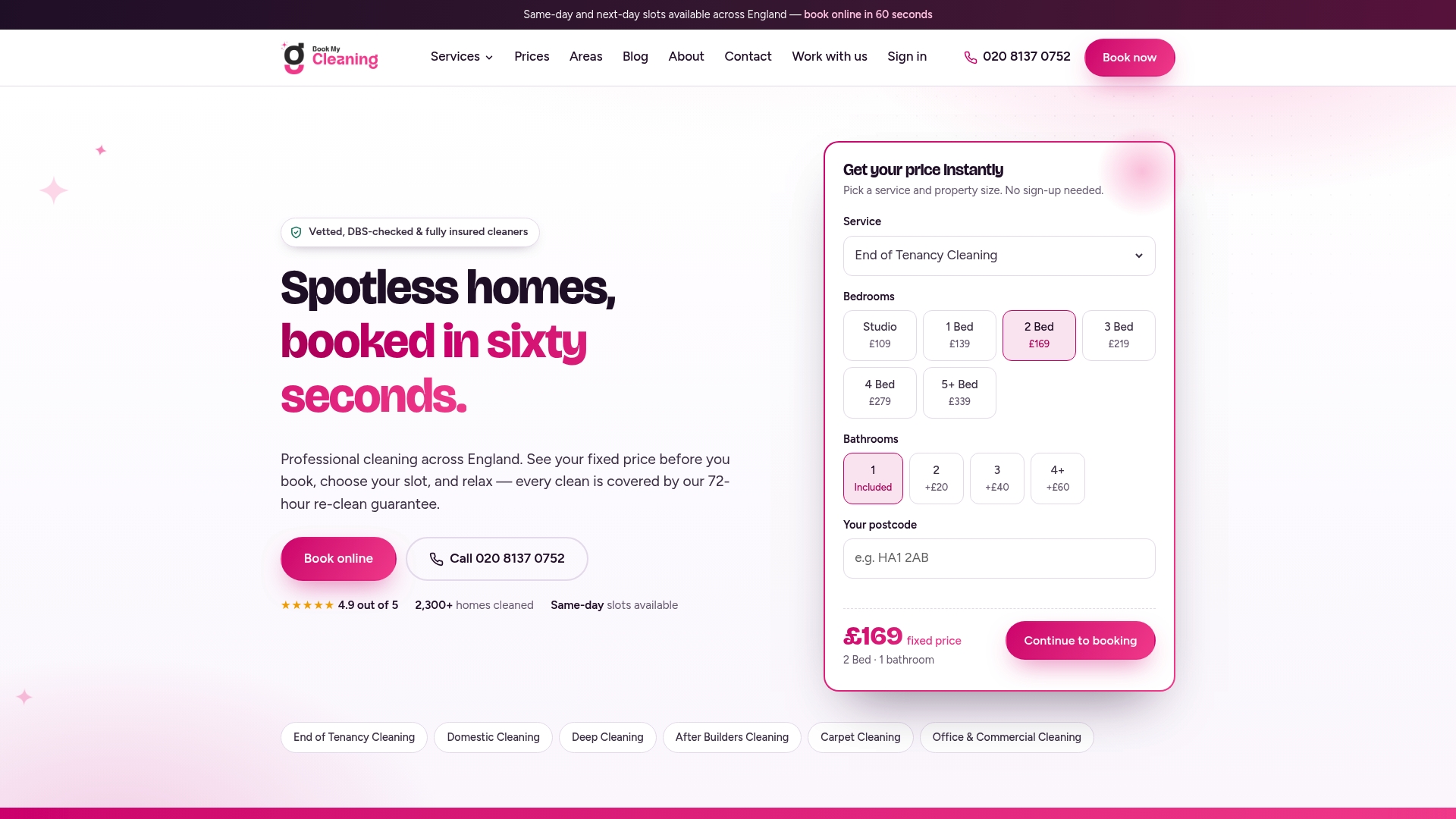
- Book My Cleaning's End of Tenancy Cleaning runs from £109 to £339 depending on property size, with fixed pricing shown before you book and no hidden fees.
- Professional cleaning services often provide vetted, DBS-checked cleaners and may include a re-clean guarantee if the standard isn't met.
Check pricing and book your end of tenancy clean online in under a minute, no card or deposit required to reserve a slot.
Primary sources and further reading

For the rules behind deposit disputes, the Deposit Protection Service's check-in guidance and its fairness principles explain how evidence is weighed. Citizens Advice covers the practical steps for getting your deposit back, and a partner guide on recovering a deposit through cleaning offers a useful checklist comparison.
Sources
- Preparing for disputes – the check in
- In disputes – be fair
- Getting your tenancy deposit back if you rent privately - Citizens Advice
- The dispute resolution process
FAQ
What should a move-out clean consist of?
A move-out clean covers every room to the standard set at check-in: kitchen appliances inside and out, bathroom descaling, carpets and floors, skirting boards, and windowsills. It should match or exceed the condition recorded in the check-in report, since that document is what any dispute gets measured against.
What is the 5-5-5 rule for cleaning?
The 5-5-5 rule breaks a quick clean into five minutes of tidying, five minutes wiping surfaces and five minutes resetting a room. It works well as a maintenance habit while you're packing, though a full move-out clean needs far longer than fifteen minutes per room.
What is the 6/10 rule for cleaning houses?
The 6/10 rule points to ten high-touch spots, such as door handles, taps and remote controls, that benefit from cleaning roughly every six hours in an occupied home. For a move-out clean, it's a reminder to check those touchpoints rather than only the obviously dirty surfaces.
How clean does a house have to be when you move out?
The property should be returned to the same standard of cleanliness recorded in the check-in inventory, not spotless beyond that. Adjudicators will not award costs for improving a property beyond its original condition, so matching the check-in report is what actually matters.
Is it worth paying for a professional end of tenancy clean?
It depends on your schedule and the property's condition, though a professional clean gives you an itemised invoice that can support your case if a landlord disputes the cleanliness later. Book My Cleaning's End of Tenancy Cleaning runs from £109 to £339 depending on property size.