
Professional domestic cleaners typically dust and wipe accessible surfaces, vacuum carpets and upholstery, sweep and mop hard floors, clean kitchen surfaces and sanitise bathrooms, empty bins and tidy general living space. Exact scope depends on the written checklist agreed beforehand, the length of the booking and whether you have chosen a regular clean, a deep clean or an end-of-tenancy service.
TL;DR:
- A standard cleaning typically takes one to three hours, with the scope covering dusting, vacuuming, mopping, kitchen and bathroom sanitizing, and bin emptying.
- Longer bookings enable more thorough work across the entire property, but the actual tasks depend on the agreed checklist and property size.
- Extras like deep oven cleaning, interior window washing, and heavy limescale removal require separate arrangements and are usually not included in standard services.
- Cleaners do not handle repairs, large decluttering, pest treatments, or tasks at heights without proper equipment; these require specialists.
- Clear, written instructions before the booking, covering scope and special considerations, prevent misunderstandings and ensure the desired outcome.
Table of Contents
- Overview: core tasks included in a standard domestic clean
- Room-by-room checklist you can use when booking
- What cleaners usually don't do (and when to call a specialist)
- How long common bookings take and what to expect in 1 to 3 hours
- How to prepare and get the most from a booked cleaner
- Hiring and briefing: questions to ask and a short checklist
- Why training and checklists matter more than you'd think
- A buyer's honest takeaway on booking a cleaner
- How we make booking a cleaner straightforward
- FAQ
- Sources
Overview: core tasks included in a standard domestic clean
A standard domestic clean covers the tasks that keep a home hygienic and presentable between deeper sessions. Dusting shelves, skirting boards and furniture removes the grime that settles daily, while vacuuming carpets and upholstery lifts dust mites and debris that a quick sweep misses. Mopping hard floors clears bacteria that vacuuming alone leaves behind, and wiping kitchen surfaces reduces the bacterial build-up that happens around food preparation areas. Bathroom sanitation targets the toilet, sink and shower, areas where limescale and bacteria accumulate fastest. Emptying bins and general tidying round off the visit, giving the home a lived-in but cared-for feel rather than a chaotic one.

According to the National Careers Service, a cleaner's core responsibilities include cleaning accessible surfaces, using chemicals safely, cleaning windows and glass where agreed, managing stock of cleaning products, and following health and safety rules. This framing matters because it shows cleaning is treated as a skilled occupation, not a casual task: the thoroughness and safety behind the work are part of the job description, not an extra.
A written specification is what turns these general duties into a predictable visit. Without one, two people can book "a clean" and expect entirely different outcomes, one assuming the oven is included, the other assuming it is not. A clear checklist, agreed before the cleaner arrives, removes that guesswork and gives both sides a reference point if anything is missed.
The core tasks you should expect in a standard domestic clean are:
- Dusting and wiping reachable surfaces, including shelves, furniture and skirting boards.
- Vacuuming carpets, rugs and upholstered furniture.
- Sweeping and mopping hard floors throughout accessible rooms.
- Wiping down kitchen worktops, the sink and the outside of appliances.
- Cleaning and sanitising the toilet, shower or bath, and bathroom sink.
- Emptying bins and tidying visible clutter in living areas.
Time allocation changes how deeply each task is done. A one-hour visit might cover a light pass over these tasks in one or two rooms, while a longer booking allows the cleaner to work through a full property with more attention to detail in each area. That relationship between time and thoroughness is the single biggest factor in what a booking actually delivers, more so than the specific product used or the brand of cleaner you choose.
Room-by-room checklist you can use when booking
Knowing what to expect room by room makes it far easier to brief a cleaner accurately or compare quotes between services. Use this as a starting checklist and adjust it to your property.
- Kitchen: worktops, sink, hob exterior and outside of appliances such as the fridge and oven are typically included; cleaning inside the oven or fridge is usually a separate add-on.
- Bathroom: toilet, shower or bath, sink, tiles and mirrors are standard; heavy limescale treatment is usually booked as an extra rather than included by default.
- Living areas: dusting surfaces, vacuuming carpets and upholstery, and general tidying of cushions and throws.
- Bedrooms: dusting, vacuuming, and making beds if linen is already in place; changing bedding is sometimes a separate task depending on the booking.
- Hallways and stairs: vacuuming stair carpet, wiping skirting boards and giving light switches and door handles a quick wipe.
A few extras come up often enough that it is worth asking about them upfront rather than assuming they are included, as advised in Low-cost home improvements before selling in Austin. Carpet shampooing, interior window cleaning and heavy limescale removal are common requests that typically sit outside a standard visit. If you know in advance that your bathroom has stubborn limescale or that your carpets need more than a vacuum, flagging it when you book saves a conversation on the doorstep. Checking a domestic cleaning service's own list of inclusions before booking is the simplest way to avoid a mismatch between what you pictured and what gets done.
What cleaners usually don't do (and when to call a specialist)
Cleaners are not maintenance workers, and a professional visit will not fix a leaking tap or patch a damaged wall. Understanding this boundary avoids disappointment, particularly around move-out time.
Common exclusions include:
- Repairs and general property maintenance, such as fixing fixtures or appliances.
- Large-scale decluttering or removal of furniture and rubbish beyond what fits in household bins.
- Specialist restoration work, including mould remediation or fire or flood damage.
- Pest treatments of any kind.
- Tasks requiring working at height without the right equipment, such as cleaning high external windows.
Gov draws a clear line between cleaning and repairs: ordinary wear and tear and maintenance defects are a landlord's responsibility, not something a cleaner resolves, however thorough the visit. For end-of-tenancy bookings especially, confirm the scope in writing beforehand, since disputes at check-out often come down to someone expecting a repair where only a clean was agreed.
How long common bookings take and what to expect in 1 to 3 hours
A one-hour booking suits a targeted tidy, think one room done properly, or a light pass across a small flat. Two hours typically covers the highest-impact areas: kitchen and bathroom, plus a once-over of the main living floor. Three hours allows broader coverage across more rooms, though the exact result still depends heavily on property size and how much clutter the cleaner has to work around first.

These figures are reasonable estimates rather than fixed rules: no official standard sets exactly what a cleaner completes in a given time, so the only reliable measure is the written checklist agreed for your specific booking. Pricing also varies with frequency, any extras you add and your region, so treat time estimates as a planning guide rather than a guarantee.
How to prepare and get the most from a booked cleaner
A little preparation turns a booking into genuinely productive cleaning time rather than tidying time. Clear surfaces of personal items and clutter so the cleaner can reach them directly, and point out anything fragile or valuable that needs careful handling or should be left alone entirely.
Decide in advance whether the cleaner will use your own products or bring their own, and mention any allergies or sensitivities to specific chemicals. Leave clear access instructions, note anything about pets the cleaner should know, and mark any rooms that are off-limits.
- Clear clutter and personal items from surfaces and floors before arrival.
- Secure valuables and flag fragile objects that need careful handling.
- Confirm whether you or the cleaner will supply cleaning products.
- Share allergy information and any rooms that are off-limits.
Pro Tip: Load dirty dishes into the dishwasher before your cleaner arrives, freeing up kitchen time for surfaces and floors instead of washing-up.
Hiring and briefing: questions to ask and a short checklist
Before booking, it is worth asking a few direct questions: are cleaners DBS-checked, are they insured, who supplies the products, and is there a guarantee or re-clean policy if something is missed? Also confirm whether the same cleaner attends each visit, which matters for consistency.
Watch for vague answers about insurance or an unwillingness to put the scope in writing, both are signs worth pausing on.
- Scope: list the rooms and tasks included in this specific visit.
- Extras: note any add-ons, such as inside-oven cleaning or carpet treatment.
- Time: confirm the booked duration and what it realistically covers.
- Access: state how the cleaner will get in and any security details.
- Special instructions: mention pets, allergies or rooms to avoid.
Why training and checklists matter more than you'd think
The Skills England apprenticeship standard for cleaning hygiene operatives highlights selecting the right method for the surface and contamination, then following documented procedures, not simply working quickly. That is why asking about process, what product goes where and why, tells you more about quality than judging by scent or shine. For anything beyond standard tasks, ask for evidence of training or a written procedure, especially around hygiene-sensitive areas like kitchens and bathrooms.

A buyer's honest takeaway on booking a cleaner
The biggest mismatch I see is not poor cleaning, it is unclear briefing. Readers expect one scope, book another, and the gap only surfaces once the cleaner has left. The fix is unglamorous: agree a written checklist before the visit, covering rooms, extras and time, and treat verbal assumptions as unreliable. It takes five minutes and prevents most disputes before they start.
— Book
How we make booking a cleaner straightforward
We offer fixed-price domestic cleaning, deep cleaning and end-of-tenancy cleaning across England, alongside common extras like inside-oven cleaning, carpet treatment and limescale removal, so the checklist above maps directly onto what you can book with us.
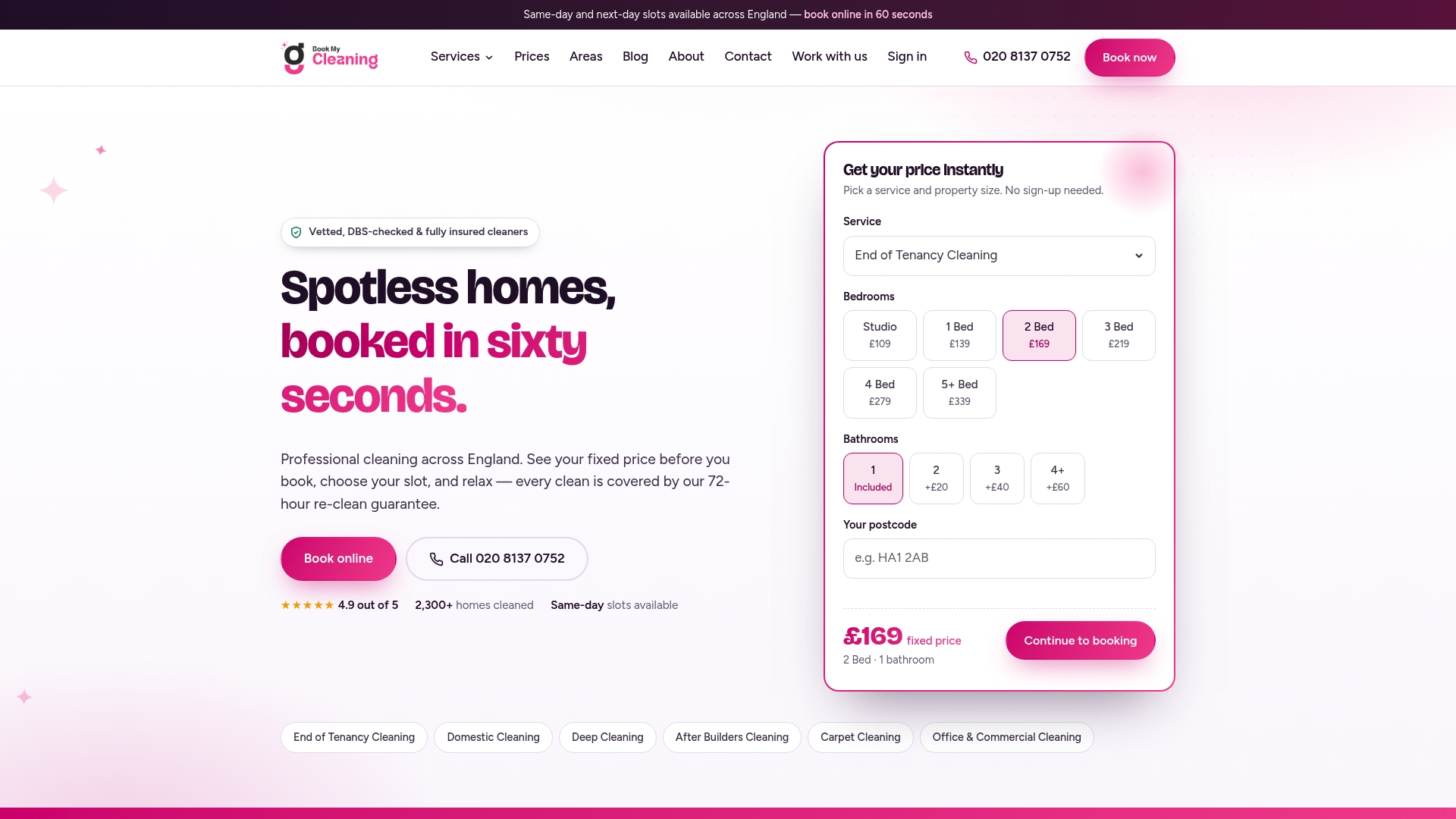
- Cleaners are vetted and DBS-checked, and arrive in uniform with products and equipment included.
- A 72-hour re-clean guarantee means a return visit if the agreed checklist was not met.
- Same-day slots and online booking allow confirmation of a visit in under a minute, with no deposit required.
Prices for domestic cleaning start at £17.50 per hour, end-of-tenancy cleaning runs from £109, and deep cleaning from £119, all shown upfront on our prices page. Check which extras are included before you book so your checklist and your invoice match exactly.
FAQ
What will a cleaner do in 2 hours?
A two-hour booking typically prioritises the highest-impact areas, usually the kitchen and bathroom, plus a quick pass over the main living floor. Exact coverage depends on property size and clutter, so a written checklist agreed beforehand is the most reliable way to know what will be done.
How much is a 1 hour clean?
Pricing for a one-hour clean depends on the provider and region rather than a fixed national rate. With us, domestic cleaning is charged from £17.50 per hour, shown as a fixed rate before you book.
Do you clean your house before the cleaner comes?
You do not need to clean before a cleaner arrives, but clearing clutter and personal items helps them reach more surfaces within the booked time. Tidying beforehand means paid time goes towards actual cleaning tasks rather than picking things up first.
What should a cleaner do in 3 hours?
A three-hour booking generally allows broader coverage across more rooms than a shorter visit, though the result still depends on property size and starting condition. As with any booking length, the written checklist agreed in advance is the clearest guide to what will be completed.
What is the difference between a regular clean and a deep clean?
A regular clean covers everyday maintenance tasks like dusting, vacuuming and kitchen and bathroom wiping, while a deep clean adds more intensive work such as inside appliances, limescale removal and detailed grime removal in neglected areas. End-of-tenancy cleaning goes further still, typically covering cupboards, ovens and windows to meet a move-out standard.
Sources
- Cleaner | Explore careers | National Careers Service
- Gov
- Cleaning hygiene operative / Skills England