
A Basic DBS check shows only unspent convictions and anyone can apply for one directly, while an Enhanced check adds police-held local intelligence and, where the role involves regulated activity, a search of the barred lists. Which one applies depends on the activities the role involves, not the job title alone.
TL;DR:
- Standard and Enhanced checks require a role covered by legal exemptions; assess actual duties and contact patterns, not the job title alone.
- Anyone aged 16 or older can apply directly for a £20 Basic check; self employed applicants need an organization for higher levels.
- The £13 annual Update Service subscription covers Standard and Enhanced certificates only, and applicants must register within 30 days of issue; Basic certificates are excluded.
- Specified offences and custodial convictions remain disclosed regardless of age; other records are filtered by elapsed time, the person’s age, and prior offences.
- DBS certificates have no legal expiry date, but employers often seek renewals every one to three years for ongoing roles involving children or vulnerable adults.
Table of Contents
- What each DBS level includes: basic, standard, enhanced and enhanced with barred lists
- Who can apply for each check, and who can request it
- How to apply, what it costs, and how long it takes
- Why filtering means enhanced checks can show more than basic ones
- Choosing the right level: a checklist for recruiters
- How we vet cleaners before they reach your door
- How long a DBS certificate stays useful
- Why DBS levels matter when choosing a cleaning service
- Keeping DBS information private and secure
- What happens if a DBS certificate contains an error
- What this means for you
- Book a DBS-checked cleaner without the paperwork
- FAQ
- Sources
What each DBS level includes: basic, standard, enhanced and enhanced with barred lists
There are four levels of criminal record check in England and Wales, and the gap between them is about scope, not just detail.
A Basic check lists convictions and conditional cautions that are unspent under the Rehabilitation of Offenders Act 1974. It is the only level open to anyone, for any reason, including a person checking their own record.
A Standard check goes further where the applicant is eligible for it: it includes both spent and unspent convictions, subject to filtering rules that remove certain old or minor offences from disclosure.
An Enhanced check carries the same Police National Computer information as a Standard certificate, plus any information a local police force holds that it considers relevant to the role, even where that information did not lead to a conviction.
Enhanced with Barred List(s) adds one more layer: a check against the Children's Barred List, the Adults' Barred List, or both, used only where the role involves regulated activity.
In short:
- Basic: unspent convictions and conditional cautions only.
- Standard: spent and unspent convictions, filtered by law.
- Enhanced: Standard-level information plus relevant local police intelligence.
- Enhanced with Barred List(s): Enhanced-level information plus a check against one or both barred lists.
Who can apply for each check, and who can request it
Eligibility works differently depending on whether you are the applicant or the organisation asking for the check.
- Anyone aged 16 or over can apply for a Basic check themselves, for personal reasons or because an employer has asked for one, without needing an employer to act as a sponsor.
- Standard and Enhanced checks can only be requested where the role falls under an "exempted question", meaning the position is listed in the Rehabilitation of Offenders Act 1974 Exceptions Order or the Police Act 1997; a job title alone does not make a role eligible, and employers should check the eligibility guidance before requesting either level.
- Organisations that process 100 or more Standard or Enhanced checks a year are expected to register directly with DBS as a Registered Body; those below that threshold typically go through an umbrella body acting on their behalf, as set out in guidance on getting a check for an employee.
- Self-employed people and contractors cannot request a Standard or Enhanced check on themselves; they need a Registered Body or umbrella organisation to submit it on their behalf, or they apply for a Basic check directly if that is sufficient for the work.
How to apply, what it costs, and how long it takes
Applying for a Basic check is the simplest route: it is done online, directly with DBS, and does not need an employer or umbrella body to sponsor it.
Standard and Enhanced checks work differently. An employer or organisation submits the request through a Registered Body or umbrella body, because individuals cannot apply for these levels on their own behalf.
Fees vary by level and who is paying:
- A Basic check costs £20, usually paid by whoever is applying.
- Standard and Enhanced checks are typically paid for by the employer requesting them, though the exact fee depends on the Registered Body used.
- Subscribing to the DBS Update Service costs £13 a year and only covers Standard and Enhanced certificates, never Basic ones.
£13 a year is the Update Service subscription fee, and it only works if you register within 30 days of your certificate being issued, which is a deadline many applicants miss because they assume it applies retrospectively.
Turnaround times are rarely instant. Delays commonly come from incorrect applicant details on the form, a change of name or address that has not been updated, or the need to check records in Scotland or Northern Ireland through Disclosure Scotland or AccessNI rather than DBS alone.
Why filtering means enhanced checks can show more than basic ones
Filtering decides which old or minor offences disappear from a certificate rather than following someone indefinitely. The filtering guidance sets out which records become "protected" over time and which never do.
Some offences are always disclosed, regardless of how long ago they happened: specified offences (a list that includes serious violent and sexual offences) and any conviction that resulted in a custodial sentence. Everything else is assessed against rules on time passed, age at the time, and whether it was a single offence.
Some youth cautions, warnings and reprimands that used to appear automatically no longer do, following changes to the filtering rules, which is why employers should read the current guidance rather than rely on what an older certificate once showed.
Overseas convictions are not routinely picked up by a UK DBS check. Where an applicant has spent significant time abroad, employers should request a separate check from the relevant country, since UK filtering and disclosure rules only govern records held in England, Wales, Scotland and Northern Ireland.
Choosing the right level: a checklist for recruiters
Getting this right protects both the organisation and the applicant from a check that is either unlawful to request or inadequate for the role.
- Identify who the role brings the person into contact with: children, vulnerable adults, both, or neither.
- Establish where the work happens: in a regulated setting, in private homes, or somewhere with little direct contact.
- Work out the frequency and nature of contact, since "regulated activity" usually requires a level of regularity, not a single visit.
- Check the role against the eligibility guidance before deciding between Basic, Standard and Enhanced.
- Record the specific activity and frequency tests used to justify the decision, so there is a clear audit trail if it is ever questioned.
Pro Tip: Write down the eligibility reasoning at the time you request the check, not months later when someone asks why a particular level was chosen.
Take a cleaner visiting several private homes a week as an example. The role involves lone access to a property but not regulated activity with children or vulnerable adults in the legal sense, so many organisations treat a Basic check, combined with identity verification and references, as proportionate, while reserving Enhanced checks for roles with direct, unsupervised care responsibilities. Our booking checklist covers what a typical home visit involves, which is useful context when making that judgement. A broader view on vetting anyone who works inside your home, including contractors, is set out in this homeowner's checklist on hiring tradespeople.
How we vet cleaners before they reach your door
We send vetted cleaners to every booking, and they arrive in uniform so you know who to expect. That vetting sits alongside a re-clean guarantee and fixed pricing shown before you book, so there are no surprises on the day or the invoice. Booking itself takes under a minute online, and if you want to ask about a specific cleaner's DBS status before a visit, a team is reachable through the booking platform to provide confirmation.
How long a DBS certificate stays useful
A DBS certificate itself does not expire: it is a record of what was on file on the day it was issued, and it does not update automatically afterwards. What differs between Basic and Enhanced checks is how practical it is to keep that information current.
Standard and Enhanced certificates can be linked to the Update Service for £13 a year, which lets an employer check online whether anything has changed since issue, rather than requesting a brand new certificate. Basic certificates cannot be added to the Update Service at all, so there is no way to verify one is still current except applying again.
In practice, many employers treat a certificate as needing renewal every one to three years, particularly for roles with ongoing contact with children or vulnerable adults, even though no legal expiry date exists. For one-off or infrequent roles, such as a single end-of-tenancy visit, a certificate from the last year or two is often considered reasonable without a fresh request each time.
Why DBS levels matter when choosing a cleaning service
For cleaning services, the DBS level requested says more about proportionality than it does about cleaners being a higher risk category. Domestic cleaning does not generally meet the legal threshold for regulated activity, so a Basic check, paired with identity checks, references and supervision on first visits, is the level most reputable cleaning businesses rely on.
That still matters to the person booking. A Basic check confirms there are no unspent convictions on record, which is a reasonable baseline when someone is given access to a private home, often unsupervised. It will not catch everything an Enhanced check might, but Enhanced checks are not typically available for this kind of role in the first place, since the eligibility rules restrict who can request one.
What this means practically for anyone comparing providers is that a DBS check alone is only part of the picture. Insurance, uniformed identification, references and a clear complaints process all sit alongside it, and a provider that is transparent about all of these tends to be a safer overall choice than one offering a DBS check as its only vetting step.

Keeping DBS information private and secure
A DBS certificate contains sensitive personal data, so both applicants and employers have obligations under UK data protection law once it is issued.
Employers who see a certificate must only use it to make the specific recruitment decision it was requested for, and they are expected to keep it for no longer than six months before secure disposal, rather than retaining it indefinitely in a personnel file. Certificates are posted to the applicant, not the employer, so the employer only sees it when the individual chooses to share it.
Applicants have the right to challenge information on their certificate before it affects a decision, and are not obliged to disclose a certificate to anyone beyond the organisation that legitimately requested it. Sharing certificate details more widely than necessary, including storing copies in shared drives or forwarding them by e-mail without safeguards, runs against the handling expectations set out in DBS guidance and general data protection principles.
What happens if a DBS certificate contains an error
Mistakes on a certificate are rare but not impossible, and DBS has a formal route for correcting them rather than leaving the applicant to argue it out with an employer.
If information looks wrong, such as a conviction that belongs to someone else or an offence that should have been filtered, the applicant can raise a dispute directly with DBS, who will review the case with the relevant police force or court. Certificates are not reissued automatically during this process, so an employer relying on a disputed certificate should treat the matter as unresolved until DBS confirms the outcome.
Where the dispute concerns locally held police intelligence rather than a conviction, the review sits with the police force that supplied the information, since DBS does not hold the underlying evidence itself. Applicants are entitled to know the broad nature of a dispute's outcome, even where full details of a police force's reasoning are not shared.
What this means for you
If you are applying, start with a Basic check unless an employer has confirmed a Standard or Enhanced check is lawful for your role. If you are recruiting, check eligibility before you request anything and write down why.
— Book
Book a DBS-checked cleaner without the paperwork
If you want the reassurance of a DBS check without working out which level applies to your own hiring, we have already done that groundwork. Every cleaner we send out is vetted and DBS-checked, arrives in uniform, and works to a written checklist, backed by our 72-hour re-clean guarantee if anything falls short.
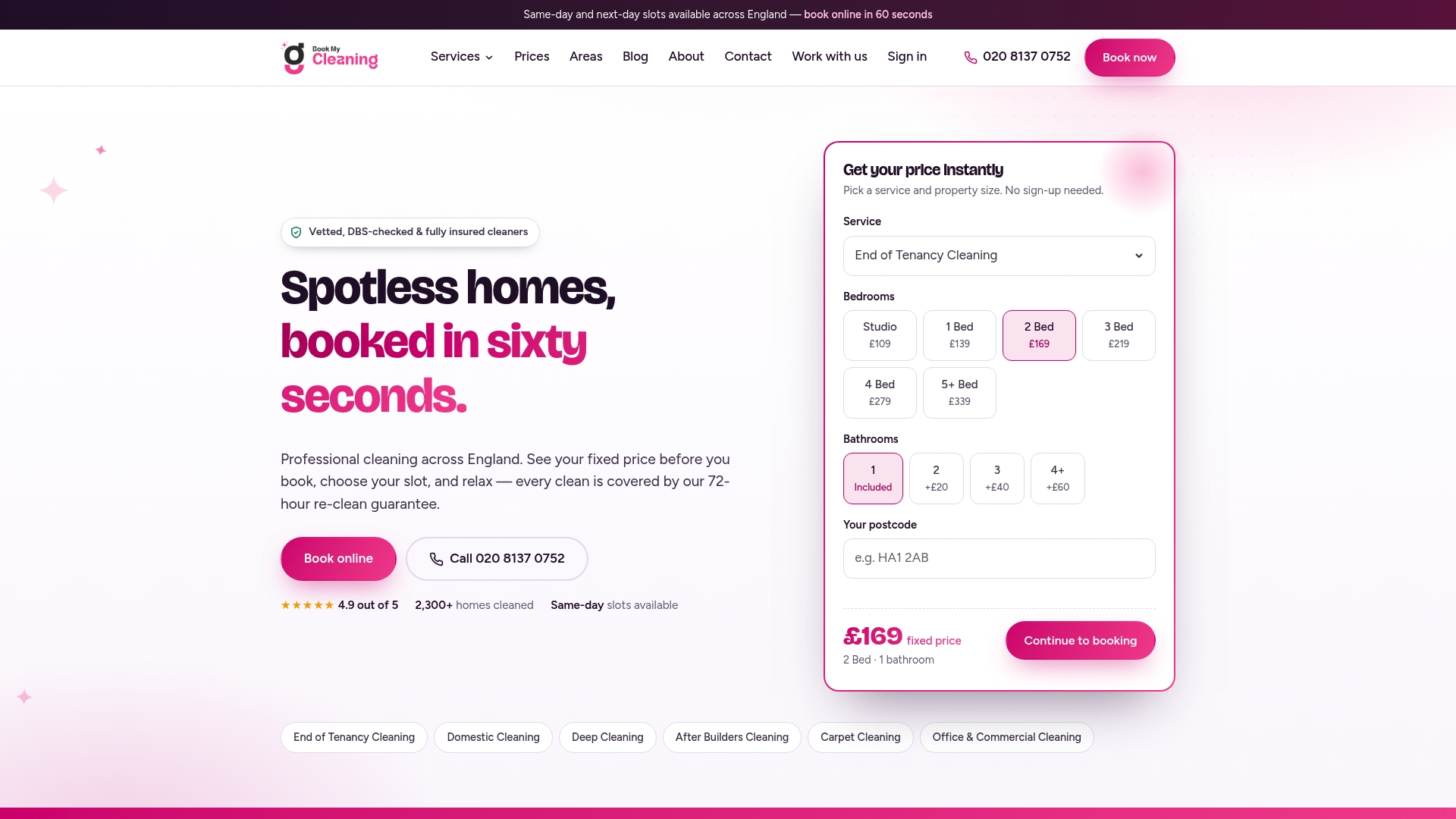
Pricing is fixed and shown upfront on our prices page, covering everything from a single domestic clean to end of tenancy cleaning from £109. Booking takes under a minute online, with same-day slots often available, and our booking checklist walks through what to prepare before your cleaner arrives. If you need a cleaning team you can trust in your home without chasing references yourself, you can check availability and book directly today.
FAQ
Can I change my basic DBS to enhanced?
No, a Basic certificate cannot be upgraded to Standard or Enhanced. You need to apply for a new Standard or Enhanced check through an eligible employer or organisation, since those levels cannot be requested by individuals applying alone.
How do I know if I have a standard or enhanced DBS?
The certificate itself states the level at the top, labelled Basic, Standard, Enhanced, or Enhanced with Barred List(s). If you are unsure and no longer have the paper certificate, you would need to apply again, as DBS does not hold a searchable copy on your behalf.
Does enhanced DBS show everything?
No, an Enhanced check shows more than a Basic or Standard check, including relevant local police intelligence and barred list results where applicable, but filtered records that are legally protected still do not appear. Specified offences and custodial sentences are always disclosed regardless of level.
Is it worth getting a basic DBS check?
A Basic check is worth having whenever you want a simple, low-cost way to confirm there are no unspent convictions on record, whether for your own peace of mind or because an employer has asked for one. At £20, it is the only level open to anyone without needing an employer to sponsor the application.