
The best way to clean a home for a newborn is to get the heavy, one-off work finished before the baby arrives, then keep to a short routine of the surfaces and feeding items that matter most. A professional deep clean at a fixed price in the final weeks of pregnancy does the first part. We offer deep cleaning from £119, booked online with the price shown before you confirm, so the heavy work is done and your newborn weeks start with a home that is already reset.
This guide is for parents-to-be, new parents and anyone preparing a home for a new arrival. It covers what to deep clean and when, which surfaces and items need regular attention, how to use cleaning products around a baby, and how to keep the air healthy.
TL;DR
- Do the heavy cleaning (carpets, oven, fridge, bathrooms, mattresses, upholstery) in the final weeks before the birth, so the newborn weeks only need a light routine.
- After the birth, focus on frequently touched surfaces, feeding equipment, the highchair, laundry and the areas where the baby spends time, not every inch of the house.
- NICE advises people caring for babies under 12 months to reduce sprays and aerosols and to ventilate rooms during cleaning.
- Keep cleaning products high up and out of reach, always in their original, labelled containers.
- Our deep cleans start at £119, with DBS-checked, uniformed cleaners, all products and equipment provided and a 72-hour re-clean guarantee.
Table of Contents
- Why the clean before the birth matters most
- What to deep clean before the baby arrives
- When to book and how to prepare
- After the birth: the light routine
- Bottles, formula and feeding items
- Using cleaning products safely around a baby
- Bathing and the rest of the baby
- Who this plan suits
- Book the deep clean, keep the newborn weeks free
- Our view
- FAQ
- Sources
Why the clean before the birth matters most
Once the baby is home, time and sleep both run short. Guidance for new parents from WakeMed recommends a thorough clean before you bring the baby home from hospital, then keeping up with frequently touched objects such as counters, phones, keyboards and tap handles. The thorough clean is the one that takes hours. The upkeep takes minutes.
That split is the plan. Do the long jobs once, while you can still plan around them, and leave yourself only the short jobs afterwards.
There is a second reason to hand the long jobs over. NICE guidance on indoor air quality says pregnant women are at increased risk of ill health from poor indoor air quality, and that babies under 12 months are too. Scrubbing an oven or a shower with sprays in a small room late in pregnancy is exactly the kind of job worth passing to someone else.
What to deep clean before the baby arrives
Aim to have this finished one to two weeks before your due date, because babies do not always keep to the calendar. Work through the home by how much time the job takes and how much of it the baby will touch or breathe.
The jobs that take the longest
- Carpets and rugs. Newborns spend their first months on a blanket or in your arms, but a rug soon becomes a play space. Paediatrician Patricia Garcia at Connecticut Children's suggests focusing on high-yield areas such as the kitchen and the living-room rug rather than every inch of the home. Our carpet cleaning is £32 per room.
- The oven. A deep oven clean means strong products and a lot of fumes. We clean inside the oven for £25.
- Fridge and freezer. You will be storing expressed milk, formula-making supplies and batch-cooked meals. Cleaning inside the fridge and freezer is £15 with us.
- Mattresses and sofas. The sofa is where you will feed at 3am, so upholstery matters. Our upholstery cleaning is £25 per item and a mattress deep clean is £30 per mattress.
- Bathrooms and limescale. Heavy limescale treatment is £20 as an add-on.
- Windows. Inside windows are £15, and external window cleaning is £25.
Why a deep clean beats a quick tidy
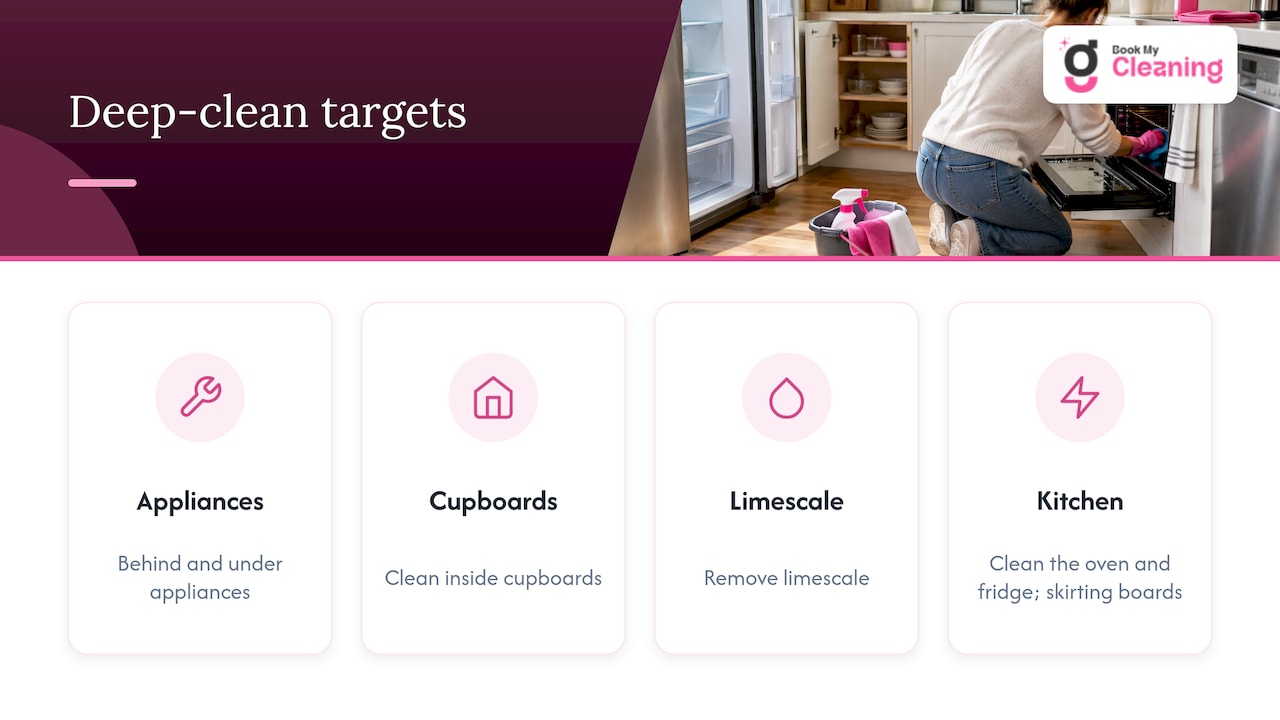
A standard weekly clean keeps a home ticking over. A deep clean reaches what weekly cleaning misses: behind and under appliances, inside cupboards, limescale, skirting boards, the oven and the fridge. Our deep cleaning booking checklist sets out what to look for when you book one. A deep clean costs between £119 and £329 depending on the size of the property, and the price is shown online before you book, so you know the total in advance.
If you have just finished a renovation or a nursery redecoration, builders' dust and paint splashes need clearing before the baby arrives. Our after builders cleaning is £159 to £419, and heavy paint splash removal is £30 as an add-on.
Washing the baby's things
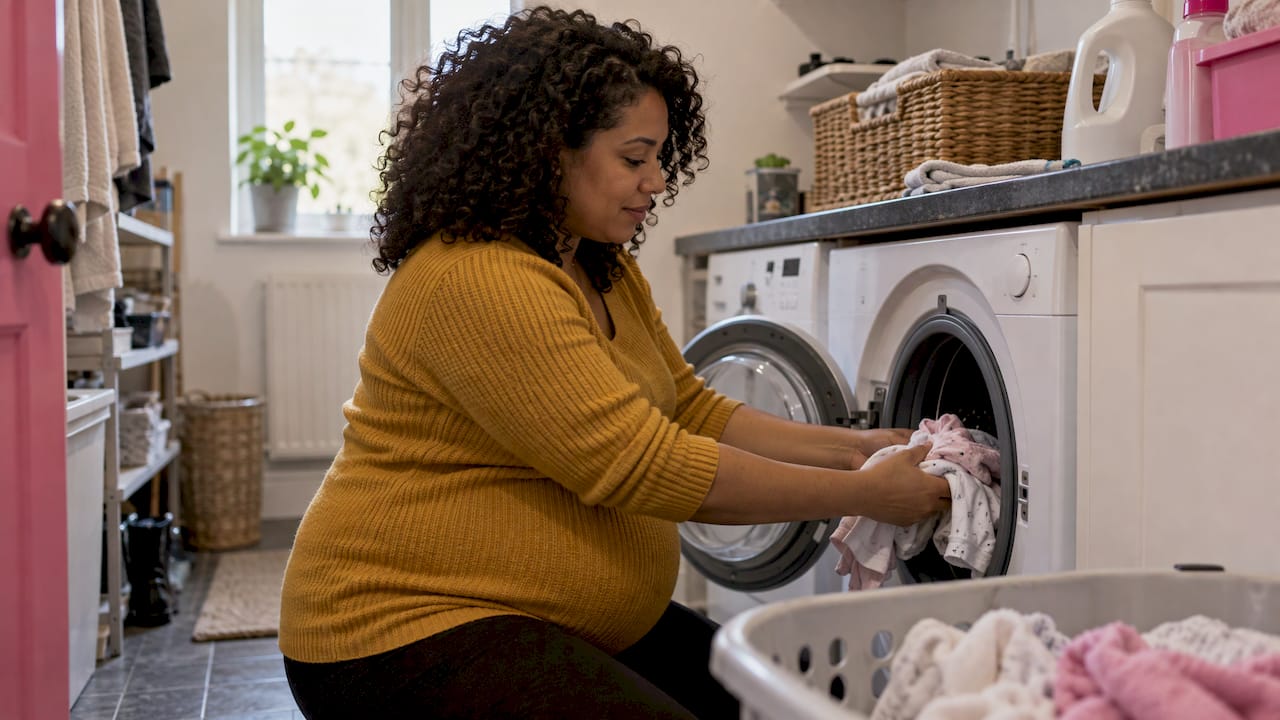
WakeMed advises washing new clothing that will touch the baby's skin before it is worn. That is a good job for the weeks before the birth. If laundry is piling up, our wash and fold service is £12 and ironing is £17.50 per hour.
When to book and how to prepare
Book for a date well before the due date, not the last weekend. Same-day slots exist if plans change, but a booked date is one less thing to think about at 38 weeks. If you are in London, you can see what a regular visit looks like on our domestic cleaning page for Kensington, with a regular cleaner from £17.50 per hour.
Preparing the house for cleaners takes about 20 minutes. Clear the floors and put valuables away, as in our guide to preparing your home for cleaners. If you want to know what a visit covers, what to expect from a professional cleaning service walks through it.
Our cleaners are vetted, DBS-checked and arrive in uniform with all products and equipment, and you get a written checklist. If something is not up to standard, the 72-hour re-clean guarantee applies.
After the birth: the light routine
Once the baby is home, the aim is a clean enough home, not a spotless one. The American Academy of Family Physicians' Family Doctor guide separates three things that are often confused:
- Cleaning removes soil, dirt and grease.
- Sanitising reduces bacteria to levels considered safe for public health.
- Disinfecting uses chemicals such as bleach or alcohol to kill germs.
Most of your day-to-day needs only the first. The same guide recommends a regular routine of cleaning frequently touched surfaces, wiping the kitchen weekly, washing hands after cleaning, doing laundry weekly and cleaning the highchair after each meal.
A realistic routine
The American Cleaning Institute's Clean First Steps guide gives a similar pattern for new parents. Turned into a schedule, it looks like this:
| How often | What to clean |
|---|---|
| After every meal | Highchair |
| Every day | Doorknobs, tap handles, phones, remotes, keyboards, the baby's play area |
| A few times a day | Teething items and toys in use |
| At least weekly | Kitchen counters, fridge, microwave and floors; laundry (every other day if you use cloth nappies) |
Connecticut Children's advises cleaning teething items and toys a few times a day or before and after every use, and cleaning the area where the baby plays daily. It also notes that baby wipes do not kill bacteria or viruses because they contain no soap, detergent or disinfectant, so use them for skin, not for sanitising surfaces.
Keep the heavy cleaning on a schedule
The weekly jobs that eat an afternoon are bathrooms, floors throughout the house and the kitchen deep clean. Many parents book a regular cleaner for the first months so these jobs are done without them. Our domestic cleaning is charged at £17.50 to £20.95 per hour, so you decide how many hours you need.
Bottles, formula and feeding items
If you formula feed or express milk, hygiene around feeding equipment matters most of all. NHS Health Scotland's formula feeding guidance says to:
- Wash bottles and teats in hot soapy water as soon as possible after a feed.
- Rinse them in clean, cold running water.
- Sterilise them, either in a cold-water solution for at least 30 minutes (changing the solution every 24 hours) or by steam, following the manufacturer's instructions.
- Wash and dry your hands before making a feed, and clean and disinfect the preparation surface before you lay out sterilised equipment.
- Make up formula with boiled water at 70°C or hotter, and make feeds one at a time.
The CDC's infant feeding FAQ adds that bottles should be cleaned after every feed, that unfinished formula should be thrown away if not finished within two hours, and that feeding items should be sanitised at least once a day. This matters especially for babies under two months, born prematurely or with a weakened immune system.
Your midwife or health visitor can demonstrate sterilising if you have not done it before. NICE's postnatal care quality standard says advice on formula feeding should cover sterilising and preparing feeds safely, with a practical demonstration where needed.
Pacifiers for babies under two months can be disinfected by boiling or with a bleach solution, following CDC guidance, according to Connecticut Children's.
Using cleaning products safely around a baby
Babies are more sensitive than adults to what is in the air and on surfaces, so how you clean matters as well as what you clean.
Sprays and aerosols
NICE guidance NG149 advises people caring for babies under 12 months to reduce their use of household sprays, air fresheners and other aerosols, to follow product instructions, and to keep rooms well ventilated. It lists cleaning products, sprays, cooking (especially on gas cookers), candles, baths and showers, and air-drying clothes among the activities that can worsen indoor air quality.
In practice:
- Use a cloth and a liquid or paste rather than a spray where you can.
- Open a window or run the extractor fan in the kitchen or bathroom while you clean and for a while afterwards.
- Skip air fresheners and scented candles in the nursery. Candles and particle levels are worth reading about if someone in the house has asthma.
- Rinse surfaces that the baby will touch, such as the highchair tray and changing mat.
The Women's Environmental Network's Green Baby Briefing notes that a baby's skin is up to five times thinner than an adult's. It recommends soap and water for most cleaning, with vinegar, bicarbonate of soda or lemon juice for the rest, and cautions that disinfectants can leave residues. Keep disinfectant for the moments that need it: the formula-preparation surface, a nappy-changing area after a leak, or after illness.
Storage and the toddler years ahead
The NHS Healthier Together child safety guidance says to keep cleaning products, including toilet products, high up and out of reach. Fit safety catches to low cupboards if you cannot store them high, choose products with a bittering agent, and never decant cleaning liquids into unmarked bottles. It is easiest to set this up before the baby arrives, so that the habit is in place by the time they crawl.
Damp and mould
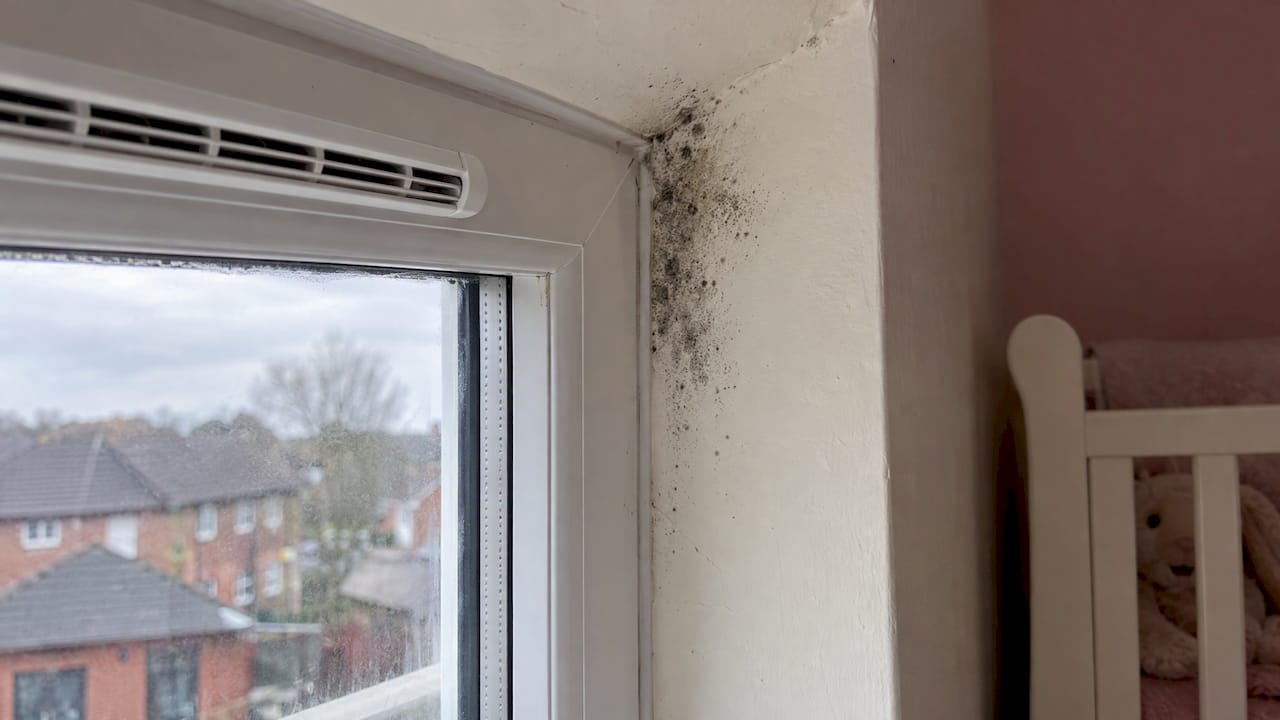
NHS Healthier Together says children living in a damp home are up to three times more likely to have breathing problems, and describes mould as fuzzy black, white or green patches on walls. NICE recommends background ventilation such as trickle vents, extractor fans, opening windows where possible and safe, avoiding drying clothes indoors, and repairing water damage promptly. Check bathrooms, window frames and the nursery walls during your pre-birth clean, and mention any patches to your landlord if you rent.
Illness in the house
When a baby is unwell, the American Cleaning Institute's healthy home guide suggests disinfecting frequently touched surfaces regularly, washing or disinfecting the toys the baby touched once they recover, having the whole household wash hands more often, and laundering clothes, blankets and bedding on a hot wash. If you are worried about your baby's health, speak to your GP, health visitor or NHS 111.
Bathing and the rest of the baby
A clean home does not mean a baby who is bathed daily. WakeMed's guidance is to bath a newborn about three times a week, cleaning the nappy area thoroughly at each change, because over-bathing can dry the skin and let germs in more easily.
Who this plan suits
Busy professionals and new parents benefit from a regular cleaner for the first months, with hours that you set. Homeowners finishing a nursery or renovation should book the after builders clean before the deep clean, then restock the nursery. Tenants expecting a baby near the end of a tenancy can book an end of tenancy clean from £109, which is a fixed price shown online, to hand the property back in order. The Kensington end of tenancy page shows how it works. Landlords preparing a property for a family move-in will find our move-in cleaning checklist useful.
Book the deep clean, keep the newborn weeks free
The deep clean is the job most worth passing on. We offer deep cleaning from £119 to £329, by property size, with no hidden fees. You can book online in under a minute, without a card or deposit. Our cleaners are DBS-checked, vetted, insured and in uniform, bring all products and equipment, and the 72-hour re-clean guarantee covers the result. Add oven, fridge, carpet, mattress and sofa cleaning for the jobs a new parent least wants to do.
See the full price list and book on Book My Cleaning, or choose your area from our Kensington deep clean page.
Our view
We think the first weeks with a baby should be spent with the baby, not with a scrubbing brush.
The guidance for new parents is consistent: a thorough clean before you come home from hospital, then a short routine of frequently touched surfaces, feeding items and laundry. The thorough clean is where professionals help most, because it is long, repetitive and often involves products and fumes that you would rather not have around late in pregnancy.
That is why we show a fixed price before you book, send vetted, DBS-checked cleaners in uniform, bring our own products and equipment, and stand behind the work with a 72-hour re-clean guarantee. With a written checklist, you know what has been done before you bring the baby home. Our rating of 4.9 stars from over 2,300 cleaned homes comes from doing exactly that, one home at a time.
Book
FAQ
How do you keep your house clean with a newborn?
Do the deep clean before the birth, then keep to a short routine. Clean frequently touched surfaces daily, the highchair after each meal, feeding equipment after every feed, and the kitchen and laundry weekly. Booking a regular cleaner for the heavy jobs leaves you free for the rest.
Should I deep clean before the baby comes home?
Yes. WakeMed's new-parent guidance recommends a thorough clean before you bring the baby home. Aim to finish one to two weeks before your due date. Our deep cleans start at £119 and can be booked online, including same-day slots if your plans change.
Is it safe to use cleaning sprays around a newborn?
NICE advises people who care for babies under 12 months to reduce household sprays and aerosols, follow product instructions and ventilate rooms while cleaning. Choose cloths and liquids over sprays where you can, open a window, and keep all products out of reach in labelled containers.
How often should I sterilise bottles?
Clean bottles and teats in hot soapy water after every feed, then sterilise them, by cold-water solution for at least 30 minutes or by steam, according to NHS Health Scotland guidance. Your midwife or health visitor can show you how if you are unsure.
Sources
- WakeMed: Healthy Home, Protecting Your Baby from Germs
- NICE: Indoor air quality at home (NG149)
- NICE: Indoor air pollution, health risks and how to reduce them
- Connecticut Children's: Are You Disinfecting Your Baby's Gear Correctly?
- Family Doctor: Preparing for Parenthood, Cleaning Your Home
- American Cleaning Institute: Clean First Steps
- American Cleaning Institute: A Healthy Home
- NHS Health Scotland: Formula feeding
- NICE: Postnatal care quality standard (QS37)
- CDC: How to clean, sanitize and store infant feeding items
- NHS Healthier Together: Child safety at home
- NHS Healthier Together: Damp and mould
- Women's Environmental Network: Green Baby Briefing
- Candles and particle levels