
Smoke smell in a rented home is a cleaning problem and a paperwork problem at the same time. The odour sits in carpets, soft furnishings, walls and dust, so it takes a methodical, room-by-room clean to shift it. And whether you are the tenant leaving or the one arriving, who pays depends on what the check-in and check-out reports say. A fixed-price end of tenancy or deep clean from Book My Cleaning, from £109 and £119 respectively, covers the cleaning side with a written checklist, all products and equipment, and a 72-hour re-clean guarantee if standards are not met. This guide explains the rest: where smoke hides, what you can do yourself, what a landlord can realistically claim, and what to do if the smell is already there when you move in.
TL;DR
- Smoke odour lives in soft materials, dust and porous surfaces, so cleaning has to reach carpets, upholstery, mattresses, walls, ceilings and hidden spots, not just visible surfaces.
- In a deposit dispute the landlord must prove the claim. A smell has to be described in writing in the check-out report, because photographs cannot show it.
- Adjudicators have awarded landlords only the cost of repainting the affected rooms, not full redecoration, where a contractor said one coat would remove the smell.
- If the smell is already there when you move in, get it written into the inventory straight away.
- A professional deep or end of tenancy clean with a checklist gives you dated proof that the property was returned clean.
Table of Contents
- Why smoke smell lingers in rented homes
- Where the smell hides: a room-by-room view
- How to get smoke smell out of a rental: the routine
- Who pays: the landlord's claim and the tenant's defence
- Smoke smell when you move in
- If the smell is still there after cleaning
- For landlords: claiming fairly
- Book the clean with proof built in
- Our view on smoke smell in rentals
- FAQ
- Sources
Why smoke smell lingers in rented homes
Cigarette smoke does not just hang in the air. The residue, often called thirdhand smoke, settles on surfaces and in dust and can linger for months. According to the thirdhandsmoke.org research team, it embeds in carpets, pillows, upholstery, furniture, drywall, floors and ceilings. That is why opening a window for a weekend rarely settles it.
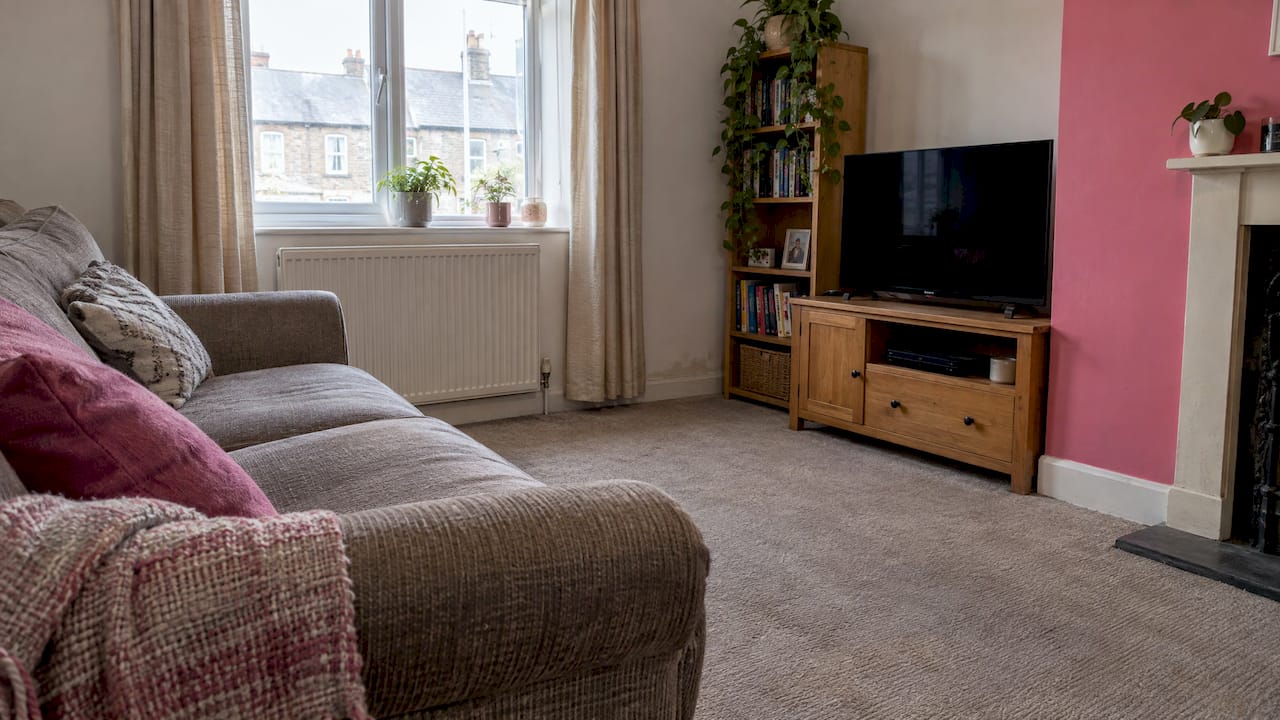
In a rental this matters for a practical reason. Carpets, curtains, sofas and mattresses are often shared across several tenancies, and the paint on the walls may be years old. A smell that one tenant created can show up in the next tenant's first week, and in the landlord's deposit claim at the end.
Where the smell hides: a room-by-room view
The same research names the reservoirs that matter most. Work through them in this order:
| Area | What holds the smell | What helps |
|---|---|---|
| Carpets and rugs | Fibres and backing | HEPA-filter vacuuming, then professional carpet cleaning |
| Sofas, chairs, curtains | Fabric and padding | Upholstery cleaning, laundering removable covers |
| Mattresses and pillows | Fabric and filling | Mattress deep clean, washing pillows |
| Walls and ceilings | Paint and plaster | Wiping down; repainting where staining is visible |
| Windows and frames | Film on glass and sills | Inside window cleaning |
| Kitchen and bathroom | Grease and limescale films that trap odour | Oven, fridge and surface degreasing |
| Cupboards, vents and ducts | Hidden dust and residue | Wiping inside units; cleaning vents and ducts |
Our published add-on prices follow the same logic: professional carpet cleaning is £32 per room, upholstery and sofa cleaning £25 per item, a mattress deep clean £30 per mattress, inside windows £15, inside oven £25 and wall spot cleaning £20. They are added to a booking at fixed prices, so you see the total before you confirm.
How to get smoke smell out of a rental: the routine
The researchers behind thirdhandsmoke.org say frequent, thorough cleaning reduces residue. Their guidance is to vacuum with a HEPA filter and wipe surfaces with an acidic solution such as white vinegar and an alkaline one such as Simple Green. They also say hidden reservoirs such as cabinet interiors, mattresses and upholstery should be cleaned or replaced.
Here is that turned into a plan you can follow, with where each step goes wrong.
- Ventilate first, then clean. Open windows while you work. Airing alone only moves the lightest odour; it does not touch residue in fabric and dust.
- Vacuum slowly with a HEPA-filter machine. Do carpets, sofas, curtain tops and skirting boards. A standard vacuum without a good filter can blow fine particles back into the room.
- Wipe from the top down. Ceilings, walls, light fittings, window frames, then shelves and doors. Work in two passes: one with an acidic solution, one with an alkaline one, as the research describes. Do not mix them in the same bucket.
- Treat soft furnishings. Wash everything washable at the hottest temperature the label allows. For sofas, carpets and mattresses, machine extraction is far more thorough than a damp cloth.
- Clean inside cupboards and appliances. Smoke film gathers on the inside of units, in oven doors and on fridge seals.
- Repeat after a few days. Residue sits in dust, so a second wipe-down of horizontal surfaces catches what resettled.
A note on strong chemicals: the same source flags trisodium phosphate (TSP), which professionals sometimes use on walls, as a hazardous chemical that needs protective equipment. If you are cleaning yourself, stay with the milder solutions above and keep the room ventilated.
The fragrance question is worth a sentence. Sprays, plug-ins and scented candles add new chemicals to the room rather than removing the source of the smell, according to the same researchers. Cleaning the reservoirs is what moves the odour out.
What a professional clean takes off your hands
The routine above is two or three days of work for a typical flat, and the equipment matters. When you book our deep cleaning (£119 to £329, depending on the property) or end of tenancy cleaning (£109 to £339), the cleaners arrive uniformed, DBS-checked and vetted, with all products and equipment provided, and you get a written checklist of what is covered. You add carpet, upholstery, mattress, oven and window extras at their fixed prices when you book. If the result is not up to standard, the 72-hour re-clean guarantee applies.
Who pays: the landlord's claim and the tenant's defence
If you are leaving a tenancy where smoking took place, you will want to know what the landlord can take from your deposit. In England, a tenancy deposit for an assured shorthold tenancy must be protected in an approved scheme within 30 days of receipt, according to RentVault's deposit guide. The same guide says the landlord carries the burden of proof if a deduction is disputed, and that undisputed money must be returned within ten days of agreement.
Damage versus fair wear and tear
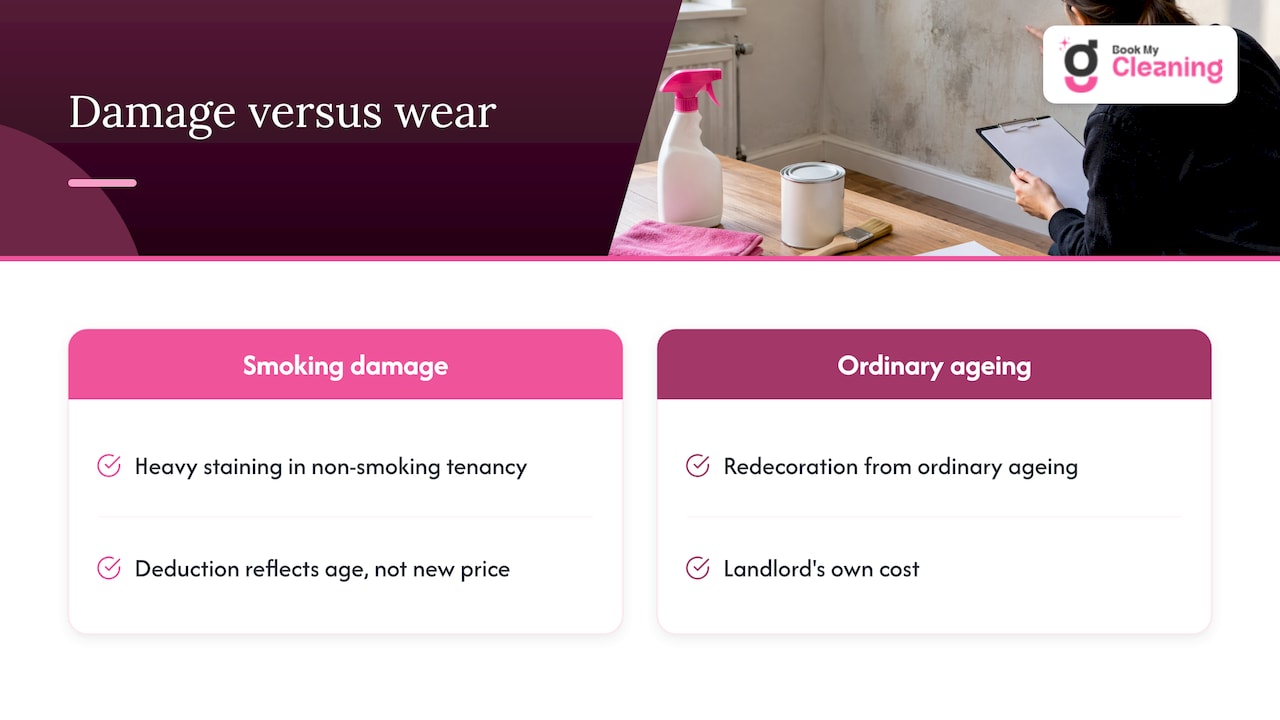
Deductions can only cover damage beyond normal use. RentVault explains that heavy staining from smoking in a non-smoking tenancy counts as damage, while redecoration needed through ordinary ageing is the landlord's own cost. Even where damage is accepted, the amount should reflect the age of the item, not the price of replacing it new.
What adjudicators have actually awarded
Two published case studies show how this tends to go in practice.
- In a mydeposits adjudication, a landlord claimed £888 to redecorate a flat. The adjudicator awarded £275 (£225 for one and a half days' labour and £50 for materials) and returned £613 to the tenant. The check-out report recorded smoke damage only in certain areas, and a contractor's estimate said one coat of paint would remove the smell.
- In a case discussed on Property118, £850 of a £1,100 deposit was disputed. The tenant admitted smoking in breach of the agreement, and the report showed strong smell and discolouration in the bedroom and living room. The landlord was still allowed only £225 to paint those two rooms, with £625 returned to the tenant, because one fresh coat would remove the odour and fair wear and tear had to be allowed for.
The pattern is consistent: proven, localised damage is paid for at a reasonable repair cost, not as a full refit. Landlords who want to claim fairly should also read up on what to expect when hiring a painting service, because a clear quote for the affected rooms is the kind of evidence adjudicators look for.
Smells cannot be photographed
This is where many claims fall apart. mydeposits' guidance on smells says that photographs cannot evidence a smell, so the check-out report must carry a written description of any smell present when the tenant leaves. If the check-in inventory noted smells, the tenant is unlikely to be held liable at the end; if it recorded none, the default position is that there were none. Problems missing from the final report and found after the tenant leaves are unlikely to be considered in a dispute.
For tenants, the takeaway is to attend the check-out, read what is written about odours and challenge anything that does not match the property on the day. For landlords and agents, it is to record smells in words at both ends and to arrange a pre-exit visit so lingering odours can be dealt with before a dispute starts.
Smoke smell when you move in
If the flat smells of stale smoke on day one, treat it as evidence, not just an annoyance.
- Write it into the inventory. Add a dated note to the check-in report describing the smell and the rooms. Under the mydeposits guidance above, a recorded smell makes it unlikely you will be held liable for it later.
- Raise it with the landlord or agent in writing. Say which rooms, and ask for the carpets, curtains or furnishings that hold it to be dealt with.
- Photograph visible staining. Yellowed ceilings, discoloured paint and stained window frames can be photographed with the date, even though the smell cannot.
- Clean what is yours to clean. A first deep clean before you unpack gives you a fresh baseline. Our deep cleaning is a one-off booking from £119, and carpets are £32 per room if the flooring is the main source.
If the smell comes from a neighbour
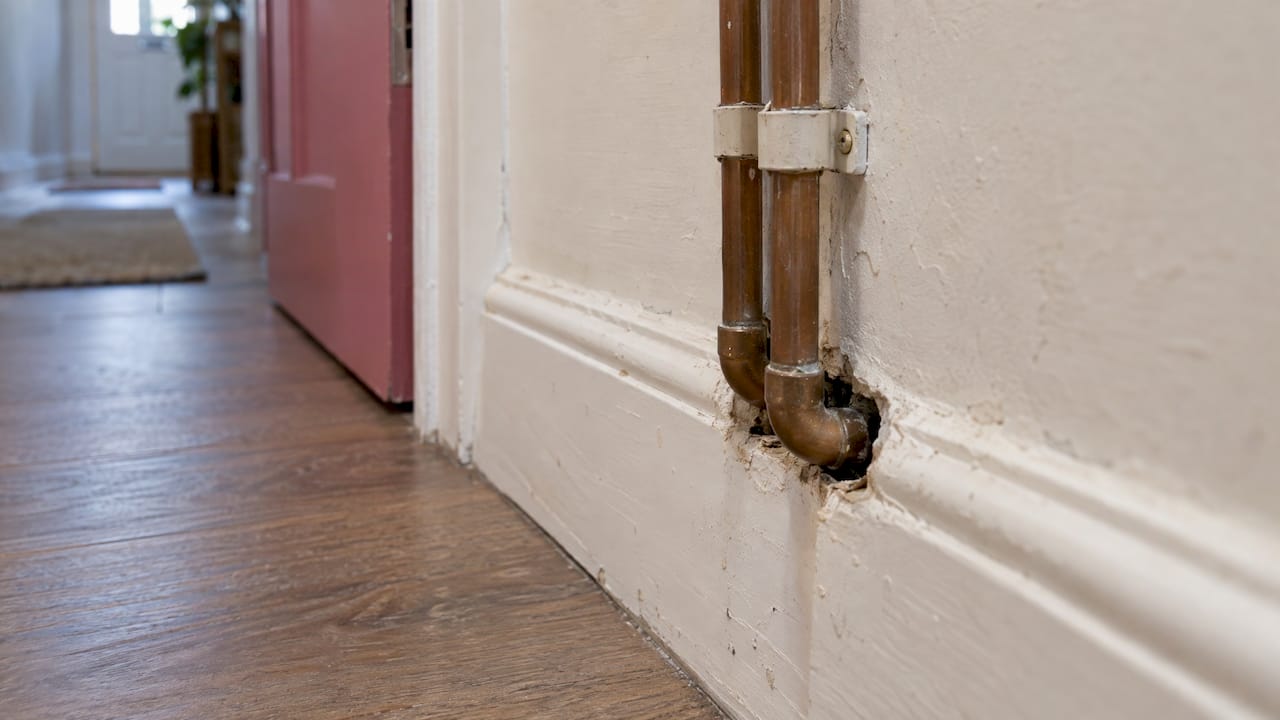
Smoke drifting in from next door is a different problem. The Housing Ombudsman, in a 2023 decision on a London borough, noted that a neighbour is by default entitled to smoke legal substances in their own home and that the threshold for statutory nuisance is high. Support for Tenants says that where smoke enters through a building fault such as gaps, cracks, broken shared ventilation or holes around pipes, the landlord must repair it, and you should ask for an inspection in writing. It also says to report serious cases to the council's environmental health team and not to withhold rent. The Mirror reports the advice to keep a log of dates, times and severity before you contact the council.
If the smell is still there after cleaning
A smell that returns usually means a reservoir has been missed. The thirdhandsmoke.org researchers explain that unless the underlying sources, such as walls, furniture and carpet backing, are dealt with, residue is re-emitted and settles again on surfaces and dust. So go back through the table above and ask which soft or porous item has not had a proper deep clean.
The usual suspects are:
- a carpet that has been vacuumed but not extracted;
- a mattress or sofa that was wiped but not deep cleaned;
- ceiling and wall paint with visible yellowing, where a repaint may be the right answer;
- cupboard interiors, vents and window frames that were skipped.
If the item belongs to the landlord, tell them in writing and agree who does what before you leave. A pre-exit conversation costs nothing and, as the mydeposits guidance suggests, is a good way to avoid a dispute.
For landlords: claiming fairly
Landlords have a legitimate interest in a smoke-free property, and the evidence rules help them as much as tenants. Property118's advice from the case above is to claim only reasonable costs that reflect actual damage, to consider how long the tenancy lasted, and to include any extra void period caused by the work. It also suggests painting a small patch in the original colour and photographing it against the smoke-stained paint. RentVault's point that adjudicators compare the check-in and check-out inventories side by side is the reason to record smells in words at both ends.
A pre-tenancy professional clean gives you a clean baseline to inspect against. Our end of tenancy cleaning comes with a written checklist, which is a useful reference document for both sides.
In Scotland the rules differ. The Scottish Government's model tenancy notes say a tenant must have written consent to smoke in the property, and that the landlord can ask for the cost of damage or cleaning caused by smoking, with receipts, where it was not allowed. This article's deposit rules otherwise describe England.
Book the clean with proof built in
If you are leaving a smoky tenancy, or have inherited one, the sensible route is a professional clean booked at a fixed price. Choose end of tenancy cleaning (£109 to £339) when you are moving out, or deep cleaning (£119 to £329) when you are settling in or have a home that has never quite lost the smell. Add carpet cleaning at £32 per room, upholstery at £25 per item, or a mattress deep clean at £30 where those items hold the odour.
You book online in under a minute, without a card or deposit, same-day slots are available, and the price is shown before you commit. The full price list is on our prices page.

In west and south-west London you can go straight to end of tenancy cleaning in Kensington or carpet cleaning in Isleworth. Elsewhere in England, start from the main site.
For more on the paperwork side, our guides cover deposit deductions for cleaning, the room-by-room move-out checklist with photo evidence and inventory check cleaning.
Our view on smoke smell in rentals
We think most smoke-smell disputes are decided long before the final day, by what was written down and by how thoroughly the property was cleaned.
A tenant who leaves with a clean, itemised, dated record is in a far stronger position than one who sprayed air freshener the night before. That is why our end of tenancy and deep cleans come with a written checklist, and why we show a fixed price up front with no hidden fees.
Smoke lingers in carpets, upholstery, mattresses and the edges of rooms people forget. Our cleaners arrive in uniform, vetted and DBS-checked, with all products and equipment, and you can add carpet, sofa, mattress, oven and window work at set prices so nothing is left out. If standards are not met, our 72-hour re-clean guarantee applies.
Over 2,300 homes cleaned, rated 4.9 stars: we want your next tenancy, or your deposit, to start from a clean page.
Book
FAQ
Can a landlord deduct from my deposit for smoke smell?
Yes, if the tenancy banned smoking or the smell is damage beyond fair wear and tear, and the landlord can prove it. The burden of proof sits with them, and the check-out report must describe the smell in writing. Adjudicators have tended to award the cost of repainting affected rooms rather than full redecoration.
Are landlords allowed to refuse smokers?
A private landlord in England can include a no-smoking clause in the tenancy agreement. In Scotland, the model tenancy requires the tenant to get written consent before smoking in the property. Check your agreement before you sign.
Can I complain about a neighbour smoking?
Smoking in your own home is generally lawful, so the bar is high. Where smoke enters through a building fault, your landlord must repair it, and serious cases that unreasonably affect your use of the home can be reported to the council's environmental health team. Keep a dated log first.
How long does the smell take to go?
Residue can linger for months in dust and soft materials, so timing depends on how thoroughly those reservoirs are cleaned. A deep clean that includes carpets, upholstery, mattresses and walls, followed by a second wipe-down of surfaces a few days later, is the most reliable route.
Sources
- How can I remove thirdhand smoke from my home? (thirdhandsmoke.org, 2022)
- Adjudication case study: Smoking (mydeposits)
- Past tenants admit to smoking in property? (Property118, 2023)
- Deposit deductions: what landlords can and cannot charge (RentVault, 2026)
- Agent guide on smells (mydeposits)
- London Borough of Ealing (202014662), Housing Ombudsman
- Second-hand smoke in a rented property: your rights (Support for Tenants, 2026)
- Expert explains what to do if your neighbour's smoking is a problem (The Mirror, 2026)
- Private residential tenancy model agreement: smoking (Scottish Government, 2024)