
Citric acid, or a mild glass limescale remover, used with a non-scratch sponge and a squeegee is the fastest renter-safe way to shift limescale from a shower screen. If the scale is baked on, check-out is close or you fear scratching the glass, a professional clean is the safer route. Official tenant guidance says excessive limescale from poor cleaning can be charged to you.
TL;DR:
- Citric acid dissolved in warm water removes limescale more effectively than vinegar; a few spoonfuls and a nonabrasive sponge suit most screens.
- Test any cleaner on hidden glass and trim first; acids can dull aluminum or chrome, while vinegar may strip protective coatings or harm natural stone.
- If thick, cloudy scale remains after two careful attempts or checkout is days away, hire a professional; heavy scale treatment is listed at £20.
- Squeegee the screen after every shower and ventilate the cubicle; drying droplets prevents new deposits, while tenant guidance says neglected limescale may lead to charges.
- After cleaning, photograph the glass, seals, and tray in good light, and keep receipts or a professional checklist to document the condition at checkout.
Table of Contents
- Which renter-safe methods should you try first?
- How do you remove limescale from a shower screen step by step?
- What tools and products should you buy in the UK?
- What daily and weekly habits keep limescale away?
- When should you hire a professional cleaner?
- Why does tackling limescale early save so much stress?
- How can we help with end-of-tenancy and heavy-limescale cleaning?
- FAQ
- Sources
Which renter-safe methods should you try first?
Start gently and work up. Each option below is ranked by how kindly it treats your landlord's glass, and none needs special equipment.
- Citric acid: Which? recommends citric acid over vinegar for limescale because it dissolves calcium deposits more strongly. A few spoonfuls of the powder in a spray bottle of warm water is all you need, and it is the best first move for most screens.
- Distilled white vinegar: Handy if it is already in your cupboard. Good Housekeeping suggests a half-water, half-vinegar spray. Keep it off natural stone and sensitive trims, because which? warns that vinegar can strip some protective coatings.
- Commercial glass limescale removers: Useful when the marks are older and a home mix is too slow. Read the label for glass suitability, ventilate the room and never mix products.
- Squeegees, window vacs and steam: These do not dissolve scale, but they speed up the job. A squeegee clears loosened residue and standing water, and a steam cleaner can soften light film before you spray.
- The stop sign: If scale is thick, white and crusty, or you have a tenancy deadline within a few days, stop scrubbing and consider a professional.
Pro Tip: Test any product on a small, low corner of the glass and its frame first. If the finish dulls or the trim clouds, stop and switch to a milder method.
How do you remove limescale from a shower screen step by step?
Work calmly and in this order. Rushing with a harsh pad is how renters turn a cleaning job into a damage claim.
- Prepare the room. Open a window or switch on the extractor fan, and put on rubber gloves. Wipe off loose soap scum with a damp cloth so the acid can reach the scale itself.
- Test first. Spray a small hidden patch near the bottom corner and wait briefly. Check the glass, the seal and any metal trim for dulling or discolouration.
- Mix your solution. Dissolve a few spoonfuls of citric acid powder in a spray bottle of warm water, as which? advises. If you prefer vinegar, use distilled white vinegar diluted half-and-half with water.
- Spray and wait. Cover the glass generously and leave it for a few minutes. Do not let the solution dry on the screen, and re-spray any patch that starts to dry out.
- Scrub gently. Use a non-scratch sponge in small circular motions. Avoid abrasive pads and metal scrapers, which leave fine scratches that trap more limescale later.
- Treat the trims with care. Aluminium and chrome frames can dull under acid, so keep contact short and wipe the frame with a damp cloth straight afterwards.
- Rinse thoroughly. Run clean water over the whole screen so no acid residue is left to etch the glass or the seals.
- Squeegee and dry. Pull the squeegee downwards in overlapping strokes, then buff with a dry microfibre cloth. Good Housekeeping recommends leaving doors or windows open afterwards so the room dries out.
- Photograph the result. Take dated, well-lit photos of the glass, the seals and the tray. They are cheap insurance if anyone questions the condition later.
- Check and repeat if needed. Once dry, look at the glass from an angle against the light. If a haze remains, repeat the process if needed, rather than pushing harder on the first attempt.
Why the stakes are real: tenant guidance on fair wear and tear separates natural ageing from damage caused by neglect, and limescale left to build up from a lack of regular cleaning falls on the neglect side of that line.
For a wider room-by-room view of what inspectors look at, our end of tenancy cleaning checklist is a useful companion.
What tools and products should you buy in the UK?
You do not need a trolley full of kit. A few cheap, gentle items cover nearly every rental shower.
- Citric acid powder: Look for "food grade" or "descaler" on the pack. It is sold in supermarkets, hardware shops and online, usually at an affordable price. Pre-mixed citric bathroom sprays are the lazy option and cost a little more per use.
- Distilled white vinegar: A bottle costs very little and works as a backup. Check that it is plain white vinegar, not malt, which can leave a brown tint on grouting.
- Squeegee: A basic rubber-bladed squeegee is easy to find at an affordable price. Choose one with a firm handle and a straight, unbroken blade edge, since a nicked blade streaks the glass.
- Window vac: This costs noticeably more than a squeegee but sucks water from glass and corners in one pass. Which? has tested window vacs and found them useful on shower screens, with Karcher and Bosch among the brands it looked at. Treat this as a nice-to-have, not a must.
- Non-scratch sponges and microfibre cloths: Inexpensive in multipacks. Choose sponges labelled safe for glass and enamel, and keep one cloth just for polishing.
- Disposable or rubber gloves: A small cost that protects your hands from acid and hot water.
A sensible starter kit is citric acid, a spray bottle, a non-scratch sponge, a squeegee and two microfibre cloths. That should be well within a modest budget and enough for most jobs.
If your seals or fittings look failing rather than just dirty, a tradesperson is the right call, and a local bathroom fitter such as Red Eagle covers East London and Essex.
What daily and weekly habits keep limescale away?
Limescale is a slow problem, and a two-minute routine beats a two-hour scrub. Which? explains that limescale forms when hard water evaporates, which is why drying the glass matters so much.
- Squeegee after every shower. Pull the water off the glass in downward strokes. It takes little time and removes the droplets that would otherwise dry into spots.
- Ventilate. Run the extractor fan or crack a window, and leave the screen door open so air gets to both sides. Damp air lingering in a closed cubicle encourages scale, soap film and mould.
- Towel-dry the edges. Seals, hinges and the bottom track hold water longest. A quick wipe with a microfibre cloth stops scale forming in the places inspectors look.
- Mist weekly. Use a light spray of your citric acid mix regularly and wipe off after a short wait, or use a daily shower spray if you prefer something ready-made.
- Keep towels and bath mats off the glass. A damp towel draped over the screen traps moisture against it and leaves stains.
Pro Tip: Keep the squeegee on a hook inside the shower so it is the first thing you reach for when you step out. A habit that needs no searching is the one you keep.
Prevention also protects your money. Hard water is the cause, but the bill for neglected glass lands on you, and tidy habits are much easier than rescuing a heavily scaled screen the week before you hand the keys back. If your landlord is open to it, long-term fixes such as a water softener are a homeowner decision, so as a renter your best tool is routine.

For cubicles that stay damp because of poor air movement, this partner guide to moisture control explains why drying cycles reduce condensation-driven build-up.
When should you hire a professional cleaner?
DIY is the right first move, but there are clear signs that it is time to hand the job over.
- The scale is baked on. Thick, white or cloudy layers that do not budge after two careful attempts need stronger treatment than a rental-safe home mix.
- Time is tight. If check-out is a few days away, a professional can descale, polish and finish the rest of the bathroom in one visit.
- You are worried about the glass. Forceful scrubbing can scratch tempered glass or damage trims, and that is a bigger problem than the limescale you started with.
- You want evidence. A professional clean with a written checklist and photos gives you a record to point to.
A professional heavy-limescale clean typically means descaling the glass with specialist products, polishing, and cleaning seals, tracks and fittings. Timing and cost depend on how much scale there is, how easy the screen is to reach and whether special treatments are needed. Our heavy limescale treatment is a listed add-on at £20, and full end-of-tenancy cleans start from £109, both on our prices page. Our re-clean guarantee means that if standards are not met, we come back.
Why does tackling limescale early save so much stress?

In my view, limescale is the sort of problem that looks trivial for months and then becomes urgent in a single afternoon. Landlords and inventory clerks tend to notice glass, taps and seals first because they are easy to judge at a glance, and scale, soap film and mould are the usual suspects in deposit arguments. The renters who come out best are rarely the ones who scrubbed hardest at the end. They are the ones who cleaned a little, often, and kept proof.
So photograph the screen once it is clean, keep any receipts for professional work, and be honest about your own time. If you have a free weekend and the scale is light, do it yourself. If you have a deadline, a heavy build-up or a nervous feeling about scratching, paying for help is a perfectly sensible trade.
— Book
How can we help with end-of-tenancy and heavy-limescale cleaning?
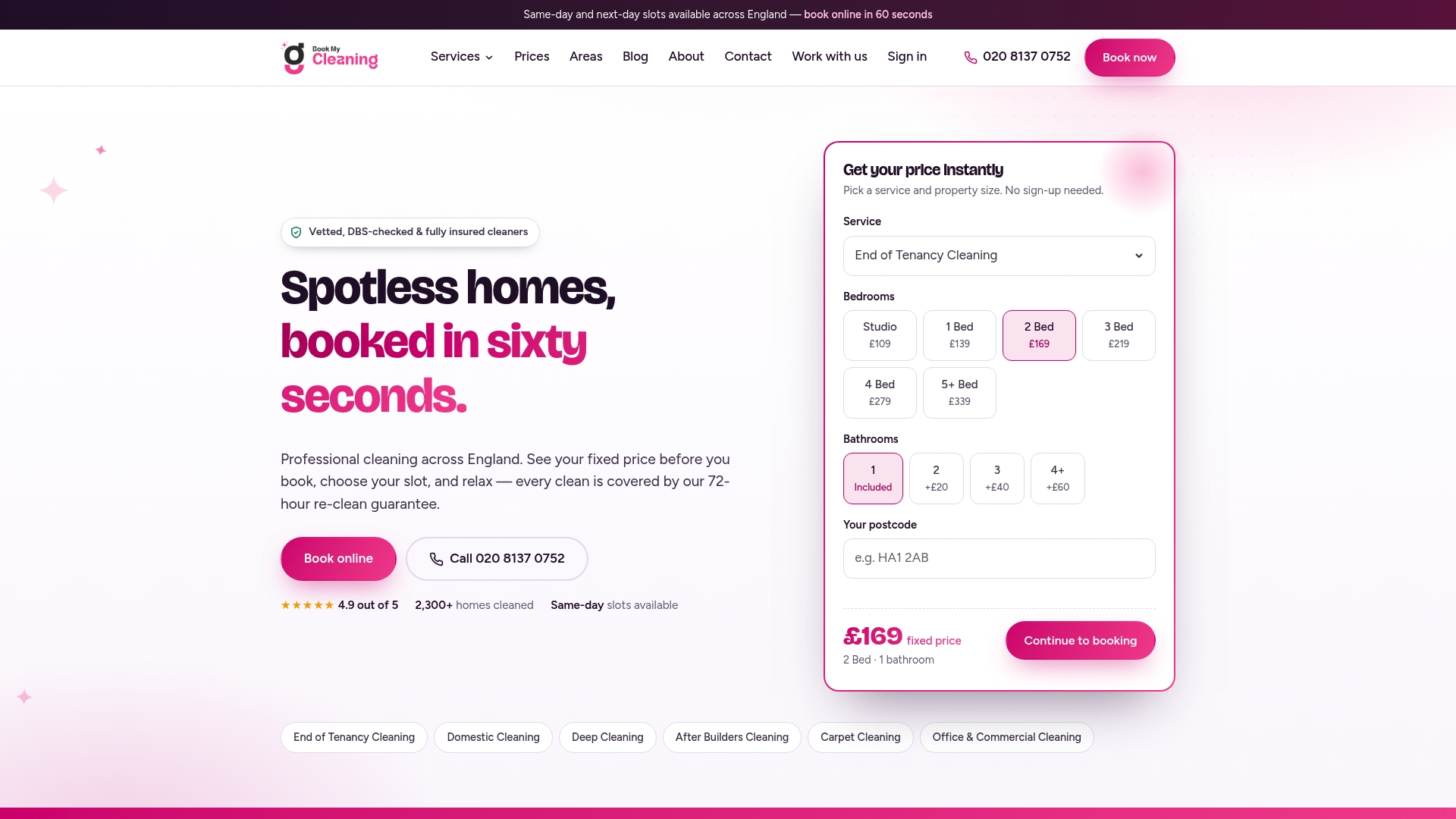
If limescale is the last thing standing between you and your deposit, we can take it off your plate. We offer end-of-tenancy and heavy-limescale treatments across England at fixed prices shown before you book, with vetted, DBS-checked cleaners who arrive in uniform.
- re-clean guarantee: if something does not meet the standard, tell us and we return to put it right.
- Flexible booking: slots may be available at short notice, which helps when check-out is close.
- Clear scope: we work from a written checklist covering the shower screen, seals, tracks and the rest of the bathroom, and all products and equipment are supplied.
- Simple prep: clear personal items from the shower and give access to water and power, and we handle the rest.
You can see exactly what is included and pick a slot on our end of tenancy cleaning page, where prices start from £109. Book online, with no card needed, and keep your confirmation with your tenancy records.
FAQ
What removes hard water stains from glass shower doors?
Citric acid dissolved in warm water is the best renter-safe option for most stains. Which? recommends it over vinegar because it is stronger on limescale. Spray, leave for a few minutes, scrub with a non-scratch sponge, then rinse and squeegee dry.
How much does it cost to have heavy limescale removed professionally?
It depends on the amount of scale and the size of the job. We list heavy limescale treatment at £20 as an add-on, and full end-of-tenancy cleans from £109, on our prices page.
What is the best way to clean a shower screen in a rental?
Use a gentle acid cleaner such as citric acid, a non-scratch sponge and a squeegee, and test on a small area first. Avoid abrasive pads and metal scrapers, and finish by drying and photographing the glass.
What dissolves thick limescale?
Acidic solutions break down calcium deposits, and Which? notes that vinegar and citric acid both work, with citric acid being slightly stronger. Very thick scale may need a repeat application or a professional treatment.
Is vinegar safe to use on a rental shower screen?
On glass it is generally fine when diluted, but it can strip some protective coatings, so keep it off natural stone and delicate trims. Which? lists the surfaces to avoid.
Sources
- Gosport
- How to clean a shower screen - Which?
- How to get rid of limescale on a shower screen
- Things you shouldn't clean with vinegar - Which?