
Most jobs cleaners leave out are not refusals out of laziness. They are tasks that are unsafe without specialist training, tasks that sit outside the booked scope, or tasks that need to be priced separately. The simplest way to avoid disappointment is to book with a written checklist and a fixed price, so you know before the visit what is included and what is an add-on. That is how we work at Book My Cleaning: you see the price online before you book, and the extras have their own listed prices.
TL;DR
- Cleaners commonly leave out hazardous work (mould remediation, biohazards, fire and smoke residue), work at height, heavy lifting and personal errands.
- Ovens, fridges, inside windows, balconies, carpets, upholstery and mattresses are often extras rather than part of a standard clean. Check the checklist, not the assumption.
- For tenants, a cleaning gap is the easiest deduction for a landlord to claim. Match your clean to the move-in inventory and photograph the result.
- Safety rules exist for good reasons: falls from height and hazardous substances are regulated workplace risks in the UK.
- Agree access, clutter, pets and extras in writing before the visit, and the clean goes as planned.
Table of Contents
- Why cleaners say no to some jobs
- Jobs that need a specialist, not a domestic cleaner
- Tasks that are usually extras, not exclusions
- Things cleaners are not there to do
- For tenants: what the landlord will check
- For homeowners after building work
- For landlords and office managers
- How to brief a cleaner so nothing is missed
- Book a clean where the scope is clear
- Our view: a clear scope is the best service
- FAQ
- Sources
Why cleaners say no to some jobs
A cleaner arrives with a time slot, a set of products and a checklist. Three things decide whether a task is done.
Safety. Some jobs carry real risk. Cleaning first-floor windows from a ladder, for example, is a work-at-height task. According to VisitBritain's business safety guidance, which reflects HSE advice, falls from height account for around 30 worker fatalities each year, and the Work at Height Regulations 2005 require employers to avoid work at height where possible and assess the risk before it happens. The same guidance says a ladder is not usually a safe way to clean first-floor windows and above.
Training and equipment. Hazardous substances are covered by COSHH (the Control of Substances Hazardous to Health Regulations). The same guidance explains that employers must assess hazardous substances and obtain a Safety Data Sheet from the supplier where needed. A domestic team is equipped for household dirt, not for sewage, chemical spills or contaminated materials.
Scope and time. A standard clean covers the surfaces, floors, bathrooms and kitchen in the booked hours. Deep scrubbing inside an oven or removing heavy limescale takes extra time and sometimes extra products, so it is priced separately rather than squeezed in.
Knowing which of the three applies tells you what to do: arrange a specialist, add an extra, or simply book more time.
Jobs that need a specialist, not a domestic cleaner
These are the tasks a reputable domestic cleaning company will not do as part of a regular visit, and for good reason.
Mould beyond surface marks
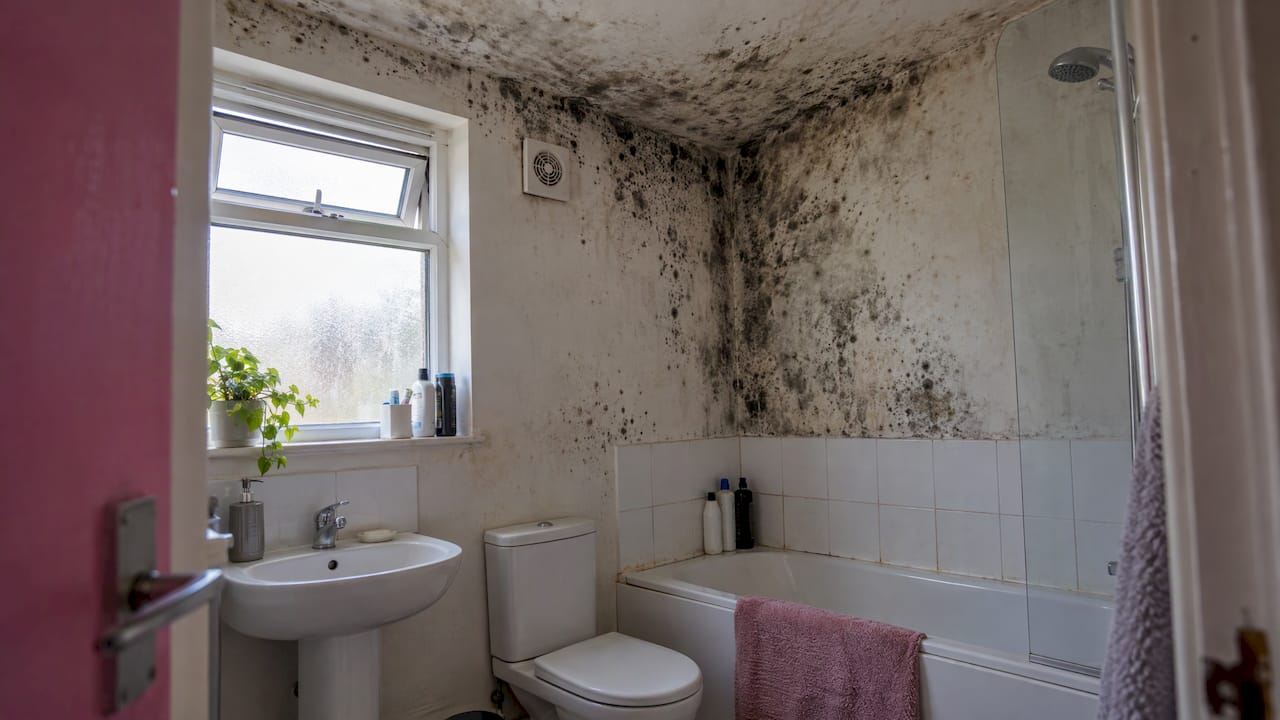
Light mould on a shower seal is a cleaning job. Widespread black mould on walls or ceilings usually points to damp, a leak or poor ventilation. The cause has to be fixed, and remediation is a specialist job. Tenants should report damp to the landlord in writing rather than scrubbing it away, because the underlying cause is the landlord's to repair.
Biohazards, sharps and hoarded properties
Blood, bodily waste, needles and heavily contaminated properties need protective equipment and trained teams. If a property is cluttered to the point that floors and surfaces cannot be reached, a cleaning visit cannot do its job until the clutter is cleared.
Fire, smoke and extinguisher residue
After a fire or the discharge of an extinguisher, the powder and soot are not ordinary dust. A restoration professional deals with this properly; this guide to fire extinguisher cleanup explains when to call one. Once the site is restored, a regular clean can follow.
Asbestos, structural and electrical problems
If you suspect asbestos in old ceiling tiles or insulation, do not let anyone scrape or scrub it. Leave it alone and have it assessed by a licensed professional. Likewise, a cleaner will not repair wiring, plumbing or damaged fittings. Those fall to a tradesperson or the landlord.
Work at height and exterior glass
Upper-storey external windows are the classic example. VisitBritain's guidance names water-fed hose cleaning as a safer alternative, and also mentions installing interior eye bolts so windows can be cleaned using a harness. If your windows sit above ground-floor level, ask what equipment is used before the booking, not after.
Tasks that are usually extras, not exclusions
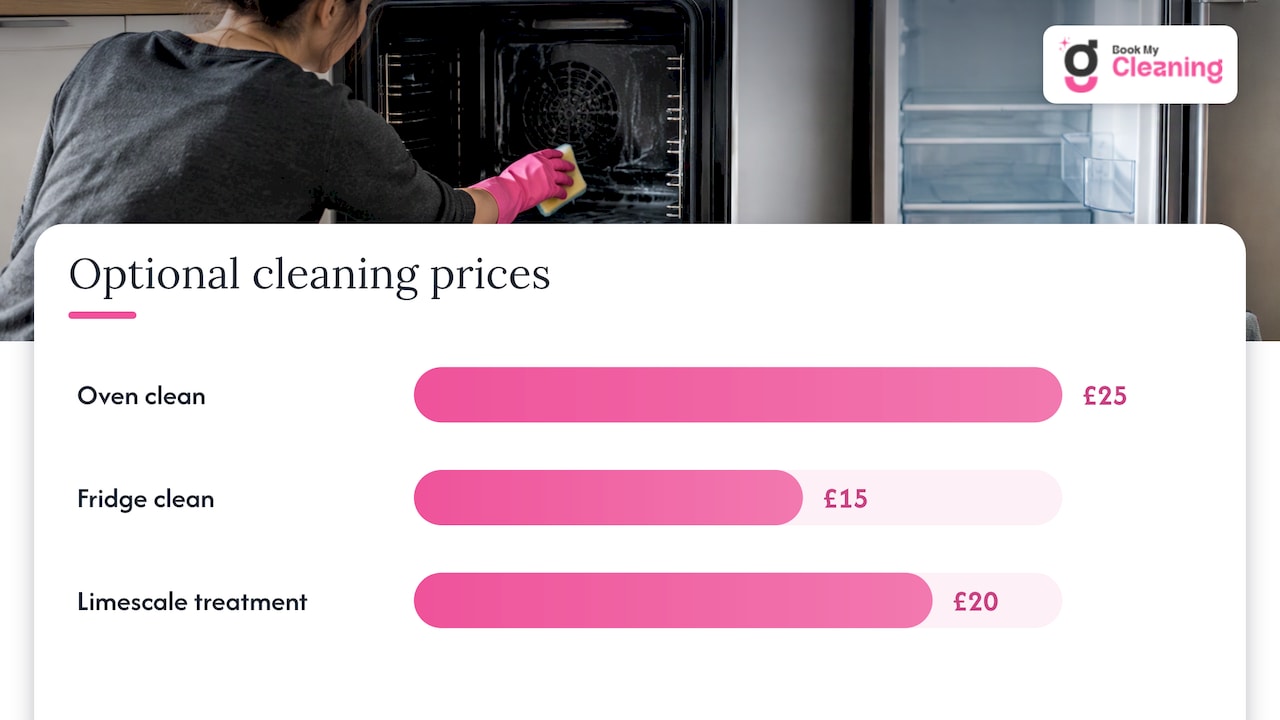
This is where most disappointment comes from. The cleaner has not refused anything; the task simply was not in the booked scope. A written checklist removes the guesswork. Our own price list shows the common extras with their fixed prices, so they can be added at booking:
| Task | Price |
|---|---|
| Inside oven | £25 |
| Inside fridge / freezer | £15 |
| Inside windows | £15 |
| External window cleaning | £25 |
| Balcony / patio cleaning | £15 |
| Heavy limescale treatment | £20 |
| Wall spot cleaning | £20 |
| Paint splash removal (heavy) | £30 |
| Carpet cleaning | £32 per room |
| Upholstery / sofa cleaning | £25 per item |
| Mattress deep clean | £30 per mattress |
| Laundry (wash and fold) | £12 |
| Ironing | £17.50 per hour |
| Key pick-up from agency | £15 |
Those are the prices as published on our prices page. Ovens, fridges and limescale are the three that tenants most often forget, and they are the ones a landlord or letting agent is likely to check.
What most people assume is included
Homeowners tend to think a clean covers the kitchen and bathroom end to end. In practice, a standard clean covers the visible surfaces, and the insides of appliances, the tops of tall cupboards and the tracks of sliding doors are where gaps appear. Our guide to what is standard and what is extra sets this out for tenants, and what to expect from a professional cleaning service covers the same ground for regular bookings.
Things cleaners are not there to do
Some requests are not cleaning at all, and a cleaning company will politely decline them or price them separately.
- Personal errands. Shopping, school runs and waiting in for deliveries are not part of a clean. A key pick-up from an agency is a listed extra at £15, which is the exception because it supports an end-of-tenancy clean.
- Clearing up before cleaning. Cleaners clean surfaces; they do not sort belongings. Cleared floors and worktops mean the time you pay for goes on cleaning.
- Moving heavy furniture. Lifting wardrobes or appliances risks injury and damage. Move or empty large items beforehand.
- Disposing of bulky rubbish. Furniture, mattresses and building waste need a waste carrier or a council collection.
- Cooking and childcare. Outside the scope of any cleaning booking.
- Washing delicate or valuable items. Antiques, fragile ornaments and anything with special care needs are best handled by the owner.
Ironing and laundry are real services with listed prices, so if you want them, book them.
For tenants: what the landlord will check
If you are leaving a rental, the question is not what a cleaner will do but what the landlord can deduct for. Shelter England advises cleaning to the same standard as when you moved in, fixing damage you caused, replacing missing or broken items, restoring the garden and removing rubbish that does not fit in the wheelie bins. It also says you cannot be charged inspection or inventory fees, and that a pre-check-out inspection in your last month gives you a chance to fix problems before the final one.
The government's How to Rent checklist (October 2023) asks you to agree an inventory with photos before moving in. On leaving, it tells you to remove your possessions, clean, dispose of rubbish, take meter readings, check against the inventory, photograph how you leave the property and try to be present at the inspection. If you disagree with proposed deductions, you can contact the deposit protection scheme.
The same Shelter page notes that without a check-in report it is harder for a landlord to charge for cleaning or damage, because there is no proof of the property's starting condition. It recommends your own inventory and a video of the property on move-out day.
A worked example
Imagine a two-bedroom flat. You clear the rubbish, mop the floors and wipe the bathroom, but leave the oven, the fridge and the limescale on the shower screen. Each of those is a typical complaint on a check-out report. Adding an oven clean (£25), a fridge clean (£15) and a limescale treatment (£20) to the booking comes to £60 on top of the clean itself. These are our listed prices, and they are far easier to plan for than a surprise deduction.
Our end of tenancy cleaning runs from £109 to £339 as a one-off fixed price depending on the property. For the room-by-room routine, see our move-out cleaning checklist with photo evidence, end of tenancy cleaning standards and the guide to inventory check cleaning.
For homeowners after building work
Renovation dust is fine, clinging and everywhere. A standard clean is not designed for plaster dust on every surface, paint splashes or cement film. That is why after-builders cleaning exists as its own service, with fixed prices from £159 to £419, and heavy paint splash removal is a £30 extra. Remove skips, offcuts and tools first; cleaners deal with the dust, not the debris.
For landlords and office managers
Landlords: attach the checklist you expect to the tenancy and the check-in inventory. A clear standard on day one makes the day-of-checkout conversation short. Where a clean is needed between tenants, an end-of-tenancy clean has a fixed price, which makes the cost easy to plan.
Office managers: shared kitchens, meeting rooms and desks are the usual flashpoints. Say in writing which areas are included (desk surfaces, for example, can be a sensitive point where papers and equipment are left out). Our office and commercial cleaning has no published price because it depends on the site, and we offer a free site visit through our office cleaning pages, such as Office Cleaning Kensington.
How to brief a cleaner so nothing is missed
- Ask for the written checklist. Ours is written, so you can compare it with your own list line by line.
- Name the extras up front. Oven, fridge, inside windows, balcony, mattress, sofa. If it is not on the list, it is not assumed.
- Disclose hazards and access. Tell the team about pets, alarms, parking, keys and any damp or mould, so no one is surprised on arrival.
- Clear floors and surfaces. Put away valuables and personal items, and move heavy things you want cleaned behind.
- Photograph before and after. Tenants especially: the How to Rent checklist recommends photographing how you leave the property.
- Walk through at the end, or check within the guarantee. Our 72-hour re-clean guarantee applies if standards are not met.
Book a clean where the scope is clear
We publish fixed prices online, so you can see what you will pay before you book. Domestic cleaning is £17.50 to £20.95 per hour, and the add-ons above are priced individually. Our cleaners are vetted, DBS-checked and arrive in uniform, with all products and equipment provided, and same-day slots are available. You can book online in under a minute without a card or deposit.
If you are leaving a rental, start with a fixed-price end of tenancy clean from £109 with a 72-hour guarantee. For regular help at home, see our domestic cleaning from £17.50 an hour, or book directly at bookmycleaning.co.uk.
Our view: a clear scope is the best service
We have cleaned over 2,300 homes and hold a 4.9-star rating, and the same lesson comes up again and again: disputes are rarely about effort. They are about expectations that were never written down.
That is why we show fixed prices before you book, with no hidden fees, and why every booking comes with a written checklist. When a job is outside a standard clean, such as an oven, a mattress or heavy limescale, we would rather it is a clear line on your booking at a stated price than a surprise on the day.
Our cleaners are vetted and DBS-checked, they arrive in uniform and bring all products and equipment. If standards are not met, our 72-hour re-clean guarantee is there for you. Clear scope, clear price, clear promise.
Book
FAQ
Will a cleaner clean inside my oven and fridge?
Not always as part of a standard clean. With us, the inside of the oven (£25) and the inside of the fridge or freezer (£15) are listed add-ons, so you can add them when you book and see the total up front.
Why won't cleaners wash my external windows?
Many cleaners avoid upper-storey windows because work at height is a regulated risk. VisitBritain's guidance says a ladder is not usually a safe way to clean windows from the first floor up. External window cleaning is a listed extra for us at £25.
Can I be charged for cleaning when I move out?
A landlord can deduct for cleaning needed to bring the property back to its move-in standard, but they need evidence of that starting condition. Shelter England says a missing check-in report makes charges harder, and recommends filming the property on move-out day.
What should I do before the cleaners arrive?
Clear floors and surfaces, put away valuables, make sure there is access and agree the extras you want in writing. Our professional cleaning checklist shows what is standard and what is extra.
Sources
- Check out inspections, Shelter England
- How to rent: the checklist for renting in England, GOV.UK
- Preventing workplace accidents and hazards, VisitBritain
- Fire extinguisher cleanup: when to call a restoration pro