
A professional deep clean covers kitchen and bathroom degreasing and descaling, skirting boards and door frames, the areas behind and under appliances, carpets and upholstery, and high-touch surface sanitisation, with inside-oven and inside-fridge work usually offered as add-ons. A whole-house deep clean typically takes longer than a standard visit, and heavy soiling or extra tasks add to both time and cost, so following a thorough seasonal pest control and deep cleaning checklist can ensure nothing is missed. Professional cleaners also follow COSHH-style safety guidance to keep chemical use safe around your home.
TL;DR:
- Inside oven, inside fridge, internal windows, and carpet shampooing are commonly optional extras, so confirm the exact scope and price before booking.
- A two to three bedroom clean takes around six hours, but heavy soiling, carpet shampooing, and extra tasks can extend the visit.
- When time or budget is limited, prioritize kitchens and bathrooms; book carpet or oven work separately rather than rushing the main clean.
- The quoted service starts at £119 and reaches £329 by property size, while oven, fridge, and carpet treatments cost extra.
Table of Contents
- Room-by-room breakdown of what a deep clean covers
- How deep cleaning differs from a regular clean
- When to book a deep clean
- Timings, preparation and what affects the price
- Health, safety and professional cleaning standards
- What a vetted provider looks like and how to judge one
- What actually matters most in a single deep clean
- Booking a deep clean with us
- FAQ
- Sources
Room-by-room breakdown of what a deep clean covers
A deep clean goes well beyond a quick tidy. It reaches into the corners and surfaces that a weekly visit skips, and it is worth knowing exactly what should be on the list before a cleaner arrives.
In the kitchen, a thorough job includes degreasing splashbacks and worktops, descaling taps, and wiping cabinets inside and out. The kitchen deep-cleaning checklist also covers the extractor fan, which collects cooking grease that ordinary wiping never shifts, and the gaps behind and under the cooker and fridge, where crumbs and dust build up unseen. Cleaning inside the oven and inside the fridge or freezer are valuable tasks that most residential deep cleans treat as optional extras rather than a standard inclusion.

Bathrooms get similar attention. A deep clean descales shower screens and taps, scrubs grout lines that have darkened over time, and removes mould and soap scum from tiles and seals. Toilets, basins and shower trays are cleaned thoroughly rather than wiped over, and extractor fans or vents get a proper going-over since they trap dust and damp residue.
Bedrooms, living rooms and hallways follow the same principle: reach the places a regular clean leaves behind.
- Dusting extends to skirting boards, door frames and picture rails, not just visible surfaces.
- Small furniture gets moved so the floor underneath can be vacuumed or mopped properly.
- Light switches, sockets and door handles are wiped down as high-touch points.
- Walls receive spot cleaning for marks and scuffs.
- Interior windows and sills are cleaned where the service includes them.
Carpets, upholstery and mattresses often need a different approach entirely. Steam cleaning or shampooing lifts ground-in dirt that vacuuming cannot reach, and edge cleaning along skirting boards catches what a standard vacuum misses. Heavily stained or allergy-prone carpets sometimes need a specialist carpet clean booked separately rather than folded into the main visit.
Most services are upfront about what sits outside the standard scope. Inside-oven cleaning, inside-fridge cleaning, internal window cleaning and carpet shampooing are commonly listed as add-ons rather than automatic inclusions, so it is worth checking the specifics before you book rather than assuming everything is covered.
How deep cleaning differs from a regular clean
A standard clean keeps a home looking tidy week to week: surfaces wiped, floors vacuumed, bathrooms freshened. A deep clean goes further in both access and intensity, which is why the two are priced and scheduled differently.
- Depth of access: a deep clean reaches behind appliances, inside cabinets and along skirting boards that regular visits skip.
- Equipment and products: deep cleans often use stronger degreasers, descalers and steam equipment rather than general-purpose sprays.
- Stain and build-up removal: grout staining, limescale and embedded grease get properly treated rather than surface-wiped.
- Frequency: standard cleaning runs weekly or fortnightly, while deep cleaning is typically a one-off or occasional job tied to a specific need.
Embedded grease on an extractor fan, months of dust behind a wardrobe, or grout that has gradually darkened are the kinds of problems a regular clean never quite reaches, because it is not designed to. Deep cleaning exists precisely to catch up on that backlog, which is also why it costs more and takes longer per visit.
When to book a deep clean
Certain moments make a deep clean worth scheduling rather than optional.
- Moving into or out of a property, particularly for landlords and tenants managing a changeover.
- Reaching the end of a tenancy, where a thorough clean affects deposit return.
- After building work or renovation, when dust and debris settle into every surface.
- Before hosting guests or a big event, when the home needs to look its best quickly.
- During allergy season, when dust, pet hair and pollen build-up benefit from a deeper reset.
Booking further ahead matters for weekends and busy periods, since slots fill up fastest then. Same-day bookings are sometimes available but tend to be limited, so earlier is safer if the date matters. Triggers like post-renovation cleaning often call for extra services too. Paint splashes and heavy debris usually need dedicated treatment rather than a standard deep-clean pass.
Timings, preparation and what affects the price
Knowing what to expect before the day keeps the visit efficient and avoids surprises on the invoice.
A little preparation goes a long way: clear fragile items off surfaces, make sure large appliances are accessible, note any pets that need managing, and leave clear access instructions if you will not be home. These small steps mean cleaners spend their time cleaning rather than working around obstacles.
Pro Tip: Leave specific written notes on anything that needs special handling, such as a delicate worktop or an antique rug, so the cleaner knows before they start rather than partway through.
On timing, planning around six hours for an average two to three bedroom deep clean is a sensible benchmark, though the actual duration varies with property size, soiling levels and any add-ons booked. A heavily soiled kitchen or a full carpet shampoo on top of the standard job will extend that window.
Several factors drive the final price:
- Property size, since more rooms and more square footage mean more time on site.
- The level of soiling, as a property left untouched for months takes longer than one with light upkeep.
- Add-ons such as inside-oven cleaning, inside-fridge cleaning or carpet shampooing, each priced separately.
- The number of cleaners sent, which affects how quickly a larger job can be completed.
- Whether pricing is fixed per job or charged hourly, which changes how predictable the final bill is.
Vague adverts that promise a deep clean "from" a low headline figure without listing what that figure covers are worth treating with caution, since add-ons and hidden charges can change the total significantly. When comparing quotes, ask exactly which tasks are included, how many cleaners will attend, whether they are insured, and what happens if you are not satisfied with the result. A printable checklist for hiring a deep-cleaning service makes that comparison easier to do consistently across providers.
Health, safety and professional cleaning standards
Professional cleaners are expected to follow safe working practices, not just get the job done quickly. HSE guidance on cleaning accommodation and facilities sets out the basics: remove heavy soil with a neutral detergent before disinfecting, never mix chemicals that could react dangerously, keep the space well ventilated, and use protective equipment where ventilation is limited.
The HSE's guidance on manual cleaning and disinfecting surfaces adds further detail that shows up in how reputable services operate day to day.
- Colour-coded cloths and equipment prevent cross-contamination between kitchens, bathrooms and other areas.
- Disposable cloths are used for toilets and similarly high-risk surfaces.
- Products are correctly labelled and diluted according to instructions.
- A cleaning schedule is followed and signed off by staff.
Pro Tip: Before booking, ask which products will be used, how the cleaner plans to ventilate the space, and how they will keep products away from pets, especially if you have cats or dogs that explore freshly cleaned rooms.
What a vetted provider looks like and how to judge one
Every provider you hire, deep clean or otherwise, is worth checking against the same basics: proof of insurance, background checks on staff, clarity on the products used, and a clear policy if something is missed. Vetted, DBS-checked cleaners working in uniform and a published 72-hour re-clean guarantee are the kind of concrete, checkable commitments worth looking for, and they form the basis of our own deep cleaning service.

Fixed, transparent pricing shown before you book matters too, since it removes the guesswork that vague quotes leave behind. Same-day availability is useful when a clean cannot wait, though slots are naturally more limited than booking ahead. Whichever provider you choose, running through a short checklist first, insurance, DBS checks, product transparency and a re-clean policy, makes the decision far easier than comparing price alone.
What actually matters most in a single deep clean
If time or budget is tight, kitchens and bathrooms earn priority. They carry the most grease, limescale and bacteria, and they show the difference a deep clean makes more clearly than any other room. Carpets and ovens are better treated as bookable extras when the budget allows, rather than squeezed into a rushed main visit.
Between deep cleans, small habits do more than people expect: squeegeeing the shower after each use, wiping extractor filters weekly, and dealing with spills immediately all reduce how quickly grime builds back up. Whoever you hire, check their credentials and safety practice before the day, not after.
— Book
Booking a deep clean with us
We offer fixed-price deep cleaning with vetted, DBS-checked cleaners who arrive in uniform and a 72-hour re-clean guarantee if anything falls short. There is no card or deposit needed to secure a slot, and same-day bookings may be available when timing is tight.
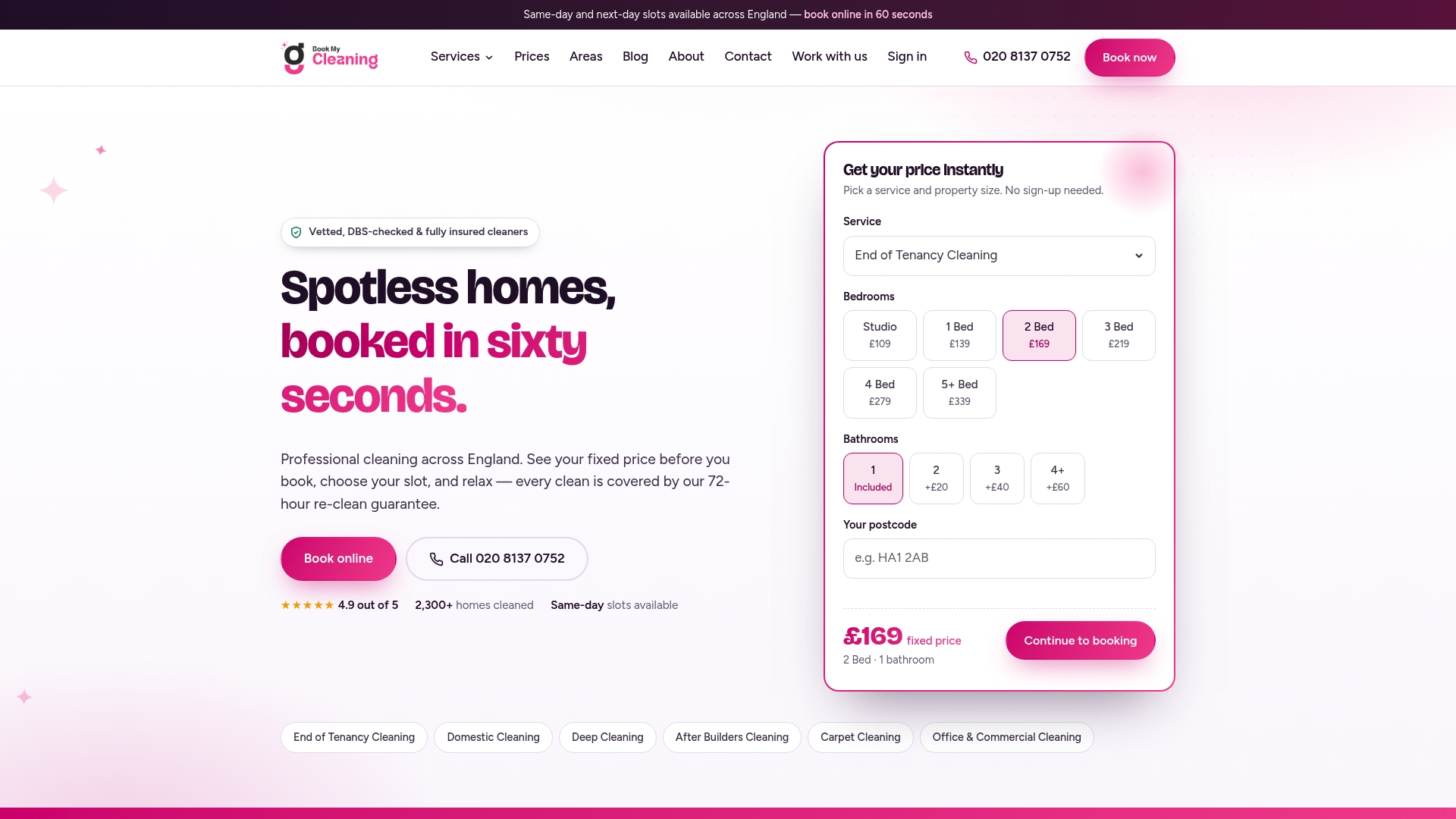
Our deep cleaning page shows exactly what is included before you commit, and our full price list sets out every add-on clearly rather than burying extras in the small print.
- Add inside-oven cleaning, inside-fridge cleaning or carpet shampooing at the point of booking if you want them included.
- Check the exact scope for your property size on the deep-cleaning page before confirming.
- Use the online booking flow to pick a slot, including same-day where available, with fixed pricing shown upfront.
FAQ
What should I expect from a deep cleaning?
Expect thorough attention to kitchens and bathrooms, skirting boards, door frames, and the areas behind and under appliances, alongside carpet and upholstery work where booked. A whole-house visit generally takes longer than a standard clean, and planning around six hours for an average two to three bedroom property is a reasonable starting point.
What should be included in a deep cleaning service?
A solid deep clean covers degreasing and descaling in the kitchen and bathroom, dusting and wiping high and low surfaces including skirting boards, and cleaning behind and under furniture and appliances. Inside-oven cleaning, inside-fridge cleaning and carpet shampooing are commonly offered, but usually as separate add-ons rather than automatic inclusions.
How much would you pay for a deep clean?
Our deep cleaning service is priced from £119 to £329 depending on property size and any add-ons chosen, with fixed pricing shown before you book. Add-ons such as inside-oven cleaning or carpet treatment are charged separately on top of the base price.
How long does it normally take to deep clean a house?
A typical two to three bedroom property takes around six hours as a planning estimate, though the actual time depends on property size, soiling levels and any extras booked. Heavily soiled kitchens, full carpet shampooing or multiple add-ons will extend that window.
Sources
- Cleaning accommodation and facilities (HSE guidance)
- 13 things you should clean every week in your home - Which?