

A professional cleaner should arrive on time, in uniform, with their own products and equipment. They should work from an agreed checklist, leave every room in the condition that was agreed, and put things right if something is missed. What they actually do depends on the type of clean you book: a regular domestic visit, a deep clean, an end-of-tenancy clean, a post-renovation clean or an office contract. Each has a different scope, a different length and different extras.
This guide sets out what is normally included in each, how long a clean realistically takes, what is usually an add-on, and how to prepare so you get what you paid for.
TL;DR
- A regular clean covers the surfaces, floors, kitchen and bathrooms you see every week. Deep, end-of-tenancy and after-builders cleans go into the detail: inside appliances, limescale, grease, skirting boards and dust left by works.
- Agree the scope in writing before the visit. Anything not on the checklist, such as inside the oven or the fridge, external windows or carpets, is normally priced separately.
- A three-bedroom house with two bathrooms is roughly a three-hour job for one cleaner in average condition. Heavy soiling, pets or a lot of ornaments add time.
- Tenants should clean to the condition on the check-in inventory, allowing for fair wear and tear, and keep dated photos and receipts in case of a deposit dispute.
- A good provider shows its price before you book, vets its cleaners and puts a re-clean promise in writing.
Table of Contents
- What a professional cleaner does on a regular domestic clean
- How long a professional clean takes
- What a deep clean includes
- What an end-of-tenancy clean should deliver
- What an after-builders clean covers
- What office managers should expect
- Weekly, monthly and less frequent tasks at home
- How to prepare and agree the scope
- Our perspective
- Book a clean with a fixed price
- FAQ
- Sources
What a professional cleaner does on a regular domestic clean
A regular clean is maintenance. The cleaner keeps surfaces fresh, stops grime building up and keeps the home manageable between your own tidy-ups. It is not a restoration job, and it works best when the home is already reasonably clear.
A typical regular visit includes:
- Kitchen: wiping worktops, hob, splashbacks and the outside of appliances, cleaning the sink and taps, emptying bins, and mopping the floor.
- Bathrooms and WCs: cleaning the toilet, basin, bath or shower, taps, mirrors and tiles, and washing the floor.
- Living areas and bedrooms: dusting reachable surfaces, wiping door handles and light switches, vacuuming carpets and rugs, and mopping hard floors.
- Finishing: emptying bins, tidying cushions and making sure nothing is left wet or in the way.
What a regular clean does not normally include: inside the oven, inside the fridge or freezer, inside cupboards, external windows, mattress or upholstery cleaning, and moving heavy furniture. These are specialist or add-on tasks. At Book My Cleaning, for example, an oven clean is a listed extra at £25, a fridge or freezer at £15, and inside windows at £15, so you can see the price of each before you book.
Our domestic cleaning is charged by the hour, from £17.50 to £20.95 depending on the service and property, and the cleaners bring all products and equipment. If you want the same person each week, ask for a regular cleaner when you book. Our domestic cleaning in Kensington page shows how a regular booking works.

How long a professional clean takes
People are often surprised at how quickly a trained cleaner works, and equally at how long a thorough job takes. Both are true, because speed comes from method, not from skipping things.
One UK cleaning-software company's time estimator puts a regular clean of a three-bedroom, two-bathroom house with two reception rooms, a kitchen, a WC and a hall at about three hours for one cleaner in average condition. It builds that up room by room: about 15 minutes per bedroom, 21 per bathroom, 20 per reception room and 32 for the kitchen. It adds 30 to 50 per cent for heavy soiling, pets or long-term neglect, and 20 to 30 per cent for a furnished home with many surfaces and ornaments.

Two cleaners are faster, but not twice as fast. The same source says a pair typically delivers 1.7 to 1.8 times one cleaner's output, because they spend time coordinating and working around each other.
Why professionals seem fast
The pace comes from a fixed routine, and you can expect to see most of it:
- Clutter is cleared first, so surfaces can be wiped in one pass.
- Bathroom product is applied early and left to work while the cleaner moves on to another task.
- Dusting goes from high to low, so falling dust lands on floors that have not been cleaned yet.
- Floors come last: vacuuming first, then mopping hard floors backwards towards the exit.
- A final check of each room against the checklist before leaving.
The same floor-last logic is why many people compare a robot mop versus vacuum when they want to keep hard floors fresh between visits, though a cleaner's attention to edges, corners and skirting is what a machine does not replace. See this comparison of robot mop versus vacuum for how each handles daily floor upkeep.
What a deep clean includes
A deep clean is a one-off reset for a home that has not had detailed attention for a while, or one you are about to move into, host in, or start regular cleaning in. It covers everything in a regular clean, plus the areas that are usually skipped:
- Descaling taps, showerheads and tiles, and removing limescale build-up
- Degreasing the hob, extractor and kitchen surfaces
- Cleaning inside the oven, fridge and cupboards where agreed
- Wiping skirting boards, door frames, window sills and light fittings
- Cleaning behind and underneath furniture that can be moved safely
Expect more hours than a regular visit. Our own guide to deep cleaning time suggests planning around six hours for a typical home. Our deep cleaning prices run from £119 to £329 as a fixed one-off fee, depending on the size of the property. If you are unsure whether you need a deep clean or a tenancy clean, we explain the difference between end of tenancy and deep cleaning.
What an end-of-tenancy clean should deliver
This is the clean with the most riding on it, because the result can affect whether a deposit is returned in full. The standard is not "tidy". It is the condition recorded on your check-in inventory, allowing for fair wear and tear.
Cleanliness is not covered by wear and tear
Mydeposits explains that fair wear and tear covers deterioration from age and normal use, such as faded paint, worn carpets or loose door handles. A landlord should only propose a deduction when the deterioration was avoidable and caused by the tenant's actions or omissions. Dirt left behind is the kind of thing a tenant can be charged for, which is why the cleaning matters.
An end-of-tenancy clean usually includes:
- Every room cleaned from top to bottom, including cupboards, wardrobes and shelves
- Oven, hob and extractor degreased inside and out
- Fridge and freezer emptied, cleaned and defrosted where needed
- Bathrooms descaled, grout and silicone wiped, and taps polished
- Internal windows, sills and frames cleaned
- Carpets vacuumed, with steam or shampoo cleaning as an add-on where the tenancy asks for it
- Floors vacuumed and mopped last
Our fixed prices for end-of-tenancy cleaning range from £109 to £339 depending on property size. Check the full list in our end of tenancy cleaning checklist and the room-by-room move-out checklist with photo evidence.
Evidence that matters if there is a dispute
In England and Wales, if the landlord and tenant disagree about the deposit, the process in a deposit scheme's alternative dispute resolution is evidence based. Both sides present their case to an adjudicator, who issues a binding decision on how the deposit is shared. A tenant generally has three months from the date they vacate, or from the date the deposit is unprotected if that is sooner, to raise a dispute.
So keep what an adjudicator would want to see:
- The check-in inventory and any photos from move-in
- Dated photos of every room after cleaning
- The cleaning checklist and the receipt or invoice
- Any written correspondence about what was expected
Start with the inventory. Our guide to tenancy cleaning and the inventory explains how to match the clean to it. If a landlord or agent flags a missed spot, our 72-hour re-clean guarantee means we return to fix it if standards are not met.
What an after-builders clean covers
After renovation, the problem is fine dust. It settles on every surface, inside cupboards and in window tracks, and ordinary cleaning just moves it around. A post-builders clean usually involves:
- Removing dust from top to bottom, including light fittings, doors and skirting
- Wiping and polishing windows, frames and sills
- Cleaning inside built-in units and cupboards
- Removing stickers, adhesive marks and light paint splashes where possible
- Vacuuming and mopping floors repeatedly until the dust is gone
Heavy paint splashes are a separate, specialist task. We list paint splash removal (heavy) as a £30 add-on, and after builders cleaning as a fixed fee from £159 to £419 depending on the size of the property. Ask for the builders to have removed their rubble and waste first, as a cleaner is there to clean, not to clear the site.
What office managers should expect
A commercial clean is a contract, not a single visit, so the paperwork matters more. A good provider will agree a written specification covering which areas are cleaned, how often, at what times (usually outside working hours) and what is excluded.
A sample cleaning service contract shows the usual shape: exclusions can be listed expressly, such as external windows, carpet shampooing or server-room equipment, changes to scope should be agreed in writing beforehand, and the work should be done with reasonable care and skill.
On a typical schedule you should expect:
- Daily: emptying bins, cleaning washrooms and kitchen areas, wiping high-touch points such as door handles and light switches, vacuuming and mopping main routes, and restocking consumables where agreed.
- Weekly: dusting desks and shelves, cleaning glass partitions and deeper floor work.
- Periodic: carpet cleaning, upholstery, internal windows and a deeper washroom descale.
Time depends on layout. The same time estimator suggests 250 to 350 m² per cleaner-hour for open-plan carpeted space and 35 to 60 m² per hour for washrooms, so a 500 m² office with two washroom blocks is typically a 2.5 to 3 hour nightly job for one cleaner. Office and commercial cleaning does not have a published price with us, so we quote after the scope is agreed.
Weekly, monthly and less frequent tasks at home
A useful way to plan what to ask a cleaner to do is to split the home into rhythms. This is a sensible guide, not a rule, and your own household will vary.
| Frequency | Typical tasks |
|---|---|
| Every visit | Kitchen surfaces and sink, bathrooms, vacuuming, mopping, bins, dusting reachable surfaces |
| Monthly | Skirting boards, door frames, mirrors, inside microwave, wiping cupboard fronts, fridge shelves |
| Every three to six months | Oven interior, inside windows, limescale treatment, mattress and sofa refresh, behind furniture |
| Yearly or after works | Carpets, deep clean, external windows, balcony or patio |
Several of these are priced as simple extras with us: carpet cleaning at £32 per room, upholstery or sofa cleaning at £25 per item, a mattress deep clean at £30 per mattress, external windows at £25 and a balcony or patio clean at £15. Our carpet cleaning in Richmond page shows how a room-by-room carpet booking works.
How to prepare and agree the scope
A little preparation turns a decent clean into a great one, and it takes about ten minutes.
- Tidy surfaces and floors. Put away personal items, papers and clothes. A cleaner cleans what they can reach, and should not be sorting your belongings.
- Write down priorities. Mention the rooms or issues you care about most, such as a stained shower, a greasy hob or pet hair on the sofa.
- Confirm the extras. Say whether you want the oven, fridge, windows or carpets done, and check each is priced before booking.
- Sort access. Decide whether you will be in, or whether keys, a lockbox or a concierge will be used. If keys need collecting from a letting agent, key pick-up from the agency is a £15 add-on with us.
- Flag what to avoid. Mention delicate surfaces, fragile items, pets and anything you do not want touched.
- Agree the checklist in writing. A written list lets both sides see what was promised, and it is your reference if anything is missed.
Our perspective
We think most disappointment with cleaning comes from unclear scope, not from bad cleaners. People imagine a deep clean when they have booked a regular one, or assume the oven is included when it is a separate task.
That is why we show fixed prices online before you book, with no hidden fees, and give you a written checklist for the job. Our cleaners are vetted, DBS-checked and arrive in uniform, bringing all products and equipment, so you do not have to supply anything.
We also stand behind the result. If standards are not met, our 72-hour re-clean guarantee means we come back. With a 4.9-star rating across more than 2,300 cleaned homes, we know what a good standard looks like, and we build every booking around it.
Book
Book a clean with a fixed price
If you know what you need, you can see the price and book in under a minute, with no card or deposit needed to reserve a slot. Same-day slots are available. Choose a regular domestic clean from £17.50 an hour, a deep clean from £119, end of tenancy from £109, or after builders from £159, all as published on our prices page.
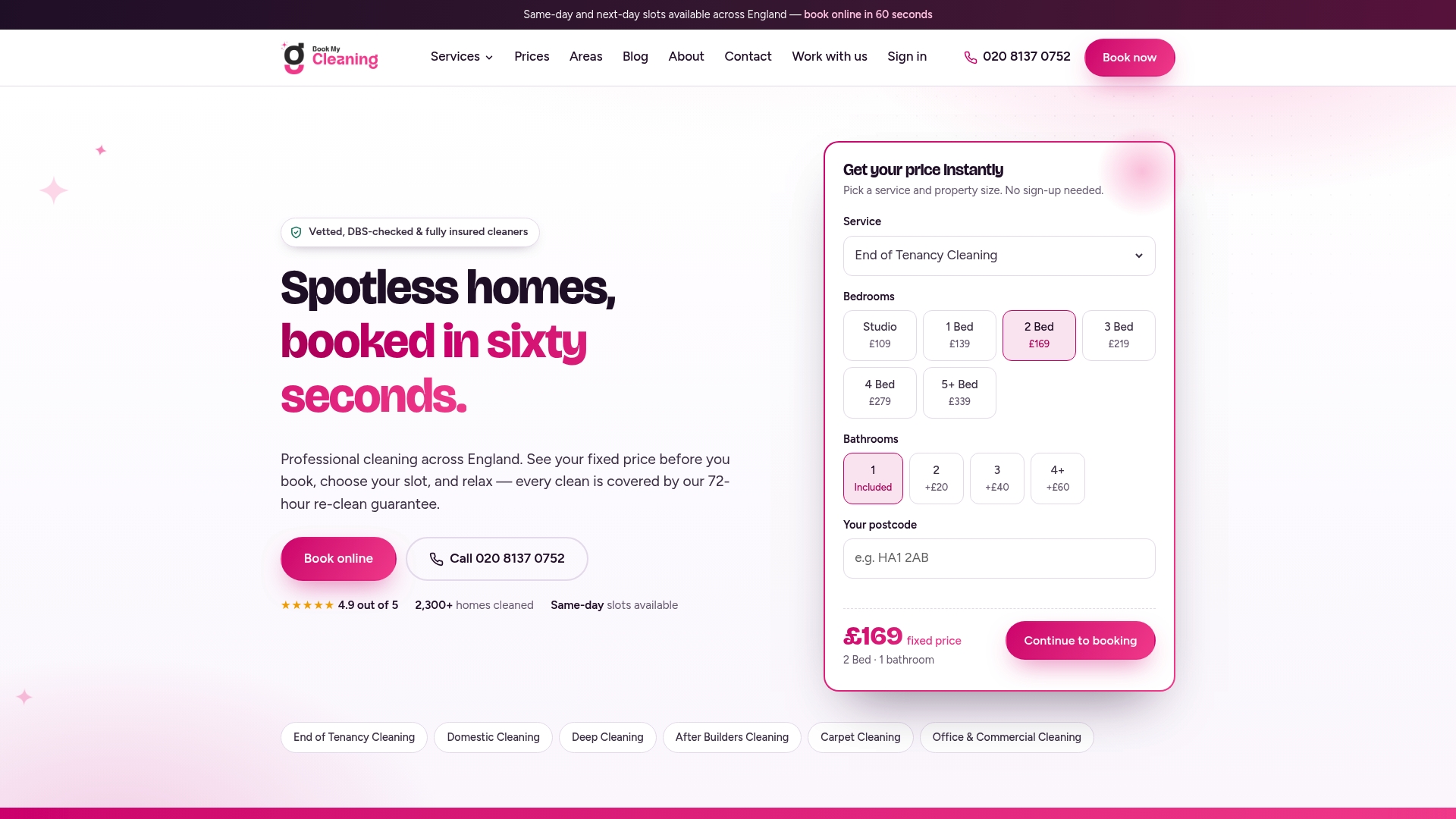
Start on our booking page and choose the service that matches your property. If you are a tenant, our end of tenancy cleaning in Ealing page shows the fixed price and guarantee in one place.
FAQ
What is expected from a house cleaner?
A house cleaner is expected to clean kitchens, bathrooms, floors and reachable surfaces to the agreed checklist, using their own products and equipment, and to leave the home tidy. They are not expected to do tasks outside the agreed scope, such as oven interiors or external windows, unless those are booked as extras.
How do professionals clean so fast?
They follow a fixed routine: clear clutter, apply product early so it can work, dust high to low, then vacuum and mop last. Because the order never changes, no time is lost deciding what to do next or redoing surfaces.
Should I be at home during a clean?
You do not have to be. Many customers arrange access with keys, a lockbox or a concierge. It helps to leave written notes on priorities and anything fragile, and to confirm access arrangements when you book.
How long does a clean take?
It varies with size and condition. One estimate puts a regular clean of a three-bedroom, two-bathroom house at about three hours for one cleaner, with extra time for heavy soiling or pets. Deep and tenancy cleans take longer, so ask for an estimate when you book.
What if something is missed?
Tell the provider promptly, ideally with photos. With our 72-hour re-clean guarantee, we return to put right anything that does not meet the standard.
Sources
- Wear and tear in renting: What it means and how it is applied (mydeposits)
- Alternative Dispute Resolution (ADR) guide (mydeposits)
- Cleaning Time Estimator: How Long A Clean Takes
- Cleaning Service Contract (UK)